№ 1
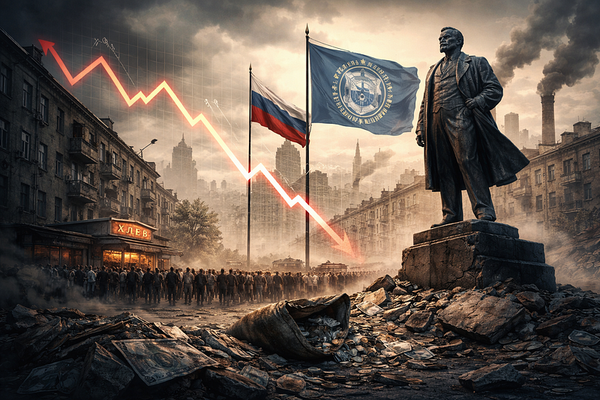
IMF Shock Therapy in Russia: The 1990s Collapse Explained
Russia's 1990s collapse was not the inevitable price of leaving communism. It was a chosen design, and an alternative had already been written down.

Russia's 1990s collapse was not the inevitable price of leaving communism. It was a chosen design, and an alternative had already been written down.
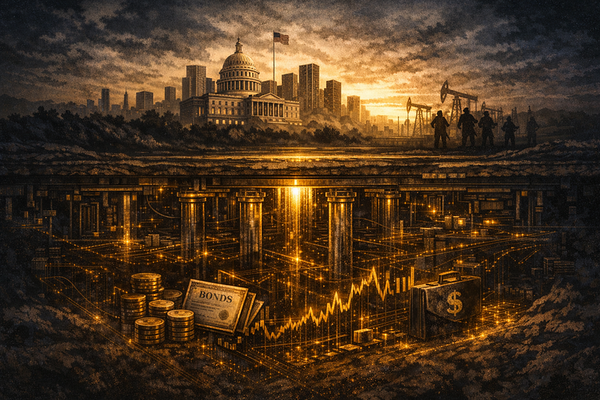
Debt, liquidity and the financial system beneath modern sovereignty.
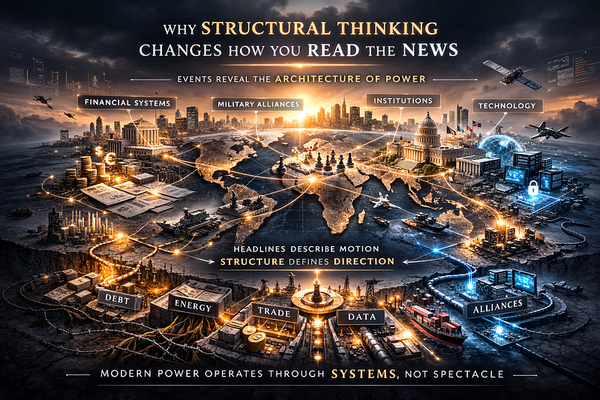
A structural analysis of modern power behind today’s headlines.
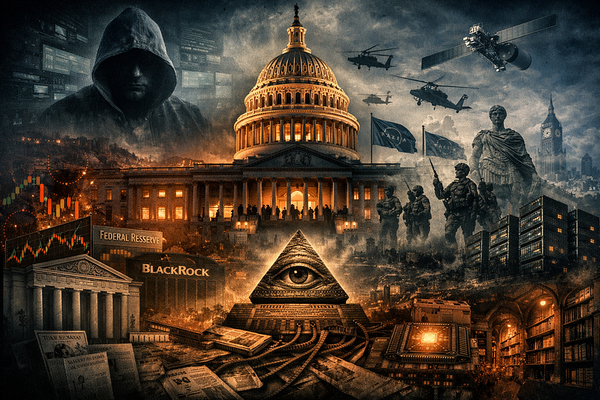
Empires do not vanish when they fall. They migrate from visible institutions into financial, administrative, and technical architecture. The determining variable is not who rules, but which layer holds the perimeter.

In 2009 Amazon reached into people's Kindles and deleted a book they had bought. It was Orwell's 1984. The lesson was not malice but structure: you did not buy the book, you licensed it. The word stayed buy; the thing it bought became a permission someone else can revoke.
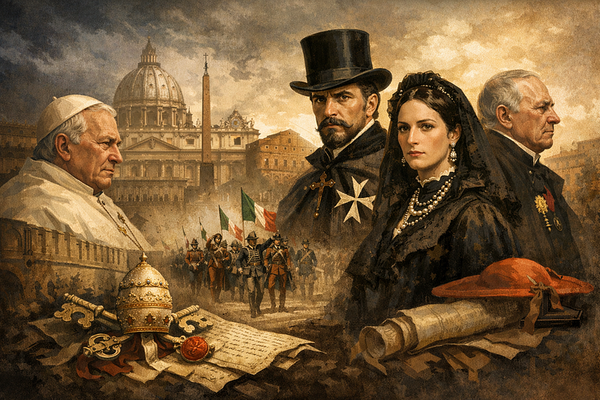
The legend speaks of ancient bloodlines secretly ruling the world. The record begins with black cloth hung from Roman balconies in 1870, and what it actually shows is stranger than the myth.
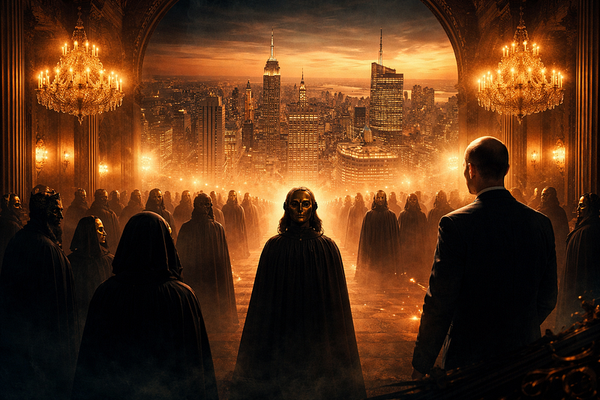
The masked ritual is not chaos but order. What Kubrick's Eyes Wide Shut reveals about elite power: it survives by cohesion and insulation, not by a cabal you could expose.
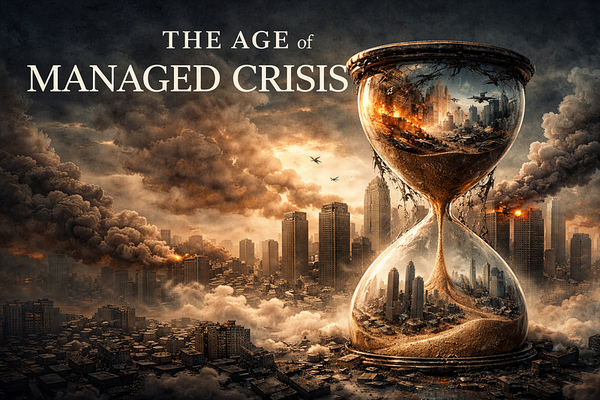
Why Nothing Gets Fixed Anymore

Foreign aid prevents collapse. It also redesigns the limits within which sovereign states are allowed to act.
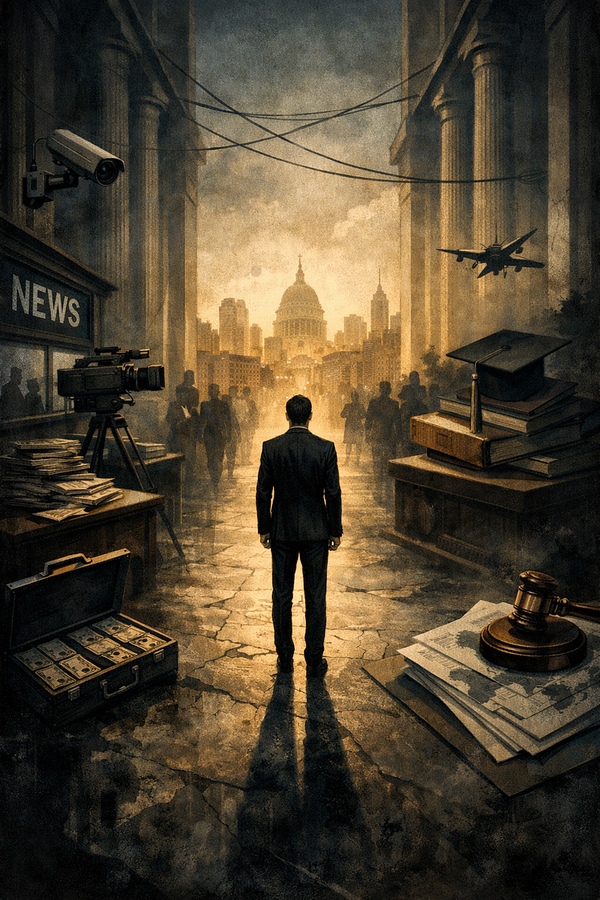
Complicity is not enforced. It is absorbed.

Epstein was not a secret. And yet they came.

Wikipedia does not decide what is true. It decides what is admissible. Its founding rule was verifiability, not truth, and the consequence is an architecture that lets a small editor class rule sources and subjects in or out by procedure, and stabilizes a frame that now propagates through search an