№ 1
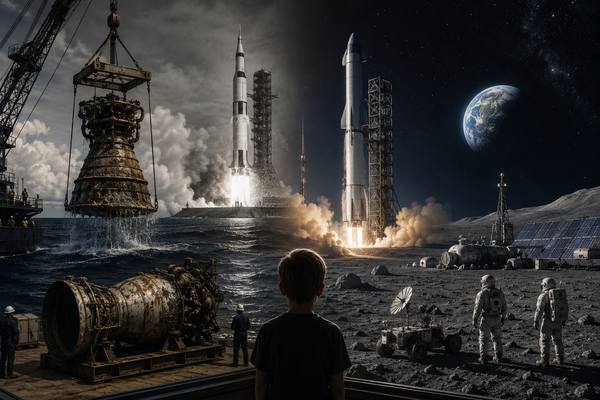
Everyone Is Watching the Return to the Moon. Nobody Is Watching What We're Going Back For.
We never lost the Moon. We stopped paying for it, and what is pulling us back is not what you are being told.
We never lost the Moon. We stopped paying for it, and what is pulling us back is not what you are being told.
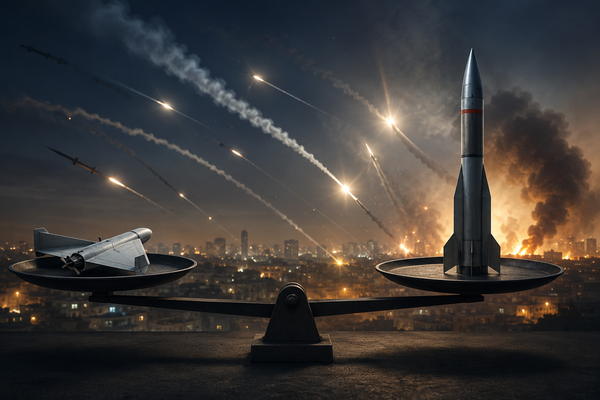
The weapon no longer decides the war. The cost of stopping it does.
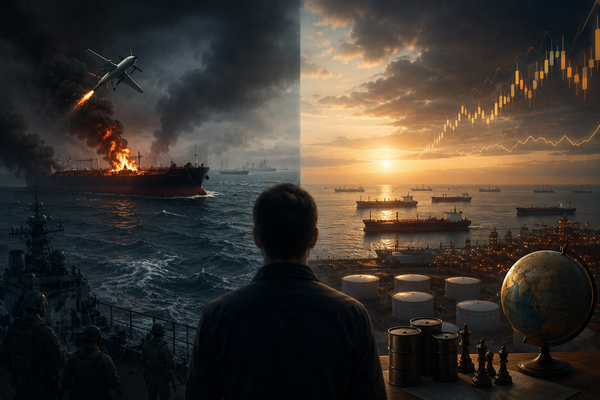
The strait is calm and oil is cheap. The calm is bought, by four buffers quietly running out.
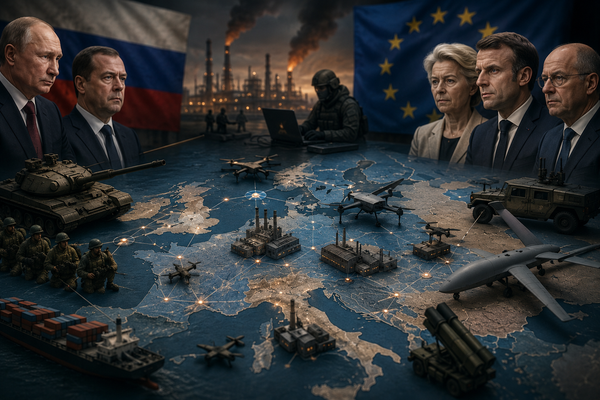
Europe has stopped funding Ukraine's war and started building it, on its own soil. Russia has published the factory addresses and called them targets. Whether that is an act of war is not decided in Brussels.
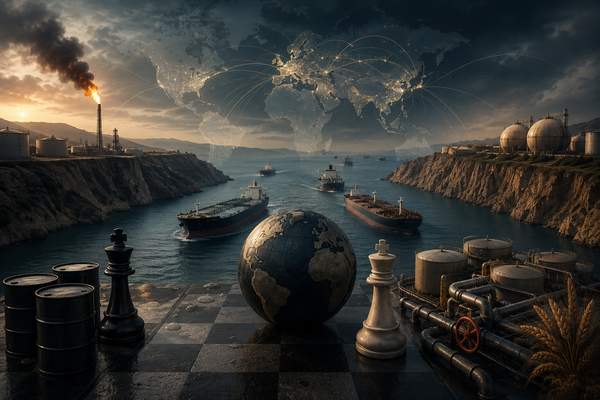
The world's entire oil buffer sits behind the Strait of Hormuz. Close the strait and you strand the cure, leaving Russian oil as the only valve. A sanction is a luxury of surplus.
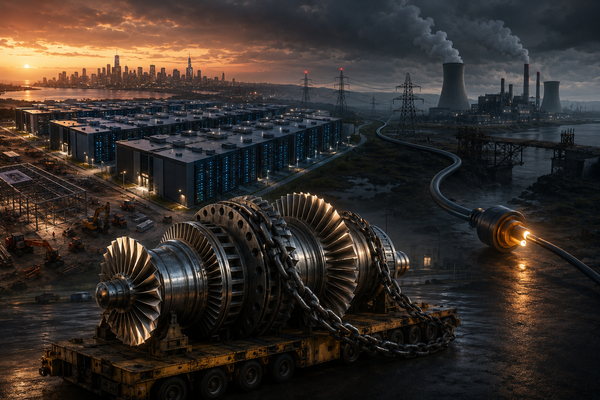
An AI data center can be built in a year. The firm power to run it takes five to seven, and the one machine that makes it, the gas turbine, is sold out through the decade.
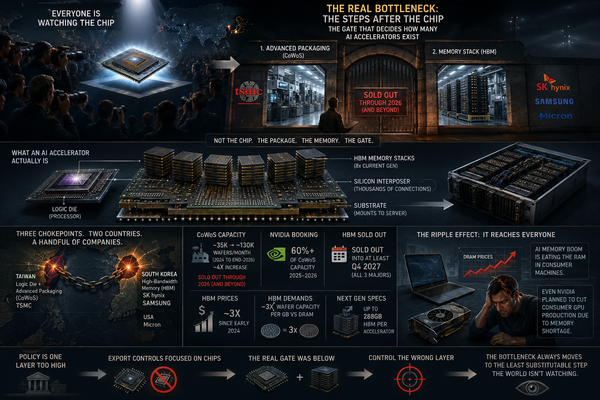
The fabricated chip is not the bottleneck. The advanced packaging that assembles it and the high-bandwidth memory it needs are, and one of those gates is not even in Taiwan.
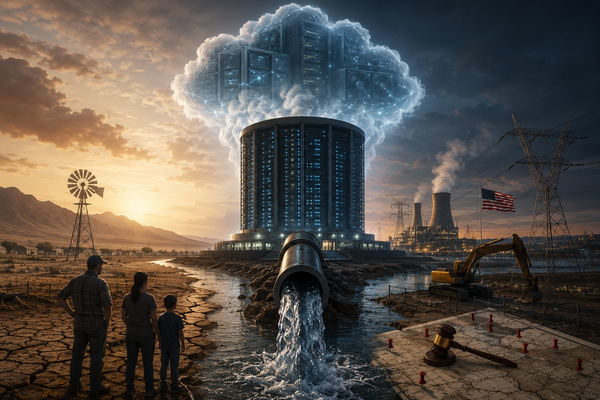
Everyone is watching the models. The determining variable is the water that cools them, drawn from the places that can least spare it.

On the morning of April 28, 1967, in a military induction center in Houston, an officer called out a name. Cassius Marcellus Clay. The most famous athlete on earth, the heavyweight champion
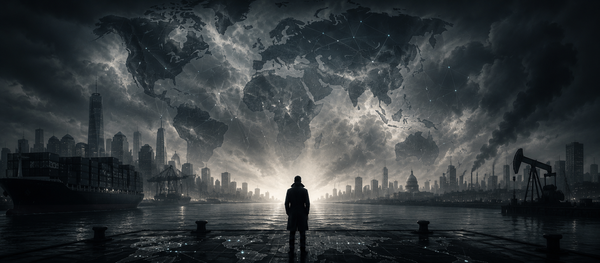
The Strait of Hormuz is open again, but access to it increasingly tracks not a ship's flag but the currency it can settle in. For the dollar fleet it may be a Suez moment: the place where a reserve currency quietly began to lose its grip.
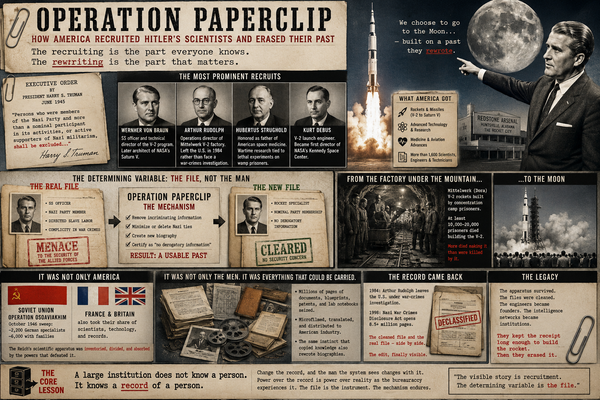
Anne Jacobsen named the program that brought more than 1,600 German scientists to America. The deeper story is what made it possible: not the recruiting, but the rewriting of the record that turned war criminals into citizens.
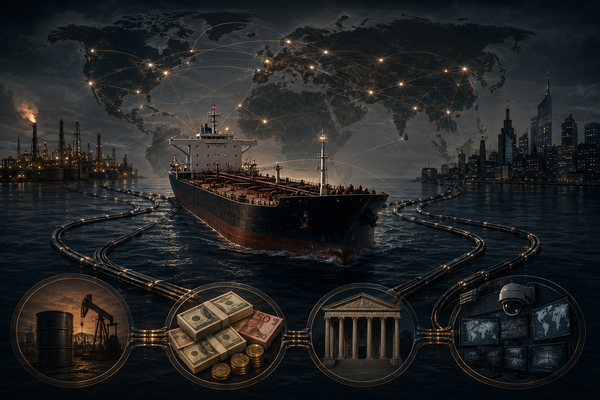
Anne Applebaum named the network of autocrats in Autocracy, Inc. The deeper story is the infrastructure beneath it, much of it built and staffed inside the democracies they are said to threaten.