September 5, 2026. Steve Witkoff and Jared Kushner traveled to Moscow. The American delegation included officials from the National Security Council, State Department, and Treasury. The Russian side was led by Vladimir Putin, his adviser Yuri Ushakov, and Kirill Dmitriev. After the meeting, Ushakov told reporters that the conversation covered the Ukraine framework and also, in his words, prospects for major Russia-US projects, discussed in considerable detail. AP reported the same: economic issues, including potentially large mutually beneficial joint projects, were addressed at length.
The institutional profile of the central American participants is worth examining before the communique. Witkoff built his career in commercial real estate: hotels, mixed-use developments, complex capital stacks assembled from institutional investors and private lenders. Kushner manages Affinity Partners, a private equity firm that raised approximately $3 billion after 2021, largely from Gulf sovereign wealth funds. On the Russian side, Dmitriev holds two concurrent titles: Chief Executive of the Russian Direct Investment Fund and Special Presidential Representative for International Investment and Economic Cooperation. He is simultaneously a fund manager and a diplomatic envoy whose formal mandate is investment and economic relations.
The channel that produced this meeting was not built around career diplomacy. It was built around the overlap between investment, capital structure, and economic cooperation. That choice of channel was not accidental. The assets whose eventual disposition could materially shape the economic architecture of any settlement are not held by Russia. They are held at a European institution, frozen under EU regulation, preserved intact by European legal restraint, and serviced by an interest stream that has partially funded Ukraine's defense. The central envoys now shaping the settlement channel are not the institutions that hold the assets, administer the EU borrowing structure, or bear most of the European legal exposure. The architecture provided for their participation without requiring it.
The Delegation and What It Was Built For
In March 2026, five months before Moscow, Dmitriev met Witkoff and Kushner in Florida. The Moscow Times reported it. The stated subject was Russian energy. What Dmitriev said publicly afterward was more expansive: he spoke of restoring Russia-US economic relations and of Russian oil and gas as central topics. Reuters confirmed the same economic and energy agenda. The Moscow Times added that Russian companies had been asked to prepare proposals for economic cooperation with the United States, and that Moscow was attempting to link business deals to the broader Ukraine peace channel.
That sequence matters more than any single meeting. March established a working economic channel between Dmitriev, Witkoff, and Kushner. September confirmed that this channel had direct access to Putin and produced a substantial conversation about large bilateral projects. The economic dimension of the Ukraine settlement was not raised for the first time in September. It had been in development since at least March, by the same people, around the same institutional functions.
Dmitriev's RDIF was established in 2011 by presidential decree. Its mandate: attract co-investment from foreign sovereign wealth funds and institutional investors into Russian state-adjacent projects. Between 2011 and 2022, the RDIF partnered with sovereign wealth funds from the UAE, Saudi Arabia, China, South Korea, Japan, and Kuwait. Its model was to pair Russian sovereign capital with foreign institutional capital in co-investment vehicles, often preserving significant Russian influence over asset selection and governance while giving foreign investors a structured legal and financial entry point. The arrangements varied in size and design, but the institutional pattern held: foreign capital entered at arm's length while Russian state interests shaped the underlying asset profile.
Dmitriev knows how to build this structure. He has done it across a decade and across multiple jurisdictions. His presence in a channel that is simultaneously discussing the Ukraine peace framework and the disposition of large bilateral economic projects is not background noise. It is the signal. Kushner's investor network includes major Gulf sovereign capital, including institutions from the same regional capital ecosystem in which RDIF had built pre-2022 co-investment relationships. The architecture of reconstruction finance would not need to be invented. A template already exists in the RDIF's pre-2022 co-investment portfolio. The economic channel was built in March. The political meeting confirmed it in September. By the time Ushakov mentioned major bilateral projects, the conversation had already been underway for months.
Three Actors, Three Functions
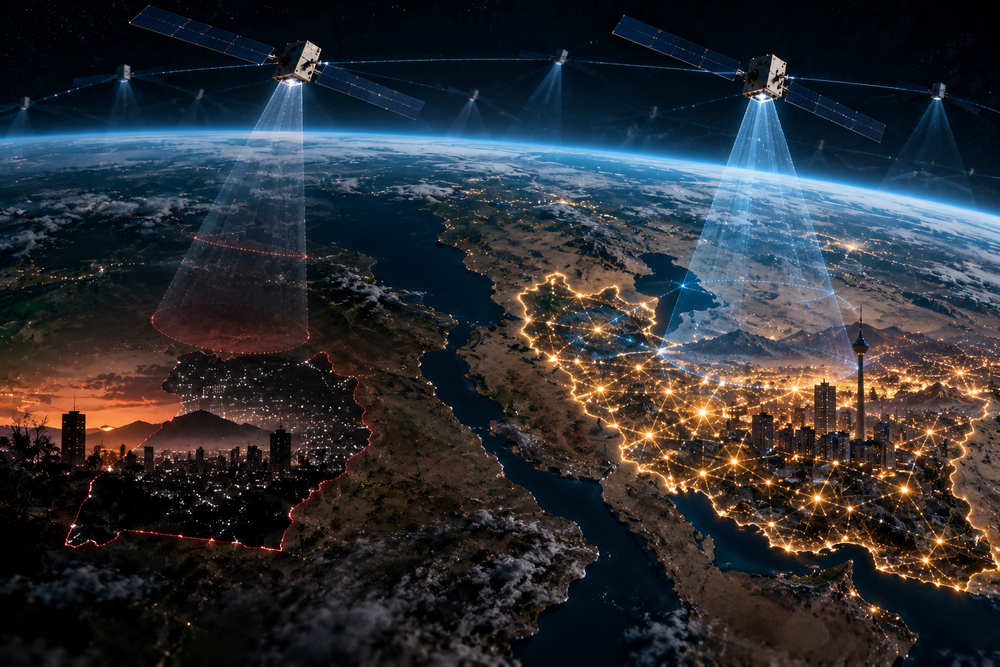
The approximately EUR 210 billion in Russian central bank assets immobilised across the European Union is often described as European leverage, European assets, or Europe's frozen billions. Each of those descriptions is legally imprecise in a way that matters for understanding what the negotiation is actually about.
Russia owns the assets. The Russian central bank holds title to the sovereign bonds, fixed-income securities, and cash positions that were immobilized in 2022. Freezing those assets did not transfer ownership. The assets did not change hands. They became inaccessible. That distinction is the basis of Russia's legal position and of the EU's own caution about what it can do with the principal.
Europe holds and immobilizes the assets. Euroclear, operating under Belgian law and EU regulation, is the custodian. The EU freeze, enacted through Regulation 833/2014 Article 5a(4) as amended, extended by Regulation 2025/2600, prohibits Euroclear from releasing those assets to designated Russian counterparties. Europe's power is jurisdictional and custodial. It can maintain the freeze, it can lift the freeze through a new legal act, and it can use extraordinary revenues generated by the frozen assets within defined limits. It cannot appropriate the principal by administrative decision without triggering significant international legal exposure.
Washington controls financial access. The dollar is the dominant currency for international trade settlement. Most internationally cleared dollar transactions ultimately depend on US-regulated correspondent banking infrastructure. OFAC can prohibit any US correspondent bank from processing transactions involving designated parties, extending US jurisdictional reach globally across dollar-denominated flows. Secondary sanctions extend this further: non-American entities that do significant business with designated Russian counterparties risk losing access to US dollar markets. No major financial institution in any country wants to lose dollar-clearing access. This mechanism operates independent of whether the EU freeze is maintained or lifted. If secondary sanctions remain in force, Russian entities cannot operate at scale in dollar markets even if the EUR 210 billion is released from Euroclear tomorrow.
Russia holds title. Europe holds custody and maintains the immobilization. Washington controls the sanctions layer that determines how far Russian entities can regain access to the wider international financial system. The functions are held by different parties in different jurisdictions, under different legal instruments, with different capacities to act. A settlement that resolves the Ukraine conflict will need to address all three. No single party can reunify title, custody, and financial access unilaterally. Russia needs European legal action to recover the principal and American regulatory relief to use it. That dual dependency is precisely why a settlement requires coordination across Moscow, Brussels, and Washington, and why Washington's role in structuring that coordination is the critical variable.
Russian bonds sit at a Belgian custodian. The custodian cannot release them. The owner cannot access them. OFAC controls what dollar access means for any released assets. Dollar access is what makes the assets economically functional. The party that can restore dollar access is not the party that holds the bonds. That is not a freeze. That is a leverage architecture.
The institution that holds the assets is not in the settlement room. The European institutions and jurisdictions that maintain the immobilisation are not represented in the room. The owner is.
The EUR 210 Billion in Russian Assets Held in European Custody
In 2022, following Russia's full-scale invasion of Ukraine, the G7 and the European Union immobilized approximately EUR 210 billion in Russian central bank reserves held across European custody, the bulk of them at Euroclear, the Belgian central securities depository headquartered in Brussels. Euroclear holds approximately EUR 40 trillion in assets under custody for clients including central banks, commercial banks, pension funds, and sovereign wealth funds from across the global financial system. It is a private financial market infrastructure company, incorporated under Belgian company law, regulated by the National Bank of Belgium and the Financial Services and Markets Authority. It is not an EU institution.
The Russian assets consist primarily of sovereign bonds, other fixed-income securities, and cash positions denominated in euros and other currencies. The EU freeze prohibited Euroclear from releasing these assets to designated Russian counterparties. The assets remained Russian central bank property. They became jurisdictionally inaccessible. Euroclear continued to receive interest and coupon payments on the frozen securities as normal. Those payments, instead of flowing through to the Russian central bank, accumulated in a segregated account under Euroclear's custody.
Euroclear's interest earnings on the sanctioned Russian cash balances varied significantly with rates, reaching roughly EUR 6.9 billion in 2024 and declining thereafter. The EU and G7 structured two complementary mechanisms around these flows: the EU redirected net windfall profits from the immobilised assets to Ukraine directly, while the G7 separately built the Extraordinary Revenue Acceleration loan mechanism around projected future proceeds. The extraordinary revenues were not revenue owned by Russia: they arose from the reinvestment of cash balances generated by the immobilisation itself. This distinction became the EU's core legal argument for using the proceeds without touching the principal.
The EU's own legal service and multiple member state governments advised caution on the principal. Confiscation would expose European states and institutions to substantial litigation and international-law challenges concerning sovereign immunity, property rights, countermeasures, and the protections traditionally afforded to central-bank assets under customary international law. Hungary and Slovakia were among the member states that expressed the strongest reservations. The G7 and EU chose to use only the extraordinary revenues, leaving the principal intact.
The principal remained Russian sovereign property. The immobilisation generated extraordinary cash balances whose reinvestment profits were redirected to support Ukraine. The principal's continued existence preserved an instrument whose disposition no one in Brussels had publicly defined.
How Europe Financed Ukraine Without Touching the Principal
The extraordinary revenue stream, while substantial, was insufficient as a primary financing instrument for a war whose costs ran into the hundreds of billions. Europe needed to supplement it with its own balance sheet.
In December 2025, the European Council agreed on a EUR 90 billion loan facility for Ukraine to be disbursed in 2026 and 2027. The structure of this loan is the key to understanding Europe's financial position in the settlement. The loan is financed through EU capital-market borrowing and backed by EU budget headroom under an enhanced-cooperation structure involving 24 member states, with Hungary, Slovakia, and Czechia explicitly excluded from the financial obligations of the guarantee. Ukraine is not expected to repay it from ordinary revenues. The European Council has explicitly linked repayment to future Russian reparations and reserved the right to use the immobilised assets for that purpose should reparations not materialise.
Until reparations are received, the Russian assets remain immobilized in the EU. The formal logic of the structure is: Europe lends EUR 90 billion against its own balance sheet. Russia owes reparations as a result of the unlawful invasion. Reparations, when received, will repay the European loan. Russian assets remain immobilized while the legal and political framework for eventual compensation remains unresolved. The structure does not treat the EUR 210 billion as collateral in the conventional sense of an asset that will be liquidated to repay the loan. It treats the Russian assets as part of a broader reparations architecture that European and international institutions are building around the peace framework.
This means that the EUR 90 billion loan and its repayment mechanism are directly linked to the reparations architecture of whatever peace deal emerges. European fiscal capacity now stands behind a EUR 90 billion loan whose repayment is explicitly contingent on future Russian reparations. Any settlement that determines Russia's reparation obligations or the disposition of immobilized Russian sovereign assets therefore intersects directly with the financial architecture Europe has created. The settlement being shaped in Moscow will determine the environment in which those repayment claims must eventually be resolved. Europe is not represented in Moscow. It borrowed against its own fiscal capacity while linking repayment to a reparations architecture that depends on a peace framework it did not design.
The Mechanism Washington Controls That Brussels Cannot Operate
The assumption that Europe holds decisive leverage because it controls the Euroclear freeze rests on the three-actor analysis established above. Brussels controls the custody and immobilization. Washington controls financial access. Those are different functions. The party that can provide meaningful relief from economic pressure is not the same as the party that holds the assets in custody.
Russian economic pressure since 2022 has operated through two primary American instruments. The first is dollar-clearing restrictions. Most internationally cleared dollar transactions ultimately depend on US-regulated correspondent banking infrastructure. OFAC can prohibit any US correspondent bank from processing transactions involving designated parties, extending US jurisdictional reach globally across dollar-denominated flows. Designated Russian entities, and counterparties exposed to US secondary-sanctions risk, face severe constraints on dollar clearing without US regulatory relief, regardless of whether Euroclear remains frozen.
The second instrument is secondary sanctions. Any non-American entity that does significant business with designated Russian counterparties risks losing access to US dollar markets. This mechanism operates independent of EU policy. A Chinese bank, a Turkish intermediary, a UAE trading firm that deals with designated Russian entities faces US Treasury designation regardless of what the EU's sanctions list says. The EU can sanction third-country intermediaries and restrict access to European markets, but it does not possess an instrument with the same systemic global reach as exclusion from US dollar clearing.
This asymmetry has one practical consequence: the party that can provide meaningful sanctions relief to Russia is not Brussels. If Washington softens secondary sanctions enforcement, Russian entities gain substantial operational room in global markets even if the Euroclear freeze remains in place. The reverse is not symmetrically true. If the EU releases the EUR 210 billion while secondary sanctions remain in force, Russian entities receive their assets back but still cannot operate in dollar markets. The layer that gives the sanctions architecture its widest extraterritorial financial reach is American. The layer that can relieve that reach is American.
Russia's engagement with Washington through the Witkoff-Kushner-Dmitriev channel is the correct identification of where sanctions relief authority sits. It is not a diplomatic preference. It is the logical consequence of the three-actor structure.
Brussels controls custody. Washington controls access. Russia called Washington.
Washington Was Not a Neutral Entrant
Washington did not enter the Ukraine conflict on February 24, 2022. By then it had spent years inside the political, military, and strategic architecture that preceded the invasion. Any account that introduces the United States only after Russian troops crossed the border removes the upstream actor from the upstream history.
Washington knew the risk. Its own ambassador told it. In 2008, William Burns warned Washington that Ukrainian NATO membership cut across Russian political red lines far beyond Vladimir Putin's immediate circle. The cable's title was blunt: Nyet Means Nyet. Weeks later, NATO declared that Ukraine and Georgia would become members. The risk was documented. The policy continued.
Washington was not standing outside Ukraine's political rupture in 2014. The Nuland-Pyatt call does not prove that the United States controlled Maidan. It proves something narrower and sufficient: senior American officials were discussing Ukrainian political personalities and preferred configurations while the crisis was still unfolding. That is participation in the political environment, not observation from a distance.
After 2014, political alignment became military integration. Training expanded. Weapons flowed. Intelligence cooperation deepened. NATO interoperability increased. Ukraine moved closer to the Western security system without receiving the treaty guarantee that would have forced the West to fight Russia directly. Washington increased Ukraine's strategic alignment while keeping America's automatic military obligation below the Article 5 threshold. Moscow saw the first movement. Washington retained the second.
By December 2021, the contradiction had become explicit. Moscow demanded legally binding guarantees that NATO would not expand further eastward, including into Ukraine. Washington rejected the demand that another state could determine Ukraine's alliance choices, while offering negotiations on arms control, missile deployments, exercises, and transparency. Both positions were intelligible. They were also incompatible. The security architecture Washington had been warned about in 2008 had reached the point at which neither side would accept the other's minimum condition.
Two months later, Russia invaded.
That sequence does not transfer the decision to invade from Moscow to Washington. It establishes something more important for this analysis: Washington was not surprised by the structural fault line. Its own diplomats had identified it years earlier.
Putin's own writings and speeches also went beyond NATO, questioning elements of Ukrainian historical statehood and framing Russians and Ukrainians as parts of a common historical whole. Those claims complicate any monocausal NATO explanation. They do not erase the security architecture Washington itself had repeatedly been warned could produce confrontation.
Russia launched the full-scale military invasion on February 24, 2022. That establishes military initiation. It does not erase the prewar architecture that preceded it.
The same power appears before the military rupture, throughout the coercive architecture that followed it, and at the table designing normalization after it. Three different phases. The same institutional center of gravity.
Washington was not merely called in to settle a European war. It was embedded in the architecture that preceded the war, central to the architecture that sustained Ukraine during it, and now central to the architecture being designed to end it.
The Weapons That Did Not Buy a Seat
Europe was asked to convert alignment into exposure. It did.
Weapons left European inventories. Europe aggressively reoriented its energy systems away from Russian supply, at substantial economic cost, while residual Russian gas flows continued to several member states including Hungary, Slovakia, and Greece. Governments guaranteed new borrowing against their own fiscal capacity. Russian sovereign assets were immobilized inside European jurisdiction, with repayment of the resulting EUR 90 billion loan tied to reparations not yet agreed. Artillery systems, air defense batteries, armored vehicles, drone technology, F-16 jets from Denmark, the Netherlands, and Belgium. European rearmament programs launched simultaneously at significant fiscal and political cost. Many of those decisions carried domestic political costs and depleted existing stockpiles. None of it came with a seat.
Europe accumulated costs. Washington accumulated a different and more immediately usable form of negotiating leverage.
The weapons transferred operational capacity to Ukraine. They did not transfer settlement authority to Europe. That is not a paradox unique to this war. Parties that supply a conflict do not automatically sit at the table that ends it. But the combination of weapons delivery, fiscal commitment, asset custody, and EU institutional exposure to the reparations architecture makes Europe's absence from the settlement channel analytically specific, not general. Each of those four contributions gave Europe something that looked like leverage. None of it translated into settlement authority.
Europe absorbed a disproportionate share of the war's geographically concentrated economic, energy, refugee, fiscal, and stockpile costs. The exit is being designed elsewhere.
What Capital Negotiations Produce That Diplomatic Ones Cannot
Understanding why fund managers and investment envoys are appropriate for this stage of the conversation requires examining what postwar settlements actually need to produce. A diplomatic agreement specifies the cessation of hostilities, the disposition of territory, and the political framework for the postwar relationship between states. A postwar economic settlement specifies something different: who owns what infrastructure, on what legal basis, financed by whom, under what governance arrangements, with what return expectations, and through what mechanism for dispute resolution. These are capital structure questions.
Ukraine's reconstruction, if a settlement is reached, will require capital at a scale that no government budget can supply alone. The latest joint World Bank-led assessment, the RDNA5 published in early 2026, puts Ukraine's reconstruction and recovery needs at approximately $588 billion over the coming decade. That capital will require sovereign wealth fund participation, private equity, infrastructure funds, and development finance institutions from multiple geographies. The Gulf sovereign wealth funds are among the largest pools of deployable capital in the world. They were also, through the RDIF partnership architecture, co-investors in Russian state-adjacent projects before 2022.
The RDIF's pre-2022 co-investment portfolio is not merely historical context. It is an existing template. The structure that allowed Gulf capital to enter Russian infrastructure projects at arm's length consisted of sovereign capital, legally separated vehicles, defined foreign returns, and politically managed operating control. That template could be adapted to postwar reconstruction: a vehicle involving released Russian capital and Gulf co-investment, structured to give foreign partners political distance while preserving Russian state influence over the underlying assets. No public evidence currently establishes that such a structure is under discussion. What is established is that the people in the room built it before, and the people across the table ran it. Dmitriev knows how to build the structure. Kushner has relationships with the same sovereign wealth funds. Witkoff brings capital stack expertise at scale.
The Moscow channel combines diplomatic authority with private-capital and sovereign-investment experience in a way that differs markedly from the EU's institutional reconstruction machinery. The EU's reconstruction finance instruments, the European Investment Bank and European structural funds, operate through established member state channels. They are not designed for joint ventures with former adversaries involving frozen sovereign assets and third-party sovereign wealth capital. The delegation composition for the Moscow channel reflects the stage of the negotiation that is actually underway: not the political settlement, which governments will announce, but the economic architecture of that settlement, which fund managers and investment envoys will design.
The political settlement, if it comes, will be announced by heads of state. The economic architecture of that settlement is being designed now, in rooms that contain fund managers.
Europe Has a Veto. It Does Not Yet Have a Design.
The most analytically significant feature of the September 5 meeting is not what was disclosed. It is what was not said in Brussels, Berlin, Paris, and Warsaw.
European governments are aware of the Euroclear architecture. They negotiated the original freeze. They agreed to the EUR 90 billion loan structure and its reparations-linked repayment mechanism. Several EU member states expressed legal concerns about the principal during the 2024 and 2025 deliberations. The European Commission has published legal assessments of the asset disposition question. European finance ministers have discussed the extraordinary revenues mechanism in public statements.
European leaders, including Belgian Prime Minister Bart De Wever, have articulated explicit conditions around the principal, including that the assets must remain immobilised and that any disposition should be tied to a peace treaty. What remains absent is a unified European negotiating position on how the principal should be treated inside a final US-Russia-Ukraine settlement architecture, or a formal European mechanism for participating in the capital dimension of the channel now operating through Moscow.
Europe has articulated defensive red lines around confiscation and legal risk more clearly than an affirmative settlement design. That is consistent with a blocking role. It does not yet demonstrate a shaping role.
A competing reading holds that European governments are preserving diplomatic flexibility on asset disposition deliberately. That is plausible. What it does not explain is the absence of a unified European position on what a settlement involving the principal would need to contain. Europe can block an outcome it has not defined. The documented record does not yet show Europe shaping the outcome it would accept.
The architecture is visible in the sequence of documented events. The sequence is not being read as a sequence.
The Strongest Counterargument
The strongest counterargument to this reading does not dispute the documentary record. It accepts that Witkoff, Kushner, and Dmitriev are fund managers and investment envoys; that the EU chose to leave the Russian principal intact; that Washington controls the secondary sanctions mechanism; and that the September meeting included substantial discussion of economic projects. It argues instead that this pattern is unremarkable. Wars end in negotiations between the parties that fought them and the powers that principally enabled the fighting. Europe is excluded from the primary table not because it is being traded, but because it lacks the military leverage and diplomatic weight that a seat requires. The United States supplied the weapons systems, the intelligence sharing, the financial backstops, and the strategic coordination that kept Ukraine operational. Russia made the decision to invade. European countries provided material support but no combat forces and limited strategic direction. Europe's absence reflects institutional incapacity, not a role as collateral.
This counterargument is structurally serious and accurately describes why Europe lacks a primary seat. The reading offered here does not dispute that claim. It claims something narrower: that ownership, custody, financing, sanctions relief, and settlement authority have ended up distributed across different governments and institutions, and that the party managing the settlement channel is not the party responsible for custody, financing, or material war support. Washington's role is also not captured by "the power that principally enabled the fighting" alone. The architecture presented here traces Washington across four consecutive phases: the prewar security structure it helped design, the military and intelligence support it provided after the invasion, the sanctions enforcement mechanism it controls, and the settlement channel it now leads. A party can lack a primary seat and simultaneously be the party whose resources determine the economic architecture of the postwar settlement. Europe's absence from the negotiation does not remove it from the transaction. The counterargument explains why Europe lacks leverage. It does not explain who has the power to reunify ownership, custody, war financing, sanctions relief, and settlement authority, and under what terms. It does not explain what that reunification will cost Europe, or who will determine the price.
A competing European reading treats custody of the EUR 210 billion as Europe's strongest remaining source of leverage: full Russian economic normalization involving recovery of its immobilised sovereign reserves cannot occur without a European legal act. On this reading, Europe's custodial authority constitutes a structural blocking position regardless of who leads the negotiating channel, because full Russian economic normalization cannot proceed without a European legal act. That reading identifies something real. Where it stops short is in assuming that a blocking position translates into a shaping position. Europe can prevent an outcome it has not defined. What the documented record does not show is the capacity, or the willingness, to define the outcome it would accept on its own terms.
September 5, 2026. The visible American channel for the Ukraine settlement was led by a commercial real estate developer and a private equity manager. They met Russia's presidential investment envoy and fund manager. NSC, State, and Treasury officials attended. Ushakov confirmed that large bilateral economic projects were discussed in considerable detail.
What is not yet documented is whether the EUR 210 billion principal is explicitly on the table in Moscow. That remains the open inference.
What is documented is the architecture around it.
Russia owns the assets. Europe holds them. Washington controls the sanctions layer with the widest global reach.
Europe supplied weapons, absorbed economic disruption, immobilized Russian capital, and placed its own fiscal capacity behind Ukraine. None of those functions produced proportional authority over the settlement.
That authority accumulated elsewhere.
The same power that helped shape the security architecture before the war became the indispensable external coordinator during it and now occupies the channel through which normalization is being negotiated.
Europe helped finance the confrontation.
Europe is helping finance what comes after it.
Europe may possess the veto without possessing the design. Washington may possess the design without possessing the assets. Russia possesses the title without possessing the access.
Washington may negotiate an architecture that Europe can prevent but did not design. That is not an indictment. It is a description of how the machine currently distributes capability across different institutions, jurisdictions, and balance sheets.
At the table where the transition between the two is being structured, Europe appears principally on the balance sheet.
Evidence Map
Core claim: The September 2026 Moscow settlement channel was built around investment and economic functions on both sides, while approximately EUR 210 billion in Russian central bank assets immobilised across the EU remain outside the settlement room, alongside European fiscal commitments under a EUR 90 billion loan whose repayment is linked to future Russian reparations and therefore intersects with any settlement addressing compensation or asset disposition. Washington's position spans the full arc: prewar security architecture, wartime military coordination, sanctions enforcement, and settlement channel leadership.
Competing hypothesis analysis (H1/H2/H3): H1: (this reading) Washington holds disproportionate settlement authority because it controls the sanctions relief mechanism Russia requires for economic normalization; European custodial authority is real but operationally downstream of the access mechanism. H2 (European leverage decisive): Euroclear custody constitutes a structural blocking position; Europe holds a legal veto over any settlement requiring principal release; the Witkoff-Kushner channel facilitates but cannot finalize without European consent. H3 (military facts determine settlement): territorial and military outcomes will determine what any settlement contains; economic and capital architecture follows from political agreement rather than shaping it; the September channel is parallel, not primary. The weight-bearing assumption in this analysis is that Dmitriev's presence reflects RDIF's institutional function as a reconstruction finance vehicle, not ceremonial diplomatic signaling. If that assumption fails, H1 weakens; the sanctions relief argument holds independently. Evidence is most consistent with H1 on the access mechanism and does not resolve H2 versus H1 on the blocking position question. Both can be simultaneously true.
Observed conditions (high confidence, directly documented): Witkoff-Kushner-Putin-Dmitriev meeting September 5, 2026: confirmed by Washington Post, Al Jazeera, AP. NSC, State, Treasury officials accompanying American delegation: reported by ABC. Ushakov post-meeting statement on economic projects discussed in considerable detail: confirmed by wire services, official Kremlin readout. March 2026 Dmitriev-Witkoff-Kushner energy and economic meeting in Florida: Moscow Times, Reuters. Dmitriev public statements on restoring Russia-US economic relations and role of Russian oil and gas: Moscow Times. Approximately EUR 210 billion Russian central bank assets immobilized across the EU, primarily at Euroclear, under Regulation 833/2014 Art. 5a(4) as amended by Regulation 2025/2600: documented since 2022. EU windfall profit redirection to Ukraine and G7 Extraordinary Revenue Acceleration mechanism: documented in G7 communique and EU Council decisions. Euroclear interest earnings on sanctioned Russian cash: approximately EUR 6.9 billion in 2024, declining in 2025 (Euroclear annual reports). EU December 2025 EUR 90 billion loan facility under enhanced-cooperation structure involving 24 member states, reparations-linked repayment: European Council conclusions December 2025. RDIF co-investment partnerships with Gulf sovereign wealth funds 2011-2022: RDIF annual reports and partner fund disclosures. Bucharest 2008 NATO declaration on Ukraine and Georgia membership: documented in summit communique. Security negotiations December 2021-February 2022: documented through public proposals and diplomatic correspondence.
Documented structural dependencies (medium-high confidence): Dollar-clearing architecture as US jurisdictional instrument: documented through OFAC authority and correspondent banking regulatory framework. Secondary sanctions extraterritorial reach: documented through multiple enforcement actions against non-US entities. EU legal incapacity to appropriate Russian central bank assets principal without separate legal instrument: documented in European Commission legal assessments and member state deliberations. RDIF co-investment template as portable capital structure: documented through pre-2022 joint venture formation. Affinity Partners Gulf sovereign wealth fund investor base: reported at fund formation. European weapons transfers as material contribution without settlement authority: documented through individual government defense ministry announcements. Progressive Ukrainian military integration with Western structures post-2014: documented through training programs, equipment transfers, and interoperability agreements.
Analytical inferences (medium confidence): The economic channel established in March was continuous with the September meeting by personnel and agenda. The Dmitriev-Witkoff-Kushner channel provides a plausible bridge between RDIF-style sovereign co-investment structures and future reconstruction finance. Russia's engagement with Washington rather than Brussels reflects correct identification of where sanctions relief authority sits. European silence on asset disposition terms is consistent with, though not proof of, institutional exclusion from the capital dimension of the settlement. The EUR 90 billion repayment structure linked to reparations creates a direct European financial dependency on the settlement architecture being negotiated in Moscow without European representation. Washington's presence across all four phases of the conflict arc is a structural pattern, not a series of unrelated decisions.
What would confirm this: A joint communique or documented negotiating agenda that names EUR 210 billion asset disposition as a settlement component. Reporting on explicit EU exclusion from capital-dimension discussions. Follow-on Dmitriev-Kushner meetings with financial institution or sovereign wealth fund participation. Announced reconstruction finance structure incorporating RDIF-template co-investment architecture. EU formal position on conditions for asset disposition in a settlement framework.
What would disprove this: Documentary evidence that EU representatives participated in the September meeting's economic component or parallel asset-disposition discussions. Evidence that the EUR 210 billion principal has been committed to Ukrainian reconstruction on terms independent of any peace settlement. Evidence that Ushakov's major bilateral projects reference was exclusively forward-looking with no connection to frozen asset disposition. Announcement of a formal European mechanism for participation in the capital dimension of settlement negotiations.
Open inference: Whether the EUR 210 billion principal is explicitly under discussion in the Moscow channel is not documented. The presence of investment-function participants on both sides, the documented economic agenda since March, and the reparations-linked repayment structure of EU financing are consistent with the principal being a background parameter of the settlement architecture. They do not establish that it is an explicit negotiating item. This is the claim's outer boundary. It should be read as Claim C, not Claim A or B.
Watchlist: Euroclear regulatory decisions on asset release procedures. Secondary sanctions enforcement changes under current US Treasury leadership. Follow-on Dmitriev-Kushner meetings with financial institution participation. EU formal response if settlement terms are announced that affect the EUR 210 billion. World Bank, EBRD, or sovereign wealth fund participation in announced reconstruction finance structures. Russian reparations framework: any formal agreement or proposal that determines the repayment timeline for the EU's EUR 90 billion loan.
Confidence assessment: September meeting and documented economic agenda: Claim A. March economic/energy continuity: Claim A, Transmission B. EUR 210 billion Russian assets in EU custody: Claim A. Extraordinary revenues mechanism: Claim A. EUR 90 billion EU loan, reparations-linked repayment: Claim A. Capital dimension linked to peace channel: Claim B, Transmission B, Causaliteit B, Synthesis C. EUR 210 billion principal as explicit settlement instrument: Claim C. European absence from the September Moscow economic channel: Claim A. Broader European exclusion from parallel capital discussions: Claim C. Washington prewar architecture link: Claim B, Transmissie B, Causaliteit C. Bewijsniveaus overall: Claim B | Transmissie B | Causaliteit C | Synthese C.
The sanctions mechanism that makes Washington the decisive party on economic normalization has three documented layers in the archive. Epic Fury Ended May 5. Hormuz Was Still Closed May 6. traces the OFAC and war powers architecture that operated during the Hormuz closure, and where leverage sat when both sides needed an exit. The Architecture Cannot Move establishes how energy dependency, defense contracts, and dollar hegemony locked into structural tension that the Moscow channel is now designed to partially unwind. Everyone Is Watching the Iran War. Nobody Sees Why It Cannot End. documented the sanctions architecture that eliminated the space for compromise, the same architecture whose partial dismantling would be required for the economic normalization now being discussed through the Moscow channel.
Jerry van der Laan is an independent analyst and the author of The Manifest Archive.
Related from The Manifest Archive
- Putin Made His Position Clear in 2007. He Made It Formal in 2021. The West Called Both a Threat. The Invasion Followed Two Months After the Second.
- Russia Threatened Britain. The CIA Arrived in Moscow the Next Day.
- China's Iran Leverage: The Exit No One Else Controls
- China, Russia, Iran: The Wars Eliminating Choices