Introduction
The problem is not that Europe is afraid of war.
The problem is that Europe is dealing with an ally that has, for decades, demonstrated aggressive behavior whenever its strategic interests are threatened.
This behavior is not an incident and not a misunderstanding. It has been visible across war after war, through economic pressure campaigns, legal exceptions, and a consistent willingness to stretch or ignore limits when power demands it. Again and again, moral, legal, and human constraints have proven subordinate once they became inconvenient.
Europe was able to live with this for a long time because interests overlapped. Because protection was offered. Because dependency was framed as partnership. That phase is ending. What remains is a power relationship that no longer conceals its asymmetry.
People feel this. Not because they read geopolitical theory, but because the consequences touch their lives. Higher prices, structural uncertainty, political language that replaces explanation with discipline. The discomfort does not come from panic, but from recognition.
“This pattern is familiar. It just has not been applied inward before.”
This piece does not look forward with a crystal ball. It looks backward at behavior and draws scenarios from it. Not to incite fear, but to clarify what stands at the door when aggressive power usage, long normalized elsewhere, begins to move toward Europe itself.
A Pattern, Not a Crisis
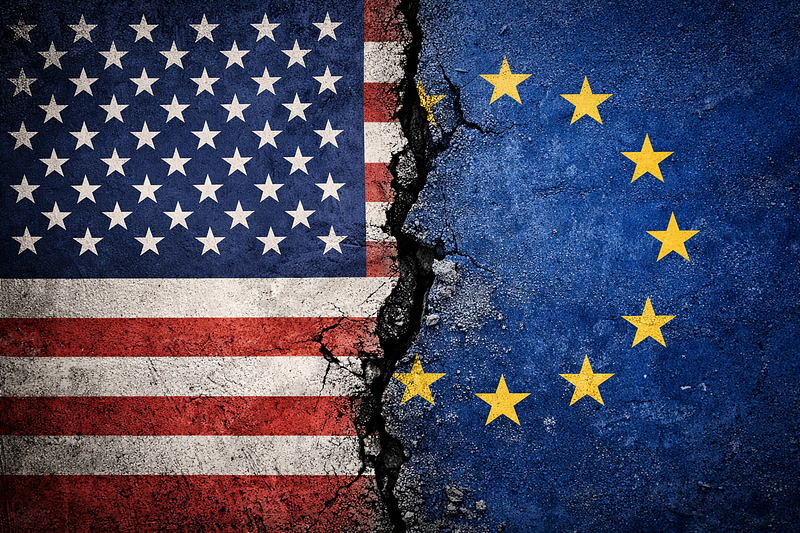
What is unfolding between Europe and the United States is not a temporary crisis or a communication failure. It is the visible outcome of a pattern that has existed for decades, but was largely applied outside Europe.
When American strategic interests are perceived to be at risk, restraint rarely follows. Escalation does. Sometimes military, sometimes economic, sometimes legal, sometimes narrative. The domain changes. The logic does not.
Vietnam was not an anomaly later corrected. Korea was not an exception. Iraq, Afghanistan, Yugoslavia, Libya, and Syria followed different justifications, but revealed the same structure. Moral urgency first. Legal flexibility during execution. Withdrawal without accountability afterward.
The constant is not ideology. It is outcome.
“Limits hold until they obstruct strategic movement.”
Limits hold until they obstruct strategic movement. Once they do, they are renegotiated or ignored. This is not a flaw of character. It is the logic of power.
Europe understood this.
It simply did not have to live under it.
Post–World War II Power as System
After World War II, the United States did not merely emerge victorious. It emerged architecturally dominant. Military supremacy was paired with financial design, legal reach, and institutional embedding.
Bretton Woods was not a neutral framework. It was a monetary order built around the dollar as reserve currency, anchoring global liquidity to American policy decisions. Stability became inseparable from American consent.
The Marshall Plan, often remembered as generosity, functioned simultaneously as economic reconstruction and political alignment. Aid flowed, but so did conditions. Industrial rebuilding occurred inside a framework that assumed American leadership as permanent.
This was not coercion. It was structural alignment.
Military institutions followed the same logic. NATO was not merely defensive. It standardized threat perception, doctrine, procurement, and escalation thresholds. European security thinking became interoperable with American priorities long before it became autonomous.
Over time, American power ceased to appear as power.
It became order itself.
From Partner to Terrain
For decades, the transatlantic relationship was presented as equal. Not because power was equal, but because dependency appeared mutual.
Europe offered legitimacy and geography. The United States offered protection and direction. As long as this exchange functioned, asymmetry remained manageable.
That balance has disappeared.
Europe is now treated less as a partner in decision-making and more as a space where decisions are implemented. Loyalty is assumed. Costs are displaced.
Europe did not become an adversary.
It became terrain.
“Europe did not become an adversary. It became terrain.”
A buffer between strategy and consequence.
Complicity Was a Choice
Europe did not simply fall into dependency.
It accepted it.
Security was outsourced. Strategic thinking deferred. Military capacity allowed to erode. Not by accident, but by political choice.
American power was tolerated not because it was benevolent, but because it was useful. As long as escalation occurred elsewhere, Europe benefited. Cheap security, moral distance, and plausible deniability came at a price paid by others.
This was not ignorance.
It was calculation.
The shock today does not stem from a sudden change in American behavior.
It stems from Europe discovering that it is no longer exempt from the consequences of a system it helped sustain.
That does not absolve the primary aggressor.
But it removes Europe’s claim to innocence.
Aggression Without Invasion
Aggression does not require tanks.
Economic pressure, trade restrictions, subsidy regimes, legal extraterritoriality, financial leverage. These are not neutral tools. They are instruments of power.
What is new is not their use.
It is where they are now being applied.
Europe absorbs sanction costs it did not design. Industry migrates. Inflation rises. Strategic flexibility remains elsewhere.
This is not cooperation.
It is hierarchy.
Silence Has a Price
Germany is not ignorant of what happened to Nord Stream.
It is constrained by it.
The destruction of critical energy infrastructure was not an accident and not a mystery. It required state-level capabilities. It occurred in allied waters. It collapsed Germany’s industrial cost structure.
What followed was not outrage.
It was adaptation.
Higher costs were absorbed. Production moved abroad. Expensive alternatives accepted. Not because the truth was unknown, but because acknowledging it would expose a hierarchy that cannot be challenged without consequence.
This is not confusion.
It is discipline.
The price of confronting power has become higher than the price of economic self-destruction.
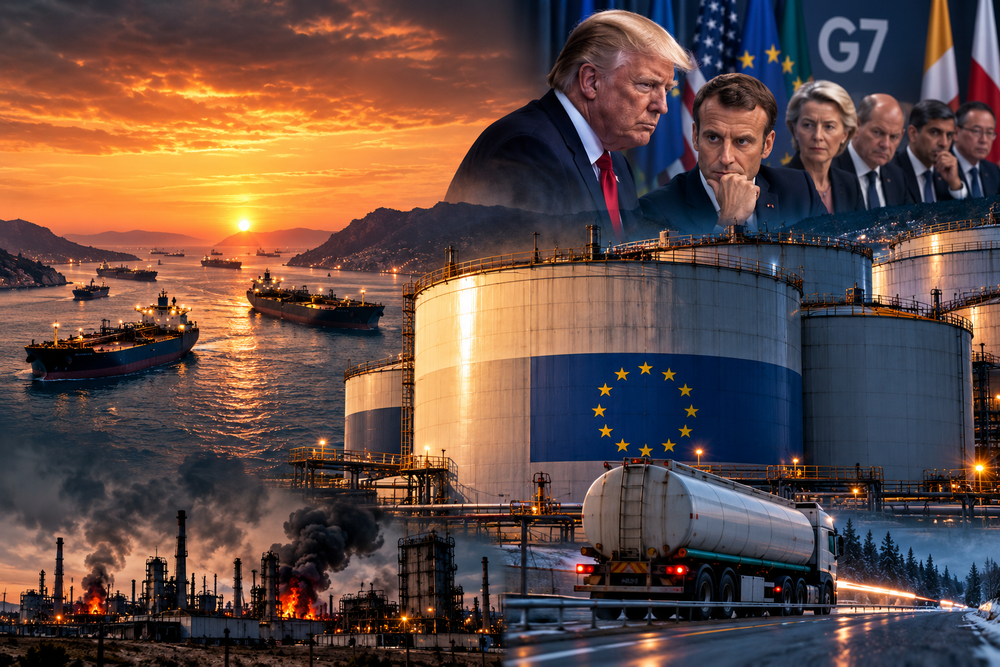
Energy as Weapon: From Dependency to Discipline
Energy was never neutral. It was leverage disguised as market logic.
The United States opposed Nord Stream long before Ukraine. Not because of European vulnerability, but because the pipeline reduced American influence over European energy.
American LNG was never competitive. It did not need to be. Once alternatives were removed, price ceased to matter. Alignment replaced efficiency.
Energy policy did not fail.
It was repurposed.
War Was Not an Accident
Europe was not surprised by the war in Ukraine.
It had been moving toward it for years.
Military integration, doctrinal alignment, intelligence cooperation. Each step defensive in framing, escalatory in effect.
Earlier political assurances eroded. Buffer zones disappeared. Neutrality collapsed into ambiguity.
Diplomatic alternatives existed. They were not pursued to exhaustion.
The invasion was an action.
The conflict was the result of a long chain of reactions.
Europe did not stumble into war.
It followed a trajectory it had helped normalize.
The Discipline of Allies
Allies are not controlled through force.
They are shaped through incentives.
Access, exemptions, liquidity, intelligence. Compliance is rewarded. Hesitation encounters friction.
Europe’s fragmentation makes this effective. Pressure need not be uniform. It need only be selective.
Escalation becomes internalized.
Why Europe Never Acted
Europe has institutions.
It does not have strategic culture.
Values replaced strategy. Legalism replaced power assessment. Autonomy remained rhetorical.
When crises emerged, Europe reacted.
It did not initiate.
Europe did not choose irrelevance.
It drifted into it.
What a Future Without Guarantees Looks Like
Europe without guarantees will not collapse.
It will compress.
Defense becomes fiscal burden. Energy constraint. Industry exposure. Diplomacy loses translation.
Nothing breaks.
Everything tightens.
This is not independence.
It is exposure.
The Question Europe Can No Longer Avoid
This is not an argument for hostility.
It is an argument for clarity.
Over decades, the United States has demonstrated a willingness to escalate force, pressure, and legal reach when interests are threatened. Europe lived with this as long as effects remained external.
That condition no longer holds.
Loyalty no longer guarantees reciprocity. Dependence has become liability.
The question is not whether Europe should distrust its ally.
It is whether Europe is willing to recognize power when it no longer disguises itself as partnership.
Escalation advances quietly. Through markets before armies. Through pressure before force. Through normalization before rupture.
Denial is no longer viable.
Europe must define boundaries without guarantees, autonomy without assurance, and consequence without cover.
That is not alarmism.
It is pattern recognition.
If this pattern is allowed to continue, it does not produce rupture but compression. Europe does not lose its ally in a single moment, nor does it regain autonomy through a decisive act. It enters a system in which choices narrow, costs are structurally displaced, and political space increasingly consists of adaptation rather than direction. Power remains formally shared, yet functionally drifts further away from those who absorb its consequences. This is not a conspiracy and not a crisis. It is what hierarchical systems do when they turn inward. What once operated at the margins becomes internalized, normalized, and administered.
What is becoming visible is not a change in intention, but clarity in structure.
And that clarity cannot be folded back into the story.
Related from The Manifest Archive