Introduction, the war you were told
The scripted beginning
The war in Ukraine is not the war you were told. From the first hours of February 2022, Western media presented a narrative ready-made for headlines: an unprovoked invasion, a ruthless aggressor, a heroic defense. The script carried the clarity of moral theater: light against darkness, certainty against uncertainty. But like all scripts, it concealed as much as it revealed.
Wars do not begin on the days newspapers mark. They gather in fragments: in silences that seemed unimportant, in treaties signed and then betrayed, in years of death that passed unnoticed outside their own borders. By the time missiles fell, the ground was already prepared.
If we want to understand this war, we must begin before 2022.
“What was told was not the truth, but the performance of truth.”
The square of fire, Maidan 2014
From civic plaza to fortress
The winter air in Kyiv cut like glass. By January 2014, Independence Square, Maidan, no longer resembled a civic plaza. It was a fortress. Piles of tyres, timber, and scrap metal blocked the avenues. At night they burned, columns of black smoke twisting into the frozen sky, flames casting shadows on thousands who refused to leave.
What had begun as a procedural decision, President Viktor Yanukovych’s refusal to sign an association agreement with the European Union, became symbol. For some, it was betrayal of a European future. For others, pragmatism to balance Moscow. Politics hardened into banners and portraits. Blue-and-yellow flags waved beside far-right emblems. Icons of nationalist figures from World War II appeared alongside the circle of EU stars.
The foreign presence
Western politicians walked the square. U.S. Senator John McCain addressed the crowd, scarf wrapped tight against the cold, promising solidarity. Other officials shook hands in front of cameras. A leaked phone call between U.S. diplomat Victoria Nuland and Ambassador Geoffrey Pyatt revealed frank discussions about who should form Ukraine’s next government. “Yats is the guy,” Nuland said, naming Arseniy Yatsenyuk. Within weeks, he was prime minister.
Fire and fracture
By February, snipers appeared on rooftops. Shots cracked into the crowd. Protesters fell. Policemen fell. More than a hundred people died in days. Their portraits, the “Heavenly Hundred,” were raised in mourning and defiance. Yanukovych fled.
In Washington and Brussels it was celebrated as revolution. In Moscow it was condemned as coup. For Ukraine it was fracture. Crimea soon voted in a contested referendum to join Russia. Donetsk and Luhansk declared independence.
The square of fire in Kyiv had lit something far larger, and far harder to extinguish.
The war before the war, Donbas and Minsk
A battlefield in silence
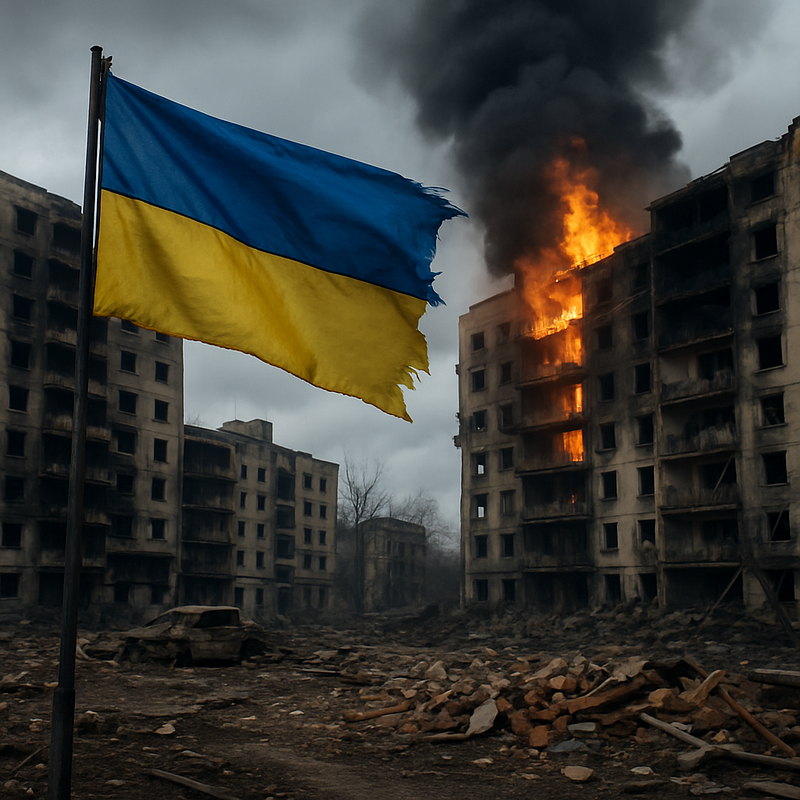
By late 2014, Donetsk and Luhansk were trenches cut into the steppe. Villages emptied, factories halted, schools abandoned. Over the next eight years, more than fourteen thousand people were killed. The world looked away. For those in the Donbas, the war never stopped.
What the West called peace was, for the east, an unending war.
“To the outside world the war began in 2022. For Donetsk and Luhansk, it began eight years earlier.”
Minsk as deception
The Minsk agreements promised settlement: autonomy for the east, international guarantees by Germany and France, withdrawal of heavy weapons. In words, it was peace. In practice, it was a pause.
Years later, Angela Merkel, François Hollande, and Petro Poroshenko admitted what had been suspected: Minsk was never meant to be implemented. It was a tactic. Time bought to arm, to train, to prepare.
NATO advisers arrived. Weapons flowed. Ukraine’s army grew into one of the largest in Europe. Moscow watched NATO fortify its doorstep. In the trenches of Donbas, fighters saw no armistice, only resupply.
The forgotten dead
Between 2014 and 2021, the OSCE logged thousands of ceasefire violations, shellings, sniper fire. Casualties mounted in obscurity. While the global press treated the front as frozen, the war continued to bleed lives.
By the time February 2022 arrived, the ground was already soaked in eight years of silence.
Hidden layers, the war beneath the war
Pipelines and explosions
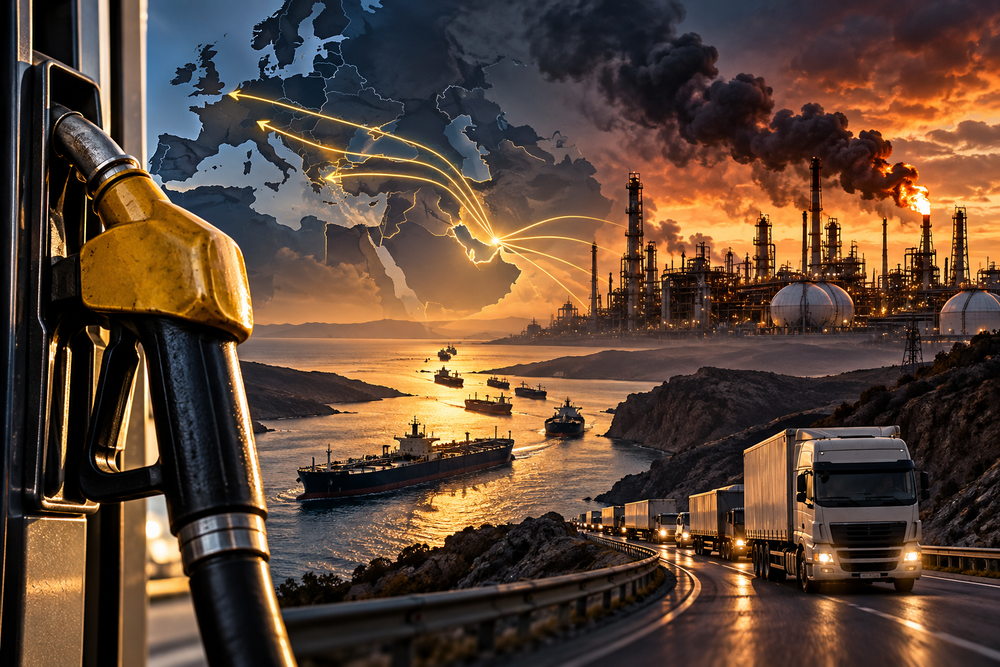
Wars are not fought only with guns. Beneath Ukraine’s frontlines ran the arteries of Europe: pipelines carrying Russian gas westward. For decades, Ukraine’s territory was transit. Then came Nord Stream, a direct line under the Baltic that threatened to bypass it.
In September 2022, those pipelines were ripped apart by explosions. Accusations filled the air, sabotage by Russia, sabotage by the West. No investigation reached clarity. What remained was silence, and the price was paid by Europe.
“The story of energy is the story of power. When the pipes burst, alliances shifted.”
Laboratories in the shadows
Russia accused Ukraine of hosting U.S.-funded laboratories. Washington denied, then admitted they existed. Officially, they were for health research. Unofficially, the ambiguity lingered. Dual-use was never pursued in headlines. What was half-confessed was quickly forgotten.
Azov rebranded
The Azov Battalion began as openly ultranationalist. In 2014, international reports labeled it extremist. After 2022, the same formation was praised as heroic. The symbols on uniforms stayed the same. Only the words changed.
What was once condemned as fringe became sanctified as frontline.
Networks without borders
Behind the public story of democracy versus tyranny, another layer operated. CIA advisers and NATO trainers moved through Ukraine long before 2022. Intelligence networks blurred the line between partner and proxy.
“The hidden layers revealed something else: energy routes, ambiguous laboratories, rebranded militias, clandestine alliances.”
The eruption of 2022 - Ignition, not beginning
The sudden invasion
On 24 February 2022, sirens echoed through Kyiv, missiles struck Kharkiv, armored columns pushed across the border. To Western audiences it was a catastrophe without warning, a beginning that erupted in headlines. To Moscow it was a “special military operation” aimed at demilitarization and the protection of Russian speakers in the Donbas.
The two framings were mirror opposites: one of unprovoked invasion, the other of inevitable defense. Neither acknowledged the eight years already burned into the soil.
“Wars do not begin on single days. They grow, year by year, silence by silence, until eruption.”
The armed preparation
By 2021, Ukraine’s armed forces were among the largest in Europe. NATO trainers had embedded, Western missiles and drones were already in place, intelligence networks linked Kyiv to Washington. From Moscow’s perspective, the line had long been crossed. From Washington’s perspective, Ukraine was simply a partner exercising sovereignty.
The eruption of 2022 was ignition, not origin.
The war as performance
In media, the script solidified. Headlines told of David against Goliath, freedom against tyranny. But beneath the story lay a darker continuity: Donbas’s trenches, Minsk’s deception, Nord Stream’s explosions, laboratories confirmed and ignored.
The invasion was not only a military act. It was theater, layered atop years of managed silence.
Fragments admitted, quickly forgotten
Minsk revealed
Minsk was presented as peace but later admitted as pause. Merkel, Hollande, and Poroshenko confessed it openly. The accords were never meant to end the war. They were meant to buy time. Time for weapons, time for training, time for NATO to entrench itself. A ceasefire disguised as diplomacy.
Nord Stream destroyed
In September 2022, explosions tore through Nord Stream. Europe’s energy map was rewritten overnight. No conclusive investigation ever followed. Washington denied involvement, Moscow denied involvement. What remained was silence, and new dependence on American gas.
“What was admitted aloud was quickly buried beneath headlines.”
Azov rebranded
Azov’s history was known. In 2014, international reports described its ideology as far-right. In 2022, the same battalion was recast as heroic. By 2024, even U.S. restrictions on funding Azov had been lifted. The uniforms did not change. Only the language did.
Biolabs confirmed
For months Washington denied the existence of U.S.-funded laboratories. Then it admitted they existed. Officially, they were for public health. Unofficially, the ambiguity lingered. There was no follow-up inquiry, no headline cycle, only fading attention.
Aid with conditions
Financial packages and weapons were delivered as “aid.” But the flows bound Ukraine tightly into Western structures. The price of support was alignment. Help was never neutral. It was strategic.
A laboratory of modern war
Information as weapon
Ukraine became more than a battlefield. It became a laboratory. Information was deployed like artillery. Memes, videos, digital campaigns traveled faster than bullets, shaping perceptions in seconds. Propaganda once printed on paper now pulsed through algorithms.
The war was fought not only on frontlines, but on timelines.
“In Ukraine, the meme became as strategic as the missile.”
Cyberwar in parallel
Servers were seized, ministries went dark, power grids flickered under attack. NATO quietly tested how far it could defend a partner in cyberspace without crossing into open war. Cyber campaigns blurred the line between conflict and espionage.
Drones and machines
Turkish Bayraktars struck armored convoys. Iranian Shaheds haunted Ukrainian skies. Cheap, expendable drones transformed the battlefield: every soldier a potential target, every position exposed to constant surveillance. Warfare shifted from massed formations to swarms of machines.
Outsourced violence
Private contractors emerged on both sides. Wagner fought openly. Western firms supplied training and logistics in shadows. Violence outsourced, deniable but decisive. War was privatized into fragments of accountability.
The economy as battlefield
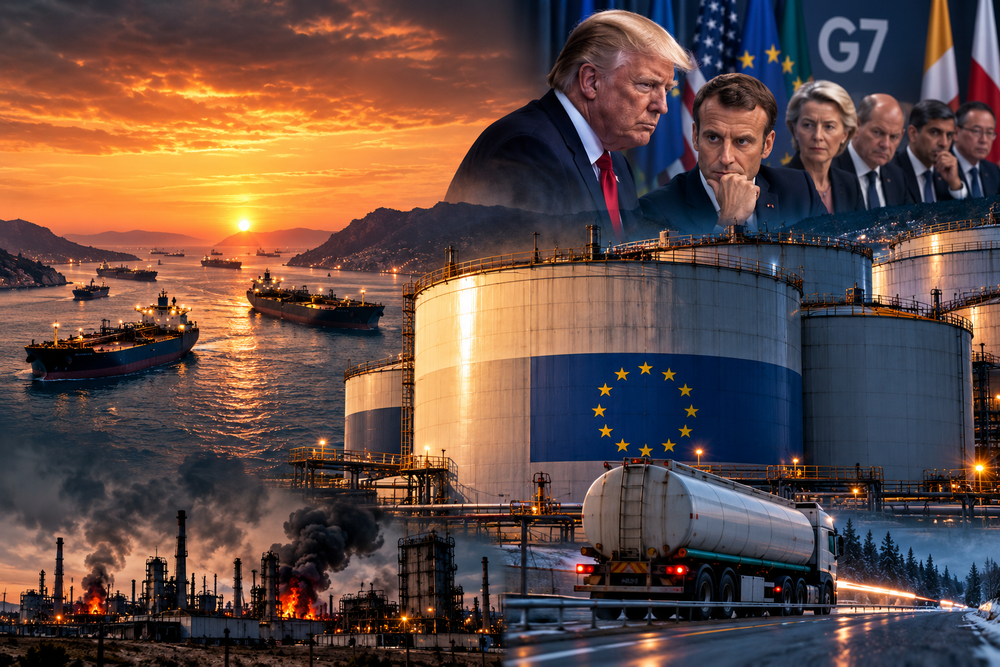
Sanctions became weapons. Russia turned to Asia, Europe scrambled for new suppliers, the U.S. energy sector reported record profits. The Western defense industry revived, contracts flowing after decades of decline. The economy itself became artillery.
Patterns and precedents
Old scripts, new stage
Yugoslavia. Iraq. Libya. Syria. Each war framed in moral clarity, each justified with humanitarian language, each leaving destruction in its wake. Ukraine followed the pattern, though on a larger stage and against a different adversary.
Wars rarely invent new scripts. They recycle old ones, only with higher stakes.
“The story streamlined, the complexity stripped away, the heroes and villains assigned, the script never changes, only the scenery.”
The cycle of justification
In the Balkans, it was “saving Europe from chaos.” In Iraq, “weapons of mass destruction.” In Libya, “responsibility to protect.” In Syria, “defending democracy.” The slogans varied, but the rhythm was constant. Intervention justified by virtue, catastrophe explained away as unintended consequence.
Ukraine fits the cycle. It is cast as defense of democracy, as proof of unity, as a test of Western resolve. But the pattern is familiar: clarity in speeches, chaos on the ground.
The larger scale
What distinguishes Ukraine is not the script but the magnitude. Here the adversary is not a fragmented state but Russia itself, a nuclear power, a nation with its own narrative of grievance and survival. The stakes are global. The propaganda louder, the silences heavier, the consequences unmeasured.
Ukraine is not an exception to the cycle. It is its climax.
Closing reflection, the silences of war
Remembering what is omitted
Wars are remembered for their explosions, but they are sustained by their silences. Ukraine’s war is defined as much by what is omitted as by what is declared. Maidan’s fire, Donbas’s trenches, Minsk’s deception, Nord Stream’s destruction, Azov’s rebranding, laboratories half-admitted, aid disguised as generosity, each fragment complicates the story presented in headlines.
The war was not born in 2022. It erupted on ground already scorched by years of silence.
“History is not only written in declarations, but in the silences that follow confessions.”
The performance of truth
The West framed 2022 as a sudden invasion. Russia framed it as inevitable defense. Both reduced complexity to performance. Neither told the whole story. To understand Ukraine is not to choose between propaganda. It is to confront the fragments as they are, facts that resist forgetting.
The truth of war is never singular. It is layered, curated, and performed.
The question that remains
Ukraine has become tragedy and template: a laboratory for new weapons, a theater of old scripts, a conflict where silence is as strategic as speech. What began as fragments has become a mirror for the twenty-first century.
And so the question remains: Will we remember only the performances, or the fragments they tried to bury?
Related from The Manifest Archive