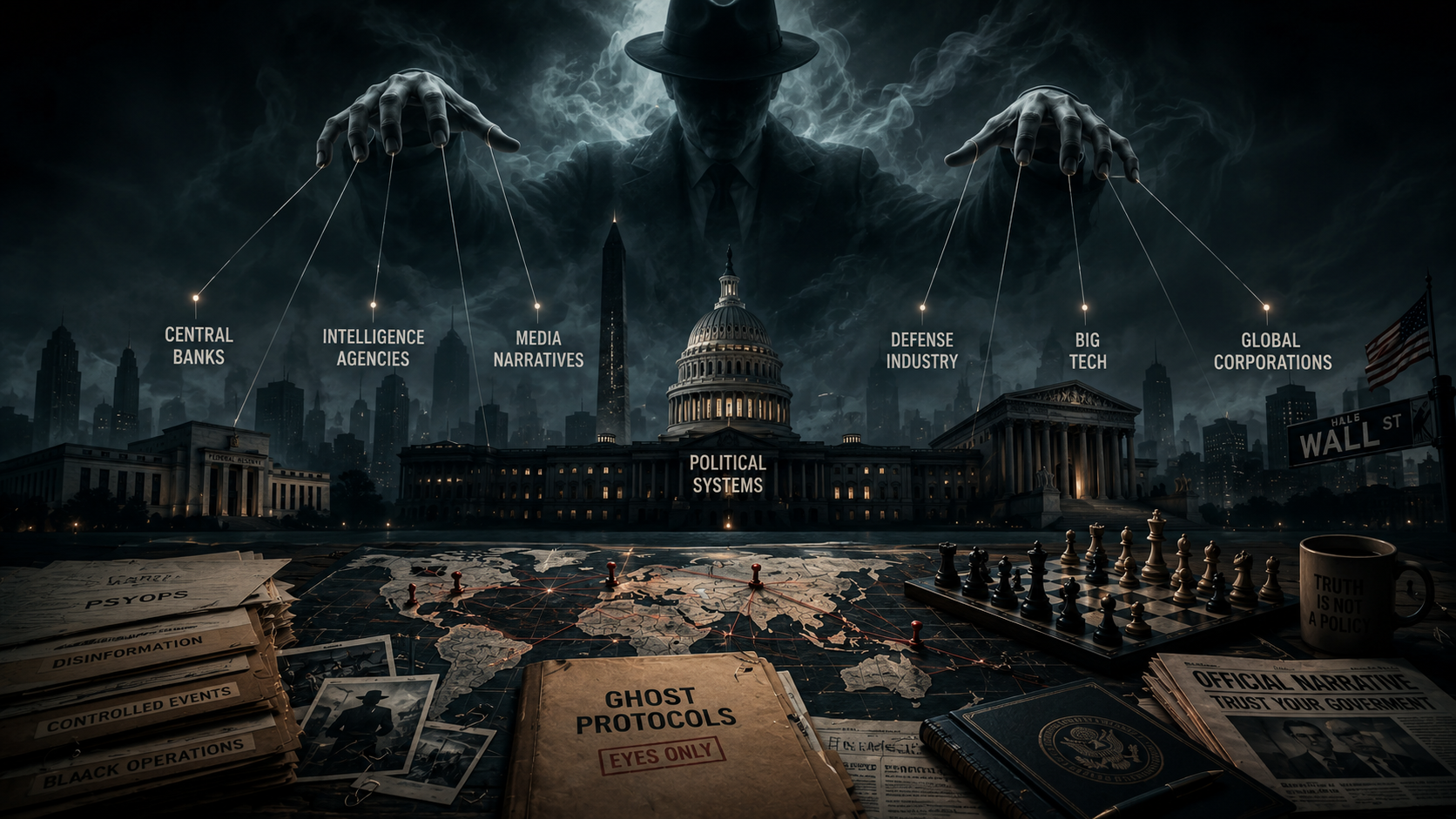
How a system optimized for conflict persistence became structurally inevitable.
The Tankers
Gulf of Oman. March 2026.
Within days of the American and Israeli strikes on Iran on 28 February, tankers were stacking up off Fujairah as war-risk insurers cancelled their Gulf cover. Every idle day carried a cost. Behind that cost sat a single assumption: the Iranian crude that sanctions had pushed out of mainstream markets years earlier would not return to them.
That assumption was not irrational. It was structural. A system had reorganized itself so completely around the absence of Iranian crude that the presence of that crude had become economically incompatible with the arrangements already in place.
The war did not create this incompatibility. The war revealed it. And the system that adapted to the revelation developed institutional inertia powerful enough that breaking the adaptation would cost more than any single participant could absorb.
The mechanism runs without coordination. The stalemate requires no treaty. The participants do not acknowledge each other's existence. That is what makes it structurally durable. That is what makes it look like permanence.
The Energy Arbitrage: Asymmetry Locked
When Iranian crude left mainstream markets after Washington ended its sanctions waivers in May 2019, three distinct geographic energy markets reorganized, and their reorganization was not symmetrical.
European refineries optimized around comparable crude slates suddenly faced materially higher replacement costs and substantially reduced margin efficiency. Replacement crude from West Africa or the North Sea carried substantial premiums. Retrofit costs exceeded structural thresholds that justify investment. By April 2026, with the war under way, simple refining margins in northwest Europe had turned negative.
Asian refineries faced an inverse problem. They can process heavier crude. When Iranian crude vanished, they accessed alternative sources at premiums they could redistribute through their margin structure. By the same April 2026 measurement, Asian refineries reported positive margins that justified continued operation and expansion.
Neither can return to Iranian crude without absorbing massive switching costs and litigation from suppliers on multiyear alternative contracts. That is not equilibrium. That is structural difference crystallized into permanence. The system absorbed the incompatibility and rewrote its own terms around it.
War-risk insurance materialized the assumption. Within days of the first strikes on 28 February, insurers gave notice that their war-risk cover for the Gulf would end on 5 March, then re-offered it at premiums that made transit uneconomical for most merchant traffic. This premium reflected institutional expectation that the conflict would persist indefinitely. Insurers were pricing in permanence because the market conditions that justified permanence had already materialized.
The Defense Allocation: Procurement Lock-In
After Russia's full-scale invasion of Ukraine in February 2022, European governments announced defense spending increases toward the NATO floor of 2 percent of GDP, and in June 2025 NATO allies committed to 5 percent by 2035. The capital markets translated it into specific institutional flows.
Rheinmetall, the German ammunition and defense systems manufacturer, appreciated from approximately €4 billion to more than €40 billion in market capitalization between February 2022 and April 2026. The company issued revised 2026 revenue guidance reflecting multiyear framework agreements with European governments.
European pension funds and asset managers also moved into defense holdings, a rebalancing often justified as geopolitical resilience. Mechanically, it represented capital locked into positions that were profitable only if the war persisted.
The European ammunition market projects significant expansion through 2031, with growth driven by multiyear government contracts. The projection does not rest on assumptions of new conflicts. It rests on the assumption that the war in Ukraine, and now the war with Iran, persist long enough to materially draw down existing stockpiles. The procurement schedule is locked. The financial visibility is locked.
None of this required explicit coordination. It required only that thousands of institutional actors optimize for their own measurable interests within the constraints available to them.
The Financial Superlayer: Monetization of Instability
But the system goes deeper. The system always goes deeper.
Beyond ammunition, beyond energy, the structure that sustains the war has embedded itself across the entire financial architecture. Prolonged instability became monetizable across six distinct mechanisms. Each one developed independently. Each one developed its own institutional constituency.
Energy volatility trades in options markets. When volatility increases, the value of options on energy increases. Hedge funds and commodity traders positioned for volatility expansion would accumulate substantial mark-to-market gains. Unwinding those positions requires stable energy prices. Stable energy prices require Iranian crude on the market.
American debt became a geopolitical instrument. The United States government issued substantial new debt between January and May 2026, while also paying for a war in the Gulf. Part of that debt was bought by investors betting that geopolitical risk would sustain elevated long-duration yields.
Inflation became a profit vector. Persistent energy volatility kept global inflation elevated into Q2 2026. Inflation benefited asset holders at the expense of fixed-income earners. Central banks remained constrained by inflation signals. That elevated rate environment became profitable for banks positioned for higher rates.
Volatility itself became an asset class. Variance swaps on crude, wheat, and copper allow investors to take pure bets on volatility expansion. Volatility traders positioned for instability accumulate positions profitable only if that instability persists.
Risk premiums widened. The yield spreads on Persian Gulf sovereign debt, Mediterranean European debt, and emerging market oil-dependent debt widened as geopolitical risk premiums increased. Institutional investors that shifted capital into narrower geopolitical-risk baskets locked themselves into positions profitable only if the risk premium persists.
Reserve composition signals entered capital decisions. Saudi Arabia has discussed pricing some crude sales to China in yuan. This created an intermediate window of extraordinary refinancing demand. Banks and financial institutions positioned for petrodollar volatility accumulated positions profitable only if that volatility persists.
None of these mechanisms required coordination. But together, they created a financial system where the most profitable positions are the ones that persist if the war continues. That is not conspiracy. That is architecture.
The System: Three Timelines, One Overlap
Watch what happens when three independent mechanisms converge.
Iran's timeline is indefinite. Without sanctions relief, the Iranian state cannot fund its external programs. Iranian interest aligns with indefinite stalemate at current intensity.
The West's timeline is 12 to 24 months. Defense contractors locked multiyear procurement visibility. But the financial window is narrower. Defense sector revenue growth is sustainable for 18 to 24 months. Beyond that, the narrative requirement changes. If the war persists beyond 24 months without resolution, political support erodes.
Asia's timeline is 18 to 36 months. Multiyear contracts lock Asian refiners into alternative sources. Asia has no interest in escalation. Asia has maximum interest in indefinite stalemate at current intensity. Asia's exit from current supply arrangements requires 18 to 36 months of price compression in Iranian crude.
These three timelines overlap. The overlap window is 12 to 24 months.
During that window, all three actors have identical incentive: stalemate persists. None escalates. None negotiates. The moment the window closes, everything diverges. This is the architecture. This is what makes it durable. Not that anyone wants the war. But that the mathematics of their separate interests align exactly where the war requires them to align.
The mechanism does not require explicit coordination. It requires only that each actor optimize for its own interests. The architecture produces a collective outcome that no individual actor chose, but that all are invested in maintaining. The system survives because coordination became unnecessary.
That chiasmic reversal defines the system: the actors need stalemate, the stalemate needs the actors, and neither can break the loop without absorbing costs the other won't absorb.
What the System Did Not Build
The most revealing absence in this architecture is structural. The system produced institutional mechanisms for escalation, procurement, insurance, sanctions enforcement, and supply rerouting. It produced no mechanisms for de-escalation.
There is no procurement incentive for peace. There is no investment vehicle for stability. There is no financial mechanism that becomes profitable if conflict ends. There is no insurance product for de-escalation. There is no futures market for stability.
The architecture accounts for every actor within it: traders, contractors, insurers, refiners, pension managers, commodity desks, and treasury officials. It accounts for their timelines, their positions, their capital commitments, and their return horizons.
Except for those who might profit from peace. The system has no mechanism for them. The system has no constituency for de-escalation. That is not an oversight. That is a structural absence. And that absence is itself evidence.
The Pattern
Modern conflicts increasingly persist not because victory is impossible, but because too many systems have adapted themselves to the economic continuity of unresolved war. The durability of those adaptations exceeds the durability of the original conflict logic.
The Iran war is not unique in this regard. It is exemplary. It is a system in which structural lock-in has become so complete, and the constituencies invested in persistence so distributed and interdependent, that the absence of a single coordinated decision to sustain the war is itself evidence that the war is being sustained by architecture rather than by choice.
The war persists not because anyone wants it to continue.
It persists because everyone has positioned themselves in ways that make its continuation profitable within the windows available to them. Every actor. Every position. Every capital flow. Aligned.
That absence of intentionality is itself the mechanism. The system does not require intention. The system does not permit escape. Architecture sustains what no one chose. Coordination becomes unnecessary because the mathematics do the coordination.
This is what the capital flows reveal. Not who decided to sustain the war. What structure emerged when nobody was looking.
Jerry writes The Manifest Archive, forensic analysis of the institutional structures that shape geopolitics, history, and power.
Related from The Manifest Archive
- Institutional Collapse: The Hormuz Mechanism
- Everyone Is Watching the Iran War. Nobody Sees the Complete Picture
- The NATO-Russia Escalation Trap: How Distributed Coordination Increases Confrontation Risk
- The Architecture Cannot Move: How Energy, Defense, and Currency Locked Themselves Into Permanent Tension


