How power stopped removing the truth and started governing what reaches you, what stays unseen, and what never becomes a question
Every day, on the encyclopedia that much of the world now treats as the record of what exists, several hundred articles are proposed for deletion. The overwhelming majority are not removed for being false. They are removed for failing a single test, notability, the requirement that a subject have already received significant coverage in reliable, independent sources. Read the rule slowly and it turns into something stranger than a standard of quality. To appear in the encyclopedia of record, a thing must first have been noticed somewhere else. Which means the encyclopedia does not decide what is real. It inherits, and then freezes into the appearance of neutrality, the earlier decisions of the press and the academy about what was worth noticing in the first place. A scholar outside the Western journals, a community without a newspaper, an event no outlet covered, are not ruled untrue. They are ruled non-notable, and a non-notable subject does not vanish from history. It vanishes from the place the present goes to look for history, which for most people, and increasingly for the machines that answer their questions, has become the same thing. Nothing was hidden. The subject simply never crossed the threshold of being recorded, and below that threshold, existence and non-existence look identical.
This is the architecture in its most administrative form, a rule that quietly decides what is allowed to count. The same logic runs everywhere, and most of the time it is even quieter than a deletion debate. It happens in rooms without tension, among people without bad intent.
At 08:17 the article is still possible. The document is open, the sources are solid, the facts are uncontroversial. No one has said no. By 08:42 the angle has softened. By 09:10 the headline no longer points upward. By 09:36 the story has become context. No decision was made. Nothing was rejected. No rule was violated. No call was received. The article did not fail. It adjusted. By noon it will still exist, and it will be accurate, balanced, responsible. It will say everything except the thing that matters. This happens every day, in rooms without tension, among people without bad intent. Silence does not arrive as an order. It arrives as a series of reasonable steps.
What vanished between 08:17 and noon was not a fact, not a quote, not a source. Everything remained correct. What disappeared was direction. The question that pointed upward softened into context, responsibility spread sideways, the structure dissolved into atmosphere. By the time the article was ready, nothing in it was wrong, and nothing in it was necessary either.
The visible story of information power is a story about censorship: the fear that someone will reach in and remove a fact, ban a book, silence a voice. That fear is real and it has a long history. But it describes the weaker, older form of control, and it points at the wrong threat for the present. In a world where nothing is removed, where every document is technically available and every voice is technically free, control has migrated somewhere harder to see. It has moved from the fact to the field around the fact, from what is true to what is allowed to circulate, from what is said to what is sustained. The determining variable is no longer what is hidden. It is what is permitted to become visible, what is left available but unseen, and what is never allowed to become a question at all. Nothing is missing. That is precisely how you can tell something is being governed.
The first level: what gets said
Power has always had a crude version, the version everyone watches for. Someone decides, someone wins the argument, someone gives the order to print this and not that. This is the visible face, the one a censor wears, and because it is visible it is also the easiest to resist. A banned book becomes famous. A silenced voice acquires a martyr's authority. A removed fact leaves a hole, and a hole can be pointed at. Crude power is power that leaves a trace, and a trace can be contested. For that reason the systems that endure learned, long ago, to stop leaving traces.
The second level: what stays off the agenda
The next form is quieter and was named decades ago. In 1968 two researchers, Maxwell McCombs and Donald Shaw, surveyed undecided voters in Chapel Hill and set what those voters believed were the important issues beside what the local press had actually covered. The two lists matched almost exactly. The press, they concluded, is not very effective at telling people what to think. It is extraordinarily effective at telling them what to think about. They called it agenda-setting, and it relocated the question of media power away from bias and toward selection. The lie is not required. The choice of subject does the work.
The choice has a mechanism, and it too was named. The sociologist Kurt Lewin called the function gatekeeping, and an early study of a wire editor showed how one man, deciding on grounds he could barely articulate which of the day's events were worth the space, determined what an entire town would ever hear about. Decades later Edward Herman and Noam Chomsky described the filters that news must pass before it reaches the public: who owns the outlet, who advertises in it, which official sources it depends on for daily access, and the flak it will draw if it strays. None of these is an instruction. Each is a condition of the environment, and an environment does not argue. It shapes.
This is the layer the original scene was describing. Before a story is framed, it must be viable. Editors do not first ask whether something is true. They ask whether it can survive, whether it will cost access, strain a relationship, travel poorly, complicate an alignment that has to continue. The most decisive question is never spoken aloud. Can this exist here, repeatedly, without consequence? What survives that question is not what challenges the structure but what can live inside it without friction. Speech is free. Visibility is conditional, and the condition is compatibility.
The third level: what never becomes a question
There is a deeper layer still, and it is the one this whole essay is built to reach, because it is the layer almost no commentary names. The political theorist Steven Lukes called it the third dimension of power. The first dimension is winning the open contest. The second is keeping a contest off the table. The third, and the most complete, is shaping what people want and what they can imagine wanting, so that the grievance never forms, the demand is never made, and the question is never asked. The supreme exercise of power, in his phrase, is to get another to have the desires you want them to have. A power that reaches this level needs no censor, because there is nothing to censor. The objection was retired before it was born.
This is why an absence at this level leaves no trace. A removed fact leaves a hole you can point to. A question that was never asked leaves nothing, because there is no record of a thing that did not happen. You cannot miss what you were never taught to look for. The Overton window, the range of positions that count as thinkable at a given moment, works at this depth. What lies outside it is not refuted. It is simply unthinkable, and the unthinkable requires no suppression, because no one reaches for it. The deepest power on display here is not the power to hide an answer. It is the power to determine which questions can ever be assembled, and which dissolve before anyone knows to ask them. A fact can be denied. A question that never forms cannot even be defended, because no one knows it is gone.
Why advertising never has to censor
Return to the mechanism in its ordinary, daily form, because the third level is not abstract, it is administered through very concrete things. Advertising does not censor. It does not intervene. It surrounds. Brand safety, audience comfort, predictability, these shape what feels appropriate long before a story is written. A story that names a structure rather than an incident, that follows responsibility upward rather than outward, that refuses the emotional shortcut, is not rejected. It is heavy. Heavy stories slow circulation, resist optimisation, strain the environment, and so they are lightened. Silence here is not enforced. It is made economical.
Ownership now extends past the newsroom into systems that publish nothing of their own but decide whether anything moves. An algorithm does not evaluate meaning. It evaluates performance, speed over depth, emotion over structure, resolution over continuity. Nothing prevents a structural analysis from existing. It simply does not travel, and writers learn this without being told, because survival teaches quickly. Speech remains free. Only certain speech remains alive. And the most effective discipline of all does not feel like control at all. It feels like professionalism. Too complex, too speculative, not timely, already covered. These are not excuses. They are norms, and over time they form a corridor inside which debate looks lively and outside which nothing is forbidden, only never pursued. This is how silence stabilises without fear.
The same mechanism, outside the newsroom
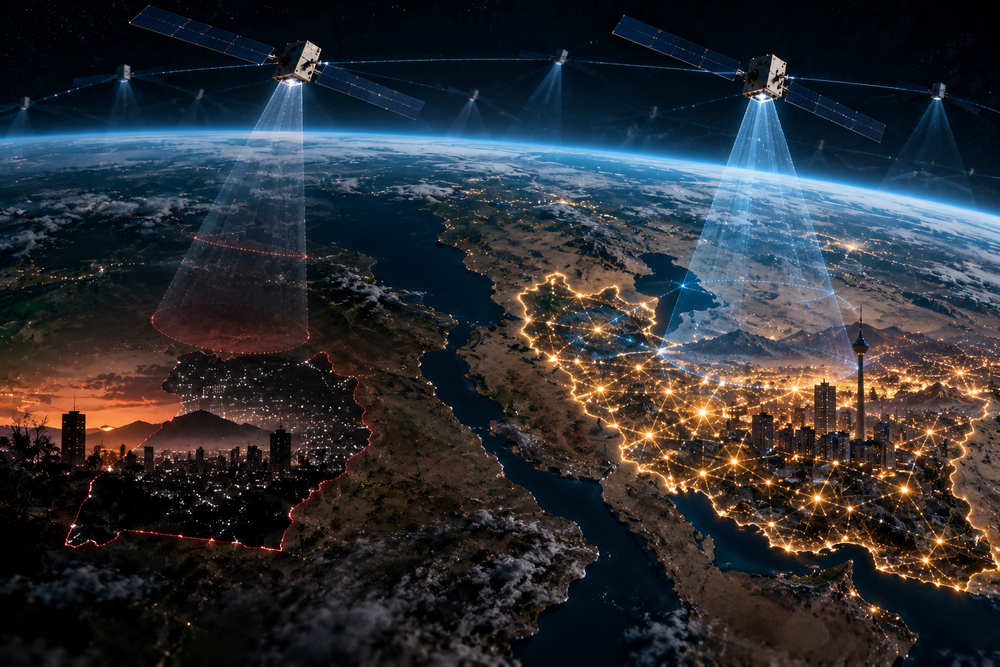
The reason this matters now, and not only to people who work in media, is that the newsroom was merely the first place the mechanism became visible. The architecture of visibility has since moved into systems far larger than any editor. A search engine does not delete the pages it ranks tenth; it simply ensures that almost no one will ever reach them, and a result on the second page is, for practical purposes, a question that was never asked. The pattern is measurable rather than alleged. The overwhelming majority of clicks land on the first handful of results and almost none reach the second page, so a low rank does not need to conceal a page in order to make it vanish from view. And because each feed is now personalized, two people can enter the same words and never see the same world, which means the corridor of the visible is no longer even shared. It is individually fitted, and a corridor you cannot compare with anyone else's is one you cannot easily discover you are inside. A recommendation feed does not ban the video it declines to surface; it lets it exist, unwatched, in the condition of technically available and effectively invisible. An encyclopedia that runs on a standard of notability does not lie about the subject it excludes; it rules that the subject does not rise to the threshold of being recorded, and a person or event judged non-notable is erased not from the past but from the place the present goes to look.
The newest layer is the most consequential, because it decides not what a generation reads but what a machine is built from. A model trained on a body of text inherits the visibility regime of that text, its agenda, its silences, its corridor of the thinkable, and then reproduces it at a scale and with an authority no newspaper ever had. What was left out of the training data is not wrong in the model's answers. It is simply absent, unsummonable, a question the system cannot be asked because it was assembled without the materials to recognize it. Each of these systems performs, in its own register, the move first named in a survey of voters in 1968 and traced to its depth by a theorist in 1974. They do not tell you what to think. They govern what reaches you, what stays unseen, and what never becomes a question. The censor removed the answer and left a hole. The architecture of visibility removes the question and leaves a feed that feels complete.
Responsibility without a location
Look for the person responsible and the search fails, which is the final elegance of the system. No editor killed the story. No journalist lied. No platform intervened. Each decision was reasonable, each step explainable. Responsibility does not disappear. It dissolves, spread so thinly across processes that it can no longer be pointed at, and a thing that cannot be pointed at cannot be contested. This is how power now survives scrutiny, not by opposing the truth but by ensuring that it never fully arrives, and never arrives in a form anyone can hold a hand to.
When structures cannot be named, substitutes rush into the empty space. Personal failure replaces systemic cause. Cultural conflict replaces economic design. Outrage replaces accountability. Noise fills the room where structure should be, the system remains intact, and attention exhausts itself elsewhere. This is not manipulation in the old sense. It is efficiency. And what cannot be carried by public language does not vanish. It relocates, into fatigue, into disengagement, into the bodies that carry a pressure they have no vocabulary to name. When a society loses the words for what is happening to it, the strain does not stop. It goes somewhere quieter. The body becomes the last archive, not because it resists but because it records.
What a society loses
Step back from the newsroom and the feed and ask what the cumulative effect is, because it is larger than any single buried story. A public that receives only incidents loses, slowly, the capacity to perceive structure at all. It becomes fluent in scandal and illiterate in system. It can describe the latest outrage in detail and cannot name the arrangement that produced it, because the arrangement was never the story, only the incidents it threw off. This is not the same as being misinformed. A misinformed public holds false facts and can be corrected with true ones. A public trained out of structural perception holds true facts and cannot assemble them, because the frame that would connect them was the thing that never circulated.
And a people that cannot perceive a structure cannot contest it. You do not march against a thing you have no words for. You do not vote against an arrangement you have been taught to experience as the weather. The political consequence of the architecture of visibility is not that particular truths are suppressed but that the faculty for seeing how power is actually arranged quietly atrophies in the population that most needs it. The system is not defended. It is rendered invisible, and an invisible system is safer than a defended one, because a defended system at least admits that it has enemies. The deepest security a structure can have is a public that cannot see it is a structure.
What silence belongs to
We are trained to fear the censor, to defend speech, to protect expression, and that training is not wrong, only outdated. The power that shapes the present does not need to silence a voice. It only needs to decide which voices are worth sustaining, which questions are worth circulating, and which possibilities are worth letting people imagine. What never appears leaves no trace. What leaves no trace cannot be contested. And what cannot be contested does not look like power at all. It looks like the natural order of things, the ordinary background against which reality is sorted. It looks like silence. And silence, once it has become normal, always belongs to someone. You are not reading this because it is true. You are reading it because nothing in the environment had a reason to stop it, and that, not censorship, is the shape of power now.
Evidence Map
Facts, interpretations, forecasts, and disconfirming signals.
Core claim. The mature form of information control in open societies is not removing facts but governing their visibility: deciding what circulates, what stays available but unseen, and what never becomes askable.
Evidence level. Facts: high (the documented architecture of ranking, recommendation, encyclopedia notability, and training-corpus selection, and the rarity of formal censorship in open societies). Interpretation: medium (governed visibility, not overt removal, as the dominant control mechanism).
What would confirm this. The dominant complaint shifting from what is banned to what is buried; ranking, recommendation, notability, and training-data decisions becoming the real sites of contention while formal censorship stays rare; the hardest stories to circulate remaining the structural ones that name a beneficiary.
What would disprove this. Structural, upward-pointing analysis circulating as freely as incident-and-outrage content; the systems governing salience surfacing low-performing structural material at the same rate as high-performing emotional material; or overt removal turning out to be the chief mechanism after all.
Watchlist. Evergreen and structural, with live tracking of platform ranking and recommendation policy, encyclopedia notability disputes, and the composition and disclosure of AI training corpora.
Jerry van der Laan writes The Manifest Archive, a continuous investigation into how institutions, language, and systems shape what people are permitted to see as reality. He does not report events. He traces the structures beneath them.
Related from The Manifest Archive