The morning that did not decide anything
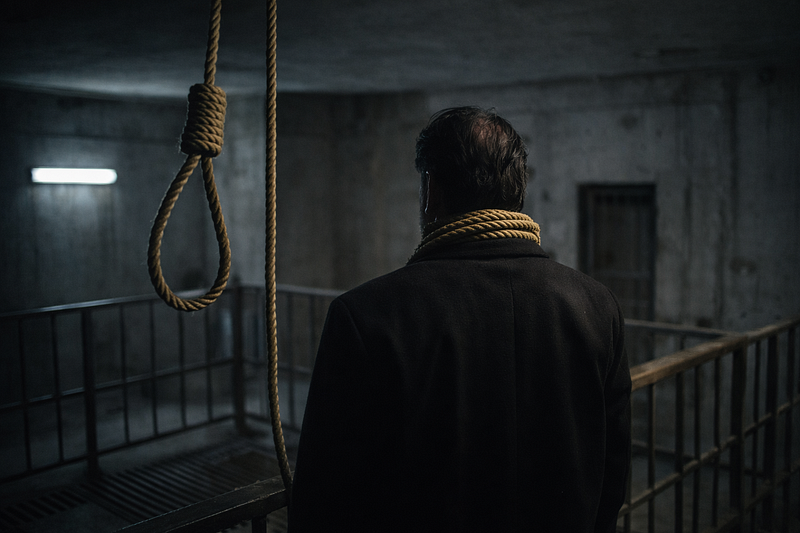
It was still dark when they took him from the cell.
Not dawn as liberation.
Not night as secrecy.
Just the hour preferred by administration.
Guards moved without urgency. Cameras were already in place. The room was bare, functional, stripped of ceremony. No audience that mattered. Only witnesses assigned to confirm that the procedure would be completed.
Saddam Hussein was executed on December 30, 2006.
Nothing about the procedure suggested urgency.
Outside the facility, Iraq was already splintering into something that no longer resembled a state. Militias controlled neighborhoods. Sectarian lines had hardened into geography. American strategy had shifted from victory to management. The war had stopped pretending it could be finished.
And yet, this was the moment chosen to end something.
The execution did not follow a decisive battle. It did not arrive after reconciliation or treaty. It came after outcome. After direction. After power had already moved elsewhere.
This was not justice catching up.
This was closure arriving when nothing else remained open.
This is not a story about what was decided that day, but about what had already stopped being reversible.
Why timing reveals function
If Saddam Hussein needed to die to end the war, he could have died years earlier.
He could have been killed during the invasion, when Baghdad fell and the statue was pulled down in Firdos Square. He could have died during his capture in December 2003, pulled from a hole, disoriented, stripped of authority, already irrelevant as a ruler.
At that point, his death would have made more sense.
He could have disappeared quietly. No trial. No cameras. No explanation.
But he did not.
Instead, he was preserved.
Tried.
Filmed.
Processed.
For three years he existed in suspension. No longer a leader, not yet a corpse. A body still capable of anchoring memory, legitimacy, and contradiction. As long as he lived, the war could still be argued. Not necessarily reversed, but questioned. His testimony could widen responsibility. His presence could reopen decisions that others preferred to consider settled.
Living figures are inconvenient to systems that require closure.
They speak.
They remember.
They redirect attention.
So the timing mattered.
He was executed only after his strategic value had already expired.
Law without altitude
Saddam Hussein was not tried before an international court.
There was no United Nations mandate. No International Criminal Court jurisdiction. No ad hoc tribunal like those convened for Yugoslavia or Rwanda. The Iraqi Special Tribunal was a national court, created under occupation, operating inside a fractured legal order.
Formally, the process followed Iraqi law as amended after 2003. Indirectly, it invoked the language of international humanitarian law. But the structure itself never rose to international altitude.
This distinction mattered.
Because international criminal law is not designed only to punish. It exists to document. To widen accountability. To establish a record that exceeds the defendant.
This court did not function that way.
A process that narrowed instead of opened
The trial did not attempt to tell the full story of Saddam Hussein’s rule.
It did not meaningfully examine the Iran–Iraq War, where Western governments had once armed and supported him as a counterweight to Tehran. It did not interrogate the sanctions regime of the 1990s, which devastated Iraqi society while leaving the regime intact. It did not place the 2003 invasion itself under legal scrutiny.
Instead, the frame was narrowed.
One massacre.
One village.
One contained narrative.
Not because other crimes did not exist, but because widening the frame would have widened accountability beyond Iraq. Justice here did not function as discovery. It functioned as insulation.
The process was designed to end with a sentence, not with understanding.
Fairness under pressure
Formally, Saddam Hussein had lawyers. There were hearings. Witnesses testified. Appeals were possible.
But structure matters more than form.
Court transcripts show moments of interruption. Proceedings paused not for deliberation, but for security concerns. The process did not stop. It adjusted.
Defense attorneys were assassinated. Judges were replaced. Proceedings unfolded under political pressure in a country without effective judicial sovereignty. International observers raised sustained concerns about independence, security, and due process.
Under international standards, a trial does not need to be perfect to be legal.
But when defense is systematically endangered, fairness becomes theoretical.
The trial remained lawful on paper.
Its integrity remained contested in reality.
The value of keeping someone alive
For three years, Saddam Hussein remained alive not because mercy prevailed, but because utility had not yet vanished.
Keeping him alive served a function.
As long as he lived, the war could still be narrated as unfinished. His trial allowed time. Time for institutions to stabilize their language. Time for governments to reposition responsibility. Time for documents to settle into archives before questions could reach them.
A living Saddam Hussein absorbed uncertainty.
He functioned as a buffer between decision and consequence.
While he stood trial, the invasion was still framed as provisional history. Mistakes could be attributed to process. Outcomes could be deferred. Accountability could be postponed under the promise of eventual legal closure.
Death would have ended that buffer too soon.
A corpse cannot carry delay.
This is why execution did not arrive at the moment of maximum outrage, but at the moment of minimum leverage. When no negotiation remained. When no testimony could widen the frame. When responsibility had already dispersed into institutions too large to interrogate.
The decision to let him live was not humane.
It was strategic.
And strategy ends the moment it no longer yields value.
Execution as confirmation
The execution of Saddam Hussein did not stabilize Iraq.
It did not reduce violence.
It did not reconcile factions.
It did not restore sovereignty.
It did not mark the end of occupation or the beginning of peace.
What it did was confirm something already true.
That the invasion would not be revisited.
That the war would not be re-argued.
That responsibility would remain distributed across administrations, institutions, and abstractions.
A living Saddam Hussein represented unfinished business. A dead one allowed the file to close.
Dead men do not testify.
Dead men do not complicate timelines.
Dead men do not force the past back into the present.
Strategic value, not morality
Saddam Hussein was not executed at the height of his power.
He was executed only after his strategic value had already expired.
His death did not neutralize a threat. It confirmed that the threat had already passed. Nothing he could say or do would alter the trajectory Iraq had been set on. Nothing he could reveal would force reconsideration of decisions already embedded into policy, doctrine, and memory.
This pattern did not end in Iraq.
Muammar Gaddafi was killed after Libya had already fractured beyond repair, when the state no longer existed as a unit and his survival posed no strategic dilemma.
Osama bin Laden was eliminated once Al-Qaeda no longer functioned as a centralized force, and when his testimony would have complicated narratives more than his existence justified.
In each case, death did not end a conflict.
It ended the possibility of reversal.
December 30 as a closing date
December 30 sits between attention cycles.
Too late for retrospectives. Too early for resolutions. A day when parliaments are adjourned, newsrooms understaffed, audiences distracted. A day suited not for debate, but for finality.
Executing Saddam Hussein on this date ensured that his death would be registered, but not absorbed. Outrage would flicker, but not organize. The event would pass as history, not as interruption.
Power does not always hide its actions.
Sometimes it performs them when attention no longer lingers.
The silence that followed
What followed the execution was not debate, but quiet.
There were statements. Carefully worded condemnations. Expressions of concern calibrated to expire within days. But there was no renewed demand for accountability that reached beyond Iraq.
No international inquiry reopened the invasion itself. No tribunal expanded its scope. No archive was forced open. The death satisfied the symbolic requirement that something had been concluded.
This is how closure is made to work in modern systems.
It does not answer questions.
It removes the obligation to keep asking them.
Once Saddam Hussein was dead, the war became administratively complete. It could be referenced, but no longer examined. Its moral weight remained, but its legal momentum vanished.
Silence did not arrive because people forgot.
It arrived because the system no longer required noise.
And once silence proves efficient, it is refined.
When history becomes storage
Events do not disappear when they end.
They are stored.
Filed into archives, classified into categories, reduced to references that can be cited but no longer accessed. What is archived is not erased. It is finalized. Removed from circulation. Preserved in a form that prevents it from interfering with the present.
This is the final stage of closure.
Not forgetting, but containment.
Once an event is fully archived, it becomes stable. It can be commemorated, debated, or footnoted, but not reopened. The archive does not lie. It simply does not respond.
What was once volatile becomes inert.
History does not vanish.
It is rendered inactive.
Why execution replaces reckoning
International justice is slow by design.
It creates friction. It delays outcomes. It preserves reversibility. It keeps questions alive long enough to travel upward.
Executions do the opposite.
They compress complexity. They end narratives. They remove the last living node through which alternative interpretations might pass.
In that sense, execution is not the opposite of impunity.
It is often its final stage.
What took years then now takes months.
What required visibility then now completes itself quietly.
When wars are already over
Wars do not end when the last shot is fired.
They end when reversal becomes impossible.
By December 2006, the war in Iraq was already over in that sense. Not concluded. Not resolved. Structurally fixed. The state had collapsed. The regional balance had shifted. The occupation had become an environment rather than an operation.
Nothing Saddam Hussein could say or do would have changed that.
That is why he was executed then, and not before.
Not as punishment.
As confirmation.
The silence after closure
After December 30, 2006, nothing reopened.
No broader reckoning followed. No responsibility shifted upward. No legal architecture was challenged. The war continued, but only as management. Violence persisted, but without a center. Memory hardened into narrative.
The file was closed.
Not because the war had ended, but because nothing remained open.
History often announces itself loudly.
This did not.
It settled.
And settled things are not decided again.
Not because no one objects,
but because objection now arrives after function.
By the time something is understood,
it has already been absorbed.
What remains is not silence as absence,
but silence as infrastructure.
You are not living after this process.
You are living inside it.
Related from The Manifest Archive