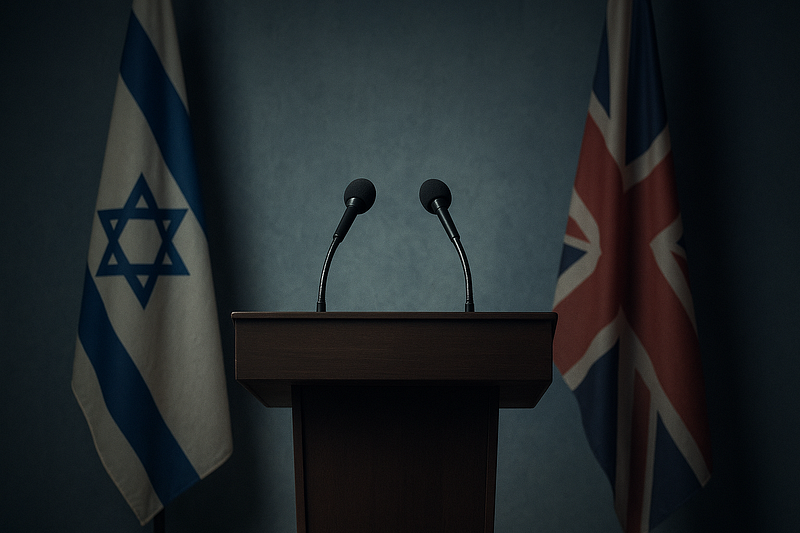
Introduction | The Man Who Failed in Iraq
He failed in Iraq.
He sold a war on a lie, watched it burn, and left a region in ruins.
And now, two decades later, Tony Blair returns, not as the accused but as the mediator.
The man who once defended the invasion of Baghdad is now called to restore Gaza.
When the architects of destruction return as builders of peace, you must ask who hired them, and for what purpose.
The announcement came quietly, almost unnoticed.
No ceremony, no flags, only a name drifting back into the headlines like a ghost of an unfinished war.
Tony Blair, former British prime minister and former envoy of the so-called Quartet for the Middle East, would join the Board of Peace, a new international body created to oversee Gaza’s transition once the bombing stopped.
It sounded like redemption.
It looked like repetition.
“They call it peace. It is paperwork.”
Behind the careful vocabulary of diplomats stability, recovery, coordination, waits the same familiar architecture that has defined Western intervention for decades.
Washington writes the script, Israel directs it, Europe approves it, and figures like Blair return to perform it.
The Return of the Priest
He was not chosen despite Iraq.
He was chosen because of it.
Tony Blair is the perfect emissary for a system that never apologises, only reinvents itself.
He speaks the language of redemption fluently, with the calm of a man who has already survived judgment.
He knows how to turn ruin into opportunity, and how to wrap power in the language of conscience.
When Washington and Tel Aviv searched for a credible face to guide the next chapter in Gaza, they did not need a reformer.
They needed someone proven, obedient, and without a political base to betray, a man who knows the theatre of diplomacy and understands that silence often serves better than sincerity.
“The best negotiators are those who have already betrayed something and survived.”
Blair’s reappearance began quietly through the same networks that shaped the Abraham Accords.
Former Trump advisers such as Jared Kushner and Ron Dermer were drafting a new regional framework, imagining a coastal enclave rebuilt under supervision rather than sovereignty.
Their idea was simple: remove Hamas, install a provisional authority under international cover, secure the borders, attract investors, and call it peace.
It was a design of control disguised as compassion.
At the centre of this plan stood the Board of Peace, a temporary council meant to manage Gaza’s recovery.
It needed a public symbol, a man who could turn technical occupation into moral duty.
Blair fit perfectly.
His voice was already familiar, his moral ambiguity already absorbed by history.
To him this is not a comeback but a continuation.
“Empires do not repent. They rehire.”
Every empire needs its priests, men who can turn strategy into salvation.
The Board of Peace
They call it an interim authority, a transitional council, a bridge between war and order.
But every bridge has a destination, and this one leads not toward sovereignty, but toward supervision.
The Board of Peace, a name that sounds almost biblical, is the administrative skeleton meant to manage Gaza once the bombing stops.
Diplomats describe it as “the day after,” as if history could be paused and restarted by decree.
It is presented as a humanitarian mechanism, yet its design belongs to geopolitics, not mercy.
Its members are a mosaic of former leaders, Western consultants, Gulf financiers, and Israeli security advisers.
At its symbolic centre stands Tony Blair.
“Peace, in modern diplomacy, is rarely an end. It is a form of management.”
The plan was conceived in Washington and refined in Tel Aviv.
During Trump’s renewed push for Middle East dominance, advisers like Kushner and Dermer shaped a framework for a Gaza stripped of its militants and rebuilt under international supervision.
The blueprint was simple: remove the resistance, install a provisional authority, secure the borders, invite investment, and rename the occupation as peace.
It was not the language of liberation but of logistics.
The New Architecture of Control
The Board of Peace is not designed to heal Gaza; it is built to regulate it.
Its vocabulary is full of softened power.
Words like coordination, stability, and institutional support appear harmless, yet each one conceals the logic of oversight.
Funding will flow through Western donors and Gulf capital, but Israel will retain the right to intervene through security agreements.
Even the flow of humanitarian aid will pass through systems monitored by external partners, ensuring that generosity never escapes control.
“A damaged asset is restructured; its management outsourced; its population redefined as beneficiaries rather than citizens.”
Blair’s involvement provides the moral narrative that every financial empire requires, the assurance that the process is guided by conscience rather than calculation.
Behind him move the quieter forces: investors, consultants, intelligence liaisons, each fluent in the language of stability.
When peace becomes a product, its managers are not priests but accountants.
Israel’s Silent Hand
While the world discusses reconciliation, Israel is already drafting its conditions.
In the silence between ceasefire and agreement lies its true power.
No speeches, no declarations, only the steady hum of systems being rebuilt exactly as before.
Control is most effective when it looks like absence.
Israel no longer needs to occupy Gaza to shape its destiny.
It has learned that power can be exercised remotely, through networks, permissions, and dependencies.
The Board of Peace is the perfect expression of this evolution.
It allows Israel to maintain oversight without visibility, influence without liability, dominance without the burden of daily rule.
“Some occupations end when the last soldier leaves. Others begin the moment the data starts to flow.”
Every camera, satellite feed, and checkpoint becomes part of an ecosystem that regulates movement, trade, and thought.
What once required soldiers now runs on algorithms.
Gaza as Symbol
Gaza is no longer just a place. It is an idea, a mirror, a laboratory where power rehearses its future.
Every strike, every negotiation, every reconstruction plan becomes a lesson in how domination can survive disaster.
From above, the city appears as a pattern of ruins and blue tarps, a landscape of intervals between wars.
From below, it feels like a loop of promises repeated by new voices each decade.
“Aid becomes a currency of loyalty. Reconstruction becomes a ritual of compliance.”
Each time the world declares a new beginning, Gaza is rebuilt on the same foundations of dependency.
Its people are told they are partners in peace while the rules of survival are written elsewhere.
This is the transformation of tragedy into strategy, the conversion of pain into policy.
The Gospel of Reconstruction
The illusion of peace depends on visibility.
The cameras arrive, the donors gather, the speeches speak of rebirth.
Concrete is poured, banners rise, and for a brief moment the city looks alive again.
But beneath the new walls lie the same contracts, the same surveillance grids, the same debts.
Blair’s presence gives this process a human face.
His eloquence allows the machinery of management to sound almost spiritual.
He talks of dignity, progress, and shared responsibility, yet behind every phrase stands a ledger.
“To understand Gaza is to see beyond the images of rubble and ceremony.”
In Gaza, even compassion has become a supply chain.
Every word is measured by its ability to calm investors, reassure allies, and silence outrage.
This is how symbols work, they absorb contradiction until the contradiction becomes invisible.
Closing Reflection | The Reverberation
There is a kind of silence that follows every war.
Not the silence of peace, but the pause of preparation.
Every empire ends its wars with a promise to rebuild what it destroyed.
Tony Blair stands at the centre of this familiar ritual, the system’s ability to forgive itself, to replace guilt with responsibility, and failure with expertise.
“It is not the end of war, only its continuation through quieter means.”
In Gaza, the illusion of peace takes the form of progress reports and development plans.
The headlines move on, yet the structure remains untouched.
Peace has become the art of managing memory, deciding what to restore and what to forget.
When the cameras leave and the ceremonies fade, Gaza will still stand as the mirror of our time.
It shows a world that mistakes order for justice and recovery for redemption.
And it reminds us that until truth itself is rebuilt, every promise of calm will remain only another design of power.
Related Chapters from The Manifest
The Last Warning: When Wernher von Braun Turned Against His Liberators, The rocket scientist who discovered that freedom and obedience share the same trajectory.
The Intoxicated State: How the World Was Ruled by Addicts, Power learned to medicate itself, and called it governance.
Europe’s Frozen Fortune: How the EU Uses Russia’s Money to Fund Ukraine, Morality and finance merged, and war found its accountant.
Imagine: The Silencing of John Lennon, He sang of a world without borders, and was buried inside one.
Related from The Manifest Archive