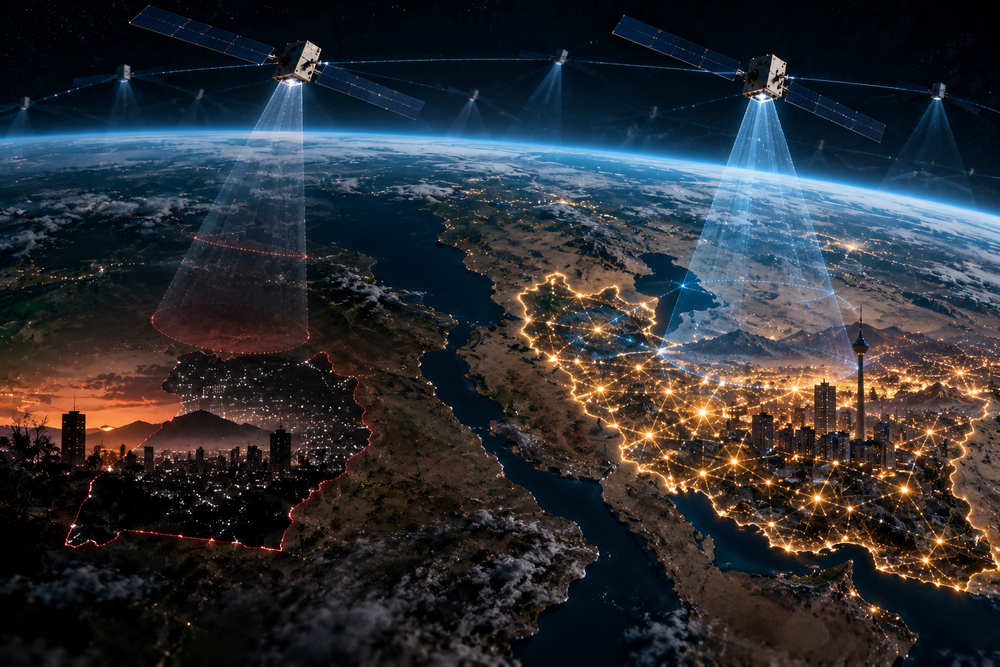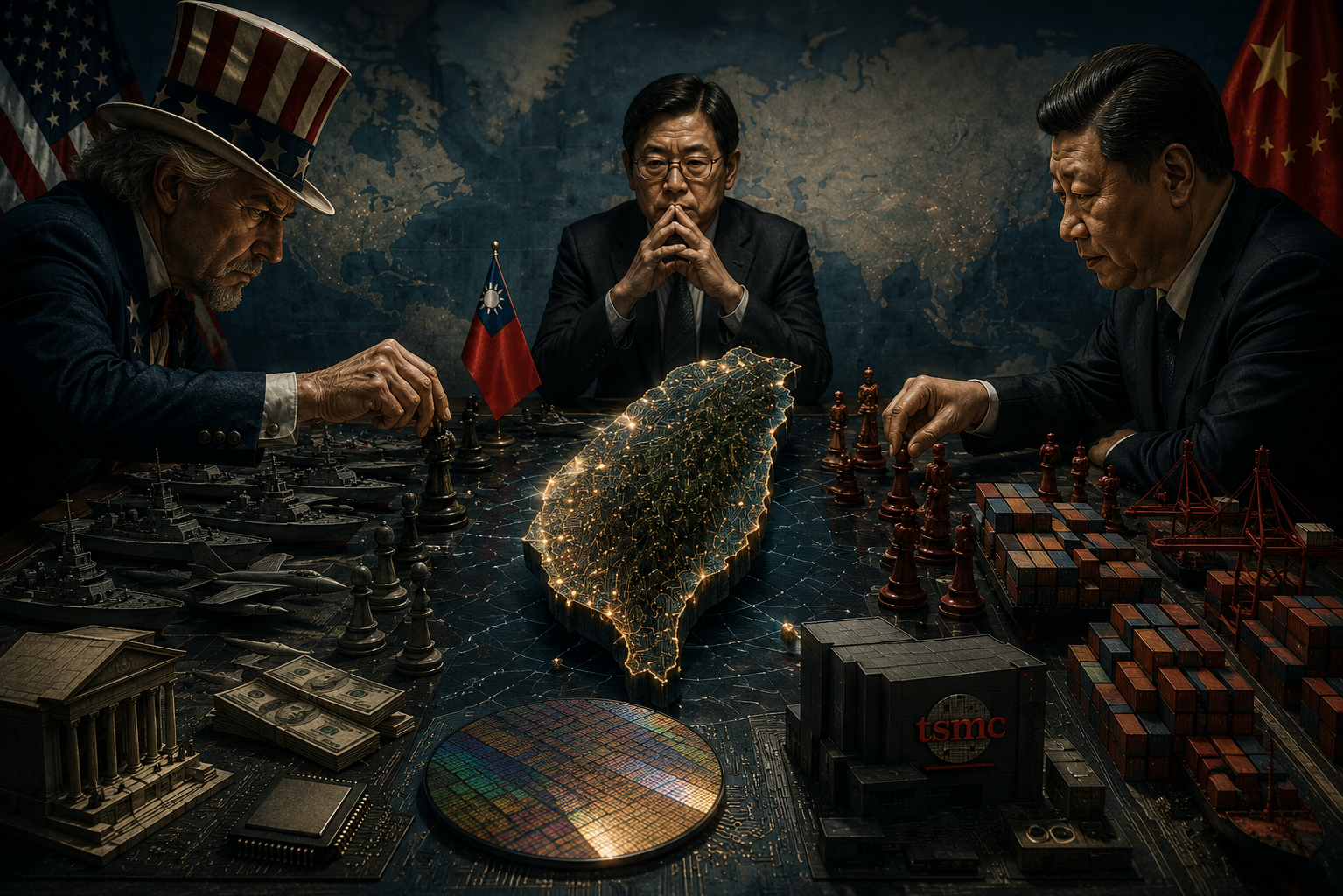
The visible story is a contest with China over an island. The determining variable is that the same island is the single point of failure in three American strategies at once, and the three cannot all be satisfied.
Most analysis of Taiwan asks who would win a war over it. That is the wrong question, or at least the loud one. The harder fact is that Taiwan has quietly become the single point of failure in three separate American strategic systems that the United States runs as if they were independent, and they are not. The Defense Department cannot sustain its security commitment to Taiwan without the island intact. The Commerce Department cannot enforce its containment of Chinese chip access without the island's main company cooperating. And the Treasury cannot justify the public money it has poured into reshoring semiconductor production without that same company succeeding on American soil. Each of these is reasonable on its own. Together they rest on one foundation, the survival of Taiwan as a functioning, American-aligned entity, and they make demands on that foundation that cannot all be met at the same time. Three rational strategies, one shared point of failure, is not a policy. It is a trap with a delay built in.
The sharpest version of the trap is worth meeting at the start, because everything else is its machinery. Taiwan is kept safe by one fact above all, that the world's most advanced chips can be made nowhere else, and the United States is now spending tens of billions of dollars, deliberately and year after year, to make that fact untrue. The reshoring meant to protect against a Taiwan crisis erodes the very thing that deters the crisis. Washington is paying, on a schedule, to dismantle its own deterrent, and calling each payment prudence.
The strait, the shield, and the cost
The word chokepoint is not a metaphor here; it is geography. The Taiwan Strait, the hundred-mile channel between the island and the Chinese mainland, is one of the busiest shipping lanes on earth. In 2022, by widely cited analyses of that year's traffic, very nearly half of the world's container fleet and around eighty-eight percent of the largest ships by tonnage passed through it. A serious disruption of the strait would not be a regional inconvenience. It would seize up a meaningful fraction of world trade at its narrowest point.
Layered on the physical chokepoint is an economic one, and it has a name. Analysts call TSMC's concentration the silicon shield: the theory that Taiwan's command of advanced chip manufacturing is so essential to the world economy that it deters China from seizing the island by force, and failing that compels the United States and others to defend it in order to keep the supply chain intact. The shield is real, and it is double-edged. The same indispensability that protects Taiwan also marks it as the most consequential target on the planet, the one place whose capture or destruction would reorder the global balance of technological power in an afternoon.
And the price of the shield failing has been counted. Bloomberg Economics modeled a war over Taiwan and put the cost to the world economy at roughly ten trillion dollars in the first year alone, close to a tenth of global output, a shock larger than the pandemic and the 2008 financial crisis put together. That figure is why the phrase breaks everything is meant literally and not as a flourish. The island is not important because of its size. It is important because three American strategies, the physical artery of world trade, and the foundation of the global chip supply all run through the same fourteen thousand square miles, and the people managing each of those systems are managing their own piece as though the others were somewhere else.
A blockade needs no invasion
The debate fixates on an amphibious invasion, the beach landings and the fleet crossing the strait, because that is the scenario that looks like a war. It is also the least likely lever, because it is the hardest, the bloodiest, and the one most certain to trigger the full Western response. The cheaper instrument is a blockade, and a blockade is not a hypothetical. It is rehearsed.
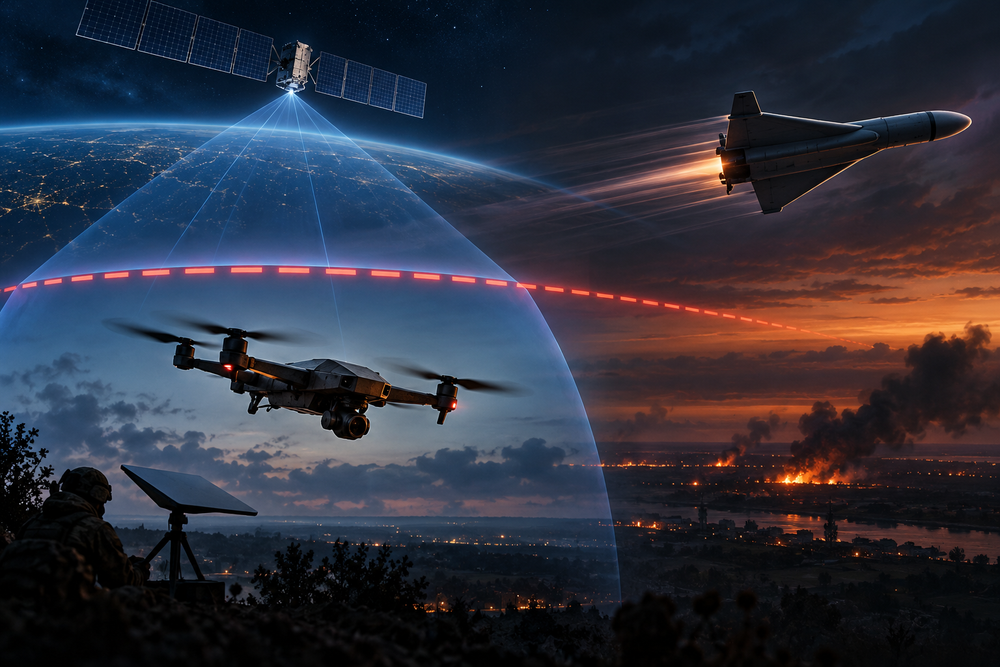
In August 2022, after a visit by the Speaker of the United States House of Representatives, China fired missiles into the waters around Taiwan, several of them landing inside Japan's exclusive economic zone, and sealed off exercise areas that boxed the island on every side. It was, in effect, a live demonstration of a quarantine. Since then the rehearsal has become routine. In May 2024, days after Taiwan inaugurated a new president, the People's Liberation Army ran the Joint Sword 2024A exercise, an encirclement drill. In October it ran Joint Sword 2024B, sending 153 aircraft toward the island in a single day, 111 of them crossing the median line of the strait that both sides once treated as a tacit border, and surrounding Taiwan with naval and coast guard forces in marked zones to its north, south, and east. The stated emphasis was the ability to seal Taiwan's air and sea space.
The point of these drills is that they do not require a war to function. A customs quarantine, an inspection regime, a declared exercise that closes the shipping lanes for a week, any of these can throttle an island that imports nearly all of its energy and exports the world's most important manufactured object, without a single landing craft touching a beach. A blockade lets Beijing apply graduated pressure below the threshold that would force an American military response, and it attacks the silicon shield directly, because a fab that cannot receive materials or ship product is as good as offline whether or not it is ever bombed. The most dangerous scenario for the island is not the one that looks most like an invasion. It is the one that looks like a maritime traffic announcement.
Why a chip crisis breaks everything
It is worth being concrete about why a disruption to one island's output would be felt in every economy on earth, because the dependency is broader than most people register. The advanced logic chip is not a luxury component confined to high-end electronics. It is the control unit of the modern physical world. It is in the car, where a modern vehicle contains hundreds to over a thousand semiconductors, a fact the world learned during the shortage of 2021 when assembly lines for finished cars halted for want of chips costing a few dollars each. It is in the phone, the data center training every artificial intelligence model, the medical scanner, the payment network, the weapon, the aircraft, the grid controller, the factory robot.
The frontier chips, the ones made overwhelmingly in Taiwan, are the ones the next decade of computing and weaponry will be built on. A sustained loss of that output would not be a gap in the consumer-electronics aisle. It would be a brake on the entire industrial economy, propagating the way the 2021 shortage did but deeper and without a clear end date, because the lost capacity could not be rebuilt elsewhere on the timescale of the crisis. This is the same logic that governs any true chokepoint. What moves through it is not a product the world enjoys but the substrate the world is built from, and there is no warehouse holding a spare supply of the irreplaceable.
System one: the military commitment
The American commitment to Taiwan is not vague sentiment; it is law. When the United States switched recognition from Taipei to Beijing in 1979, Congress passed the Taiwan Relations Act, which binds the United States to provide Taiwan with arms of a defensive character and to maintain its own capacity to resist any use of force against the island. For more than four decades that statute has underwritten a continuous flow of weapons, from missiles and air-defense systems to fighter upgrades, and it requires congressional notification and long manufacturing lead times measured in years rather than months. Taiwan needs that flow continuously, and the backlog of arms already sold but not yet delivered has run into the tens of billions of dollars, a measure of how dependent the island's defense is on an American pipeline that cannot be turned on quickly.
The commitment is also deliberately undefined. For decades the United States has practiced what is called strategic ambiguity, declining to say outright whether it would fight for Taiwan, a posture meant to deter China without provoking it and to restrain Taipei without abandoning it. Ambiguity of that kind is workable only while the underlying capacity and will remain credible; it is the diplomatic surface of a commitment whose actual substance is the arms pipeline, the regional bases, and the carrier groups behind it. Erode the substance and the ambiguity stops reading as restraint and starts reading as exit, which is the danger the whole system is built to avoid.
The structural feature that matters is simple. The United States can slow or stop that flow, but only by doing visible damage to the commitment itself, and the commitment is the thing that keeps Taiwan inside the American system in the first place. The military guarantee, in other words, can be modulated, but it cannot be quietly withdrawn, because the moment Taiwan reads withdrawal in the signals, the entire architecture built on its alignment begins to come apart.
What defending the island actually takes
The military commitment looks solid on paper and is harder than it looks in geography. Taiwan sits roughly a hundred miles from the Chinese coast and many thousands of miles from the nearest large American bases, and that asymmetry of distance shapes everything. China can mass its forces at home, in range, at rest. The United States would have to project and sustain power across the Pacific, through a small number of bases that are themselves within reach of Chinese missiles, against an adversary fighting in its own front yard.
The constraint that turns this from a map problem into a structural one is what planners call magazine depth, the simple question of how many precision weapons exist before the factories have to catch up. War games of a Taiwan conflict have repeatedly found that critical American munitions, the long-range anti-ship missiles above all, could be exhausted within the first week or so of high-intensity fighting, after which there is no quick resupply, because those weapons take years to build and the production lines were sized for peacetime. This is the physical meaning of the tens of billions of dollars in arms sold to Taiwan but not yet delivered. The backlog is not paperwork. It is the gap between what deterrence promises and what the supply chain can actually produce, and it cannot be closed in a crisis any faster than a fab can be built or a strait reopened.
So the guarantee that anchors the whole structure rests, at bottom, on the same kind of constraint as the chip and the strait: a stock of something irreplaceable on a short timescale, held in quantities sized for a world that assumed the crisis would not come. The commitment is legally absolute and physically finite at the same time, and the distance between those two facts is precisely the space in which an adversary calculates.
System two: chip containment
The second system is the effort to deny China the most advanced semiconductors, and it runs through the same island because the island makes them. Taiwan Semiconductor Manufacturing Company produces, by the most widely cited estimate, more than ninety percent of the world's most advanced logic chips, the processors that train artificial intelligence and run the frontier of computing. The United States built its containment policy on this fact. The CHIPS and Science Act of 2022 set out to reshore production, and a parallel structure of export controls, tightened sharply in 2022 and 2023, sought to cut China off from leading-edge chips and from the machines that make them. The controls have been specific and escalating: bans on selling China the most advanced processors, custom restrictions reaching even the deliberately downgraded chips designed for the Chinese market, and steady pressure on the Netherlands and Japan to deny China the lithography machines without which the leading edge cannot be reached at all.
The enforcement problem is where the system strains. Controls written as export licenses are evaded through intermediaries and resold hardware, which pushes the United States toward ever more intrusive enforcement, tracking shipments at the level of individual servers and demanding that the manufacturers themselves police where their products end up. That deeper enforcement requires the active cooperation of TSMC, and TSMC's cooperation is not free. It accepts lower profit and higher operational risk in exchange for one thing above all: the belief that the United States will keep Taiwan secure. Containment, in other words, is not enforced by Washington alone. It is enforced by a Taiwanese company that is cooperating only so long as it trusts system one.
The machine behind the machine
There is a chokepoint inside the chokepoint, and it sits not in Taiwan but in a town in the Netherlands. The most advanced chips cannot be made without extreme-ultraviolet lithography, the process that prints circuit features a few nanometers wide, and the machines that perform it are built by exactly one company on earth, the Dutch firm ASML. There is no second supplier. Each top-end machine costs on the order of hundreds of millions of dollars, contains hundreds of thousands of parts, and is produced only a handful of times a year. TSMC's lead rests on owning more than half of the world's installed base of these machines and knowing how to run them at yield. Take ASML out of the chain and the frontier stops everywhere at once, in Taiwan, in Arizona, in China, in Korea.
This is why the export-control war is fought as hard over the machine as over the chip. Washington's most effective lever against China was never a tariff or a chip ban in isolation; it was persuading the one country that makes the one machine to stop selling its best models east. The entire global contest over advanced computing narrows, at its physical base, to a single product line from a single firm in a single town, which depends in turn on a handful of suppliers for its optics and light source. The semiconductor world is often described as a supply chain. It is closer to a single thread, and the thread runs through Veldhoven before it runs through Hsinchu.
The asymmetry is the tell, the same one that marks every true chokepoint. A machine you can count on two hands in a year governs the production of the components that run the entire digital economy. The world did not decide to make itself this dependent on one Dutch machine and one Taiwanese foundry. It optimized, relentlessly, for the most advanced chip at the lowest cost, and the optimization delivered both, along with a concentration so extreme that two points of failure now sit beneath nearly everything electronic that exists.
The wall China is building
The export controls were meant to freeze China at the trailing edge. Their actual effect was to convert a customer into a competitor with a grievance and a blank cheque. Denied the machine and the chip, Beijing did the only thing a large state can do when told a door is permanently closed. It stopped knocking and started building its own door, pouring state money into a domestic industry whose explicit purpose is to make the controls irrelevant.
The results so far are a study in how much a wall slows an opponent without stopping one. In 2023 a Huawei phone appeared with a seven-nanometer chip made in China by SMIC, a node the controls were designed to keep out of reach, achieved without the extreme-ultraviolet machines that the frontier beyond seven nanometers normally requires. SMIC reached it the hard way, through older equipment and repeated patterning, at yields reported to have started poor and improved over time, and it remains largely stuck at that node because the step beyond it without EUV grows brutally expensive. The wall is real. China is years behind at the leading edge and may stay there. But the controls also guaranteed that every yuan of Chinese industrial policy now flows toward the single goal of never being dependent on Taiwan or the Netherlands again, which is the opposite of what dependence was supposed to achieve.
This is the part of the structure that runs on its own clock. Western analysts and officials often cite 2027, not as a date Beijing has chosen for anything, but as the year by which Chinese leaders have reportedly directed their military to be capable of taking the island. United States intelligence has been clear that capability is not a decision and that no fixed timeline for an invasion has been set. But the deeper pressure is not a single year on a calendar. It is that every element of the containment strategy gives Beijing a reason to want the island, or its replacement, sooner rather than later, because each turn of the screw makes the cost of waiting rise. A wall that cannot fully stop an opponent, but can fully convince him he will always be a second-class power until he goes around it, is not obviously a stable thing to have built.
System three: budget authority
The third system is the money, and it is the one that makes the bind explicit. To reduce its dependence on a single island in a contested strait, the United States induced TSMC to build in Arizona, a commitment the company has raised to roughly one hundred and sixty-five billion dollars, supported by a finalized federal grant of about six and a half billion dollars under the CHIPS Act, plus loans and tax credits. The political justification is onshoring: production on American soil, beyond the reach of a Taiwan crisis.
This concentration is not a quirk of nature; it was built. Taiwan spent the 1980s deliberately constructing a semiconductor industry as state policy, and in 1987 Morris Chang founded TSMC on an idea that reorganized the whole field: the pure-play foundry, a company that would manufacture other firms' chip designs and compete with none of its customers. Chang, an industry veteran recruited home by a government that had decided semiconductors would be its future, made a wager that the firms designing chips would rather not own the brutally expensive factories to build them. The wager was correct beyond anyone's expectation. Over four decades that model and the cluster around it compounded into an advantage no one has matched, which is why the world's most advanced production now sits, by deliberate history rather than accident, in one place that the rest of the system is straining to escape and cannot.
The economic reality is harder. Building advanced fabs in Arizona has cost substantially more than building them in Taiwan, with first-fab construction estimated thirty to fifty percent higher, and even at steady state the per-wafer cost runs somewhat above Taiwan's, where the ecosystem, the labor, and the supply chain are concentrated. Meanwhile TSMC's enormous profitability, net income of more than fifty billion dollars in 2025, is generated overwhelmingly by its Taiwanese operations serving a global market that includes large commercial customers in China. The capital the United States has committed only pays off if the Arizona fabs reach scale, and reaching scale requires exactly the high-volume, high-margin commercial demand that the containment system is trying to restrict. The Treasury cannot force TSMC to make Arizona profitable. It can only keep the subsidies flowing and hope, which means the budget system, like the others, ultimately depends on a private board in Taipei making a choice the United States cannot compel.
The part that cannot be air-freighted
The thing Arizona cannot import is not equipment. It is a culture, and the gap showed up the moment the desert fab tried to run. Picture the scene the project kept producing: a tool goes down on the overnight shift in the Arizona cleanroom, and the question of what happens next is the whole story. In Hsinchu the answer is automatic, an engineer is in his car within the hour, because that is what the job has meant for a generation. In Arizona the same moment ran into a workforce that had reasonably different expectations about being summoned from sleep, and into Taiwanese managers who had flown halfway around the world and could not understand why the line did not simply behave the way lines behave at home. The clash was not about silicon. It was about two in the morning, and who answers the phone.
That is what cannot be air-freighted. The most advanced foundry on earth is not only a building full of machines; it is a workforce trained, over a generation, to treat a fabrication plant the way few other workplaces are treated anywhere, rotating through punishing shifts and absorbing a discipline of yield and uptime that the surrounding society organized itself to produce. The chips are cheap and the yields are high in part because an entire labor culture was bent toward making them so.
The early Arizona timelines slipped for exactly this reason, and the reporting on it kept circling the same point: the hard part was never the building or the machines, which money can buy, but whether the human system that makes the Taiwanese fabs work could be reproduced in a place that had never built it.
This is the deepest form of the lock-in. You can copy a blueprint and buy a machine, but you cannot air-freight forty years of accumulated tacit knowledge and the social arrangement that sustains it. The irreplaceability of Taiwan was never only a matter of equipment or even of the ASML machine. It was the people who know how to run the line, and people are the one input that does not ship.
The shield erodes as you build it
There is a sharper version of the contradiction, and by 2025 it had acquired its own name in the policy debate: the erosion of the silicon shield. The shield protects Taiwan precisely because the world's most advanced chips can be made nowhere else. But the entire purpose of the Arizona project, and of the parallel fabs the United States has pressed TSMC to build in Japan and Europe, is to make those chips somewhere else. Every fab that succeeds abroad is a small reduction in the world's dependence on the island, and the world's dependence on the island is the shield. Pursued to its conclusion, the reshoring strategy dismantles the very deterrent the military strategy relies on. Analysts and Taiwanese officials began saying so openly, that the safest thing for Taiwan's security is for TSMC to remain irreplaceable, and that American policy is now spending tens of billions of dollars to make it replaceable. Taiwan is kept safe by the fact that its chips cannot be made elsewhere, and American policy is paying, year after year, to make them elsewhere. The budget system does not merely strain the military system in the abstract. It is engineered, line by line, to weaken the one thing that keeps the military commitment from ever having to be honored.
The arithmetic
Lay the three systems side by side and the contradiction is not rhetorical; it is close to arithmetic. The military system needs Taiwan to survive as a functioning state, which needs its economy intact, which needs TSMC profitable, which needs access to the global market, China included. The containment system needs China denied access to TSMC's frontier output, which lowers TSMC's most lucrative demand and raises its risk. The budget system needs Arizona to become profitable, which needs the high-volume commercial markets that containment restricts. Each pair of the three can be made to work. The third, in each case, is undermined by the first two.
Choose military commitment and budget authority, and containment fails, because a profitable, secure TSMC serves the world. Choose containment and budget authority, and the military commitment hollows, because a TSMC denied its best markets and an island treated as a chip-control instrument cannot also be a fully defended ally. Choose military commitment and containment, and the budget authority bleeds, because Arizona never reaches the scale that would justify the money, and a subsidy with no path to profit is a loss Congress will not fund forever. Pick any two. The third degrades, and the structural features of semiconductor economics and political feasibility mean it degrades not instantly but progressively, on the slow clock of fab construction and arms-delivery pipelines rather than against any single deadline.
How the trap stays hidden
The architecture survives, for now, on deniability. Each department can act in its own logic and deny that any larger choice is being made. The Pentagon can let an arms delivery slip and call it a scheduling matter. The Treasury can pour money into Arizona and call it onshoring. The Commerce Department can tighten enforcement and call it compliance. None of them has to say out loud that Taiwan is being asked to be three incompatible things at once, and so long as no one says it, the contradiction can be carried. The recent signals, taken together, look like the early visible edge of that strain: enforcement pushed down to the level of individual hardware shipments, the continued and costly commitment to Arizona, the friction over chips diverted to China, and Beijing's increasingly open drive to build its own frontier capacity rather than wait for access it now assumes is gone for good. That drive is not hypothetical. As the SMIC seven-nanometer breakthrough already showed, the controls slowed China rather than stopping it, and in doing so gave it every reason to stop asking for access and start building around the wall instead. None of these events contradicts the others. The absence of contradiction between them is the mechanism, because they are all the same single bind seen from different desks.
Deniability, though, has a time limit, and the documented pressures set the clock. An Arizona fab needs years of uninterrupted capital to reach breakeven; cut it mid-build and it becomes a stranded asset. Server-level enforcement needs TSMC's active, ongoing cooperation, which lasts only as long as TSMC trusts the security guarantee. The security guarantee needs Taiwan's economy functional, which needs TSMC profitable, which needs the market access containment is closing. These are not moods that pass. They are structural constraints that tighten as each system is pursued more seriously, which is why this is better read as a slow contradiction than a passing coordination problem.
The strongest objection
The strongest counterargument does not dispute any of this. It disputes the conclusion. It says the three systems are not truly incompatible over a one-to-two-year horizon, only difficult to coordinate, and that with precise, disciplined execution the United States can hold all three long enough for circumstances to change, for Arizona to mature, for China to be contained, for the guarantee to hold. This objection is serious and deserves to be stated at full strength, because it is the case any competent policymaker would make, and execution genuinely does matter.
But it confuses timing with possibility. The claim here is not that the contradiction is instantaneous; it is that the contradiction is structural, and structural contradictions are not resolved by execution, only postponed by it. Perfect coordination does not make Arizona cheaper than Taiwan, or make a market-denied TSMC as profitable as a market-served one, or make an island treated as a control instrument feel as secure as an island treated as an ally. A coordination problem dissolves when the parties cooperate. A structural contradiction persists, and worsens, precisely as each party cooperates harder, because cooperating harder means pursuing each of the three incompatible demands more fully. That is the difference between a problem that can be managed and a bind that can only be deferred.
What remains
This is, to be honest about its claim level, an accounting of structure rather than a prediction of dates. The documented part is the bind itself: three legally and institutionally real American systems, the Taiwan Relations Act commitment, the CHIPS-and-export-control containment, and the Arizona budget bet, all resting on the single foundation of a secure, profitable, American-aligned Taiwan, and all making demands on that foundation that the economics cannot jointly satisfy. The marked, interpretive part is the resolution rather than its date: that as the Arizona capacity matures and each system is pursued more seriously, the deniability that lets the three coexist runs out, and one of three things forces the choice. Taiwan's own government asks Washington to choose between protecting it and restricting its exports. TSMC's board reveals the priority by where it actually puts its capital and its output. Or Beijing makes the options costly enough that the American choice is effectively made for it.
There is a portable law underneath the Taiwan case, and it is larger than chips or China. When several strategies are allowed to rest on a single point of failure, the point does not have to be destroyed to defeat them. It only has to be contested, because the moment it is contested every strategy that depends on it competes for it, and they begin to consume one another. Concentration is efficient until the day it is challenged, and on that day it converts, all at once, from a strength into the shared weakness of everything built on top of it.
In each of those paths the shape of the outcome is the same. One of the three systems is sustained and the other two are quietly let go, because the foundation was only ever strong enough to carry one. The architecture accounts for every actor in advance. The Pentagon has a strategy, the Treasury has a strategy, the Commerce Department has a strategy, Taiwan has a government, TSMC has a board, and Beijing has a calculus. The only actor the architecture does not account for is the one who can see the whole structure at once and is positioned to change none of it, which is the reader, and the analyst, and everyone watching a slow contradiction tighten while each department insists it is merely doing its job.
Evidence Map
Facts, interpretations, forecasts, and disconfirming signals.
Core claim. Taiwan is simultaneously the foundation of three American strategies, the military commitment, semiconductor containment, and industrial reshoring, and the three increasingly undermine one another.
Evidence level. Facts (high): the Taiwan Relations Act; the 2022-2023 export controls; the finalized CHIPS grant and TSMC's ~$165bn Arizona commitment; TSMC's >90% share of advanced logic and >$50bn 2025 net income; ASML's sole-supplier position in EUV; the 2022 missile firings and the Joint Sword 2024A/B encirclement drills; the Bloomberg ~$10tn first-year war-cost estimate. Interpretation (marked): reading the three as one structural bind, and the blockade as the more probable lever than invasion. Forecast (speculative): the window in which the bind forces a choice.
What would confirm this. Deeper shipment-level export enforcement; persistent Taiwan arms delays; continued Chinese domestic-chip substitution; ongoing Arizona subsidy dependence; further blockade-style drills.
What would disprove this. Arizona reaching profitable scale without the markets containment restricts; all three policies proving sustainable at once; Taiwan dependence falling without weakening deterrence.
Watchlist. Arms-delivery timelines; CHIPS disbursements and Arizona output; export-control enforcement depth; TSMC's capital-allocation disclosures; the frequency and scope of PLA encirclement exercises.
Jerry van der Laan writes The Manifest Archive, where he examines power, infrastructure, and institutions. He traces the structures beneath them.