Opening | Infrastructure Without Permission
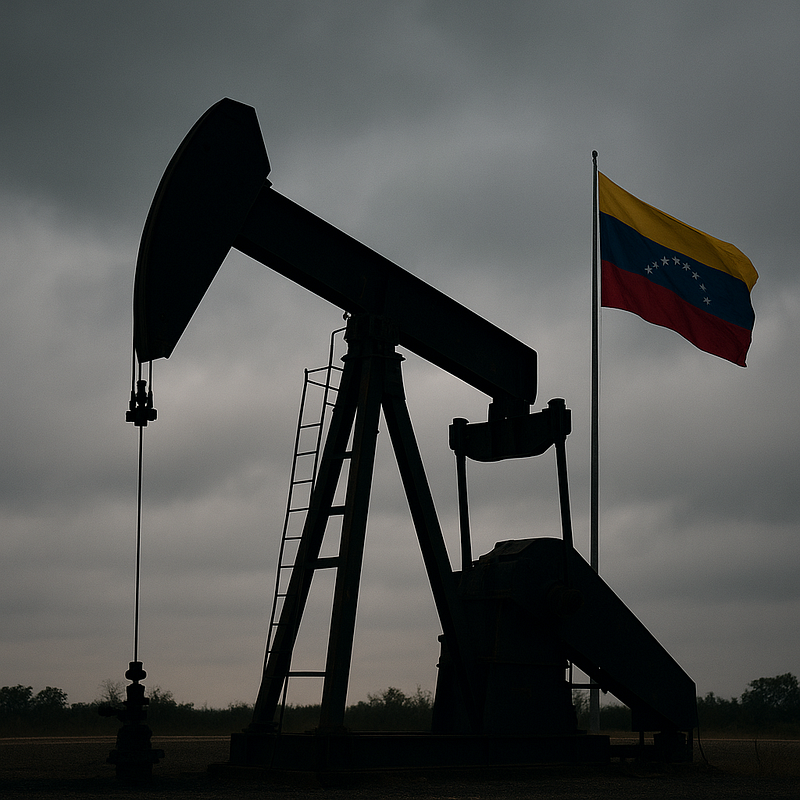
The refinery is still there.
Along the Venezuelan coast, pipes stretch toward the sea the way they always have. Steel darkened by salt. Valves aligned with habits older than governments. The machinery does not register ideology. It does not remember speeches. It does not recognize elections.
Nothing about it is broken.
The lights still turn on. The gauges still move. The oil still rises from below ground, indifferent to flags, sanctions, or intent. Beneath the ground, in layers older than contracts and far older than law, wealth rests without opinion. It does not ask to be discovered. It does not demand to be extracted. It waits.
What disappeared was not the resource.
What disappeared was permission.
Ships did not stop dramatically. There was no blockade. No smoke on the horizon. They simply failed to return. Insurance letters waited unanswered. Payments circulated through correspondent banks and never landed. Contracts remained valid in law and unusable in practice.
Oil that does not move becomes something else.
Not leverage.
Not power.
It becomes weight.
This was not collapse.
Collapse leaves debris.
This was absence.
And absence does not look like violence. It looks like administration.
“Infrastructure remains. Access disappears.”
When Movement Becomes Negotiation
Venezuela did not fall.
It was made unreachable.
The explanations came later, once the silence had settled and the delays had accumulated enough mass to require interpretation. Corruption. Mismanagement. Criminality. Drugs. These words always arrive after consequences. They never precede them. They explain outcomes that are already irreversible.
Because Venezuela did not become dangerous when chaos appeared.
It became dangerous when negotiation did.
Not ideological negotiation. Not speeches, flags, or slogans. Paperwork. Ownership. Terms that were no longer treated as ceremonial. Contracts that were no longer inherited but examined. Access that was no longer assumed.
The moment ownership was treated as real, the tone shifted.
Quietly. Respectfully. Efficiently.
Credit hesitated. Insurance paused. Compliance departments thickened their files. Risk assessments multiplied. Each step was defensible. Each delay procedural. No law was broken. No prohibition announced.
Power does not need to refuse.
It only needs to wait.
Waiting is not neutral. It is directional.
A Country That Had Everything
Venezuela did not suffer from scarcity.
It suffered from abundance.
The country holds the largest proven oil reserves on Earth. More than Saudi Arabia. More than Russia. This is not rhetoric. It is accounting. Add to that gold, coltan, iron ore, bauxite, gas, freshwater. Add to that geography. Add to that timing.
These were not theoretical assets. They existed. They still do.
There was no absence of material.
There was no absence of capacity.
What destabilized Venezuela was not ideology.
It was exposure.
Contracts were expiring. Terms were being reviewed. Access was no longer automatic. The inherited architecture of extraction, shipping, insurance, and settlement was suddenly visible as architecture.
And architecture invites inspection.
Resource Wealth as Exposure
The question underneath everything was simple.
Who decides where value goes?
In official language, this moment would later be called uncertainty. In investor language, risk. In moral language, failure. But these words followed the decision. They did not cause it.
Real ownership disrupts systems built on predictability.
Stability is not peace.
It is compliance without friction.
Pressure did not arrive as punishment. It arrived as inconvenience. Each transaction took longer. Each shipment required more assurances. Each agreement demanded another layer of review.
Nothing collapsed.
Everything slowed.
“They called it restraint. It functioned as enclosure.”
The First Invisible Wall
The first wall was not legal.
It was financial.
Correspondent banking did not stop. It hesitated. Transfers were not rejected. They were reviewed. Then reviewed again. Then routed through additional checks. Funds existed. Accounts were open. Ownership was not disputed.
Movement was.
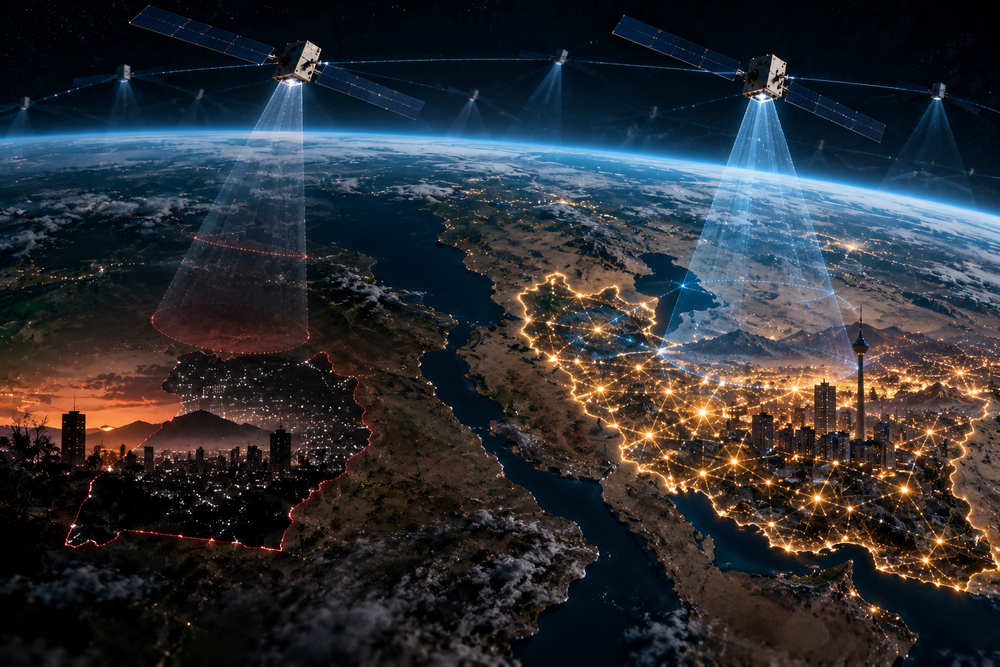
This is where economic warfare begins. Not with sanctions as law, but with sanctions as atmosphere. Banks do not need orders to sense risk. Insurers do not need prohibitions to withdraw. Shipping companies do not need bans to seek calmer waters.
No one said no.
Everyone waited.
Procedures That Never Say No
The Treasury never announces itself.
There is no siren. No public letter. No moment where power clears its throat. The mechanism lives lower than policy and higher than law, inside procedures that describe themselves as neutral and function as filters.
The Office of Foreign Assets Control did not close doors.
It rearranged hallways.
Lists were updated. Guidance was issued. Clarifications appeared in language so careful it could not be accused of intent. Banks were reminded of obligations they already knew. Insurers were invited to consider exposure. Compliance departments were asked to reassess risk.
Nothing was ordered.
Everything was understood.
This is how optional law operates. It does not command. It conditions. It creates an environment where refusal is unnecessary because participation becomes irrational.
A bank that processes a Venezuelan transaction does not break the law.
It invites attention.
Attention has weight. Attention has cost. Attention invites questions that never fully resolve. Each unresolved question becomes time. Time becomes delay. Delay becomes deterrence.
No sanction is required when hesitation does the work.
“No one said stop. Everyone slowed.”
Correspondent Banking and the Geography of Delay
Money does not move the way people imagine.
It does not travel directly from sender to recipient. It passes through layers. Correspondent banks. Clearing institutions. Jurisdictions that exist not as places, but as permissions.
A payment from Caracas to anywhere else must cross borders it cannot see. Each crossing is a question. Each question is a chance to pause.
Funds were not seized.
They were suspended mid-motion.
Accounts remained open. Balances remained visible. Ownership was not contested. What disappeared was velocity. The right to arrive.
This is the cruelty of financial modernity. You can possess something completely and be unable to touch it.
Hospitals learned this first. Not through embargo, but through procurement. Medical suppliers required insurance. Insurance required banking assurances. Banking required compliance clearance. Clearance required patience.
Patients waited at the end of a chain that never officially broke.
Insurance as Veto
Insurance is where trade goes to ask permission.
Ships do not sail without it. Cargo does not move without coverage. No insurer needs to ban a destination to make it unreachable. They only need to adjust premiums. Or request additional documentation. Or decline quietly.
Lloyd’s does not issue decrees.
It prices behavior.
Underwriters began to hesitate. Not uniformly. Not publicly. Each decision could be justified on its own. Aggregate effect did not require coordination.
Shipping companies learned the lesson quickly. Routes adjusted. Flags changed. Ports became less convenient. The sea remained open.
Access did not.
“Nothing was prohibited. Everything was impractical.”
The Sanctions That Never Appear on Paper
Sanctions are imagined as lists.
They are experienced as fog.
A fog where every step requires recalculation. Where no rule is broken and no path is clear. Where each actor protects themselves by retreating one inch further than required.
This is why sanctions rarely announce themselves as violence. Violence leaves evidence. Procedure leaves plausible deniability.
Economic warfare learned this lesson early.
It does not starve directly. It interrupts logistics. It does not destroy factories. It prevents replacement parts. It does not forbid medicine. It complicates payment.
Law remains intact.
Life does not.
When Delay Becomes Structure
By the time sanctions were named, the damage was already normalized.
The naming came after the architecture was complete. After waiting had been internalized. After delay had become routine. Once the mechanism works, it can afford visibility.
This is the inversion most people miss.
Sanctions do not cause collapse.
They formalize it.
The real work happens earlier, inside compliance emails, internal memos, unanswered requests. By the time policy speaks, behavior has already changed.
Venezuela did not experience a sudden break.
It experienced a gradual suffocation that could never be photographed.
The Moment Law Became Optional
International law did not disappear.
It became selective.
The sanctions imposed on Venezuela were not the result of multilateral consensus. They were unilateral, enforced through financial dominance rather than adjudication. No court ruled. No treaty was broken.
Law existed.
Its application did not.
This is the power of financial hegemony. It does not need legitimacy. It needs reach. When enough nodes depend on the same currency, the same clearing systems, the same insurance markets, law becomes situational.
Trump did not invent this condition.
He revealed it.
Trump as Exposure, Not Origin
Trump spoke plainly.
He removed the insulation that usually protects procedure from scrutiny. He named assets. He named oil. He named outcomes. What previous administrations managed through silence, he managed through declaration.
But the structure did not change.
It was already in place.
Before Trump, sanctions arrived wrapped in language about norms and stability. After Trump, the same mechanisms operated without apology. Assets were frozen. Parallel authority was recognized. Access was withdrawn.
Not because law demanded it.
Because power allowed it.
“He did not make law optional. He showed that it already was.”
Exclusion Without Invasion
Venezuela was not invaded.
It was disconnected.
No troops landed. No buildings fell. No maps were redrawn. The refinery still stood. The ports still existed. The contracts still had signatures.
What disappeared was the ability to participate.
This is modern exclusion. Clean. Reversible in theory. Permanent in practice.
A country does not need to be destroyed to be neutralized. It only needs to be removed from circulation.
The Crime Narrative Arrives
The story about drugs arrived late.
Not as investigation. As punctuation.
Criminality simplifies causality. It collapses complexity into guilt. Once a country is framed as criminal, delay becomes virtue. Suffering becomes consequence. Questioning becomes sympathy.
No one denied trafficking existed.
That was not the point.
Selection was.
Other countries moved more drugs. Other states housed deeper networks. They remained partners. Their alignment protected them.
Venezuela lost alignment.
Morality replaced economics.
Blame replaced design.
Halfway | The Illusion Breaks
This is the moment where the story turns.
Venezuela is not the subject.
It is the example.
What happened there was not exceptional. It was exemplary. A demonstration of how power prefers to operate when visibility is a liability.
First friction.
Then delay.
Then isolation.
Then explanation.
The vocabulary shifts.
The structure remains.
“Failure is never announced. It is narrated.”
Waiting as a Weapon
Waiting does not look like force.
It looks like patience.
But patience imposed from above is not patience. It is pressure without fingerprints. Each day without resolution compounds uncertainty. Each unresolved transaction teaches restraint.
People adapt. Institutions recalibrate. Eventually, expectation itself collapses.
This is when sanctions no longer need enforcement.
They have been absorbed.
The Pattern That Travels
What happened to Venezuela did not require invention.
It required replication.
Once the architecture exists, it moves easily. It adapts to geography, ideology, scale. It does not care about flags. It only needs access points. Currency corridors. Insurance hubs. Clearing systems. The rest follows automatically.
Venezuela is useful because it is clear.
Other cases are useful because they are familiar.
Iran and the Anatomy of Exception
Iran was never fully cut off.
That is the myth.
Humanitarian exemptions existed. Medicine was technically allowed. Food shipments were not banned. On paper, suffering should have been impossible.
In practice, everything passed through the same corridors.
Banks hesitated. Insurers declined. Shipping companies asked for guarantees no one could give. Payments stalled. Suppliers withdrew, not because they were forbidden, but because delay made planning impossible.
Hospitals did not close because law demanded it.
They closed because timing did.
This is how exceptions function inside optional law. They preserve legality while emptying it of effect.
“Permission existed. Access did not.”
Cuba and the Weaponization of Time
Cuba learned early that sanctions do not need escalation.
They need duration.
Decades pass quietly. Generations adapt downward. Scarcity becomes normal. Ambition shrinks to survival. When enough time passes, the sanction no longer feels imposed. It feels inherited.
This is the most efficient form of control.
No enforcement is required once expectation adjusts.
Cuba was not crushed.
It was taught to wait.
Waiting is not neutral when it lasts long enough to redefine the possible.
Russia and the Elastic Corridor
After 2014, Russia was not isolated.
It was slowed.
Energy still moved. Capital still flowed. Trade still occurred. But every transaction carried friction. Every agreement required additional routing. Each detour added cost, time, and uncertainty.
The system tested elasticity.
How much delay could be absorbed before behavior changed?
This is how sanctions scale. They are tuned, not declared. Adjusted, not imposed. The point is not stoppage.
It is correction.
Iraq and the Precedent of Silence
The 1990s provided the blueprint.
Iraq was sanctioned into administrative ruin. Food-for-oil programs preserved legality while institutional capacity collapsed. The suffering was documented. The responsibility diffused.
No single actor could be blamed.
This is crucial.
Sanctions survive scrutiny because they distribute causality. Every delay has a reason. Every failure has a form. No one holds the knife.
The Psychology of Absorption
Sanctions do not only reshape economies.
They reshape expectations.
Institutions adapt first. Banks recalibrate risk models. Insurers adjust exposure. Corporations reroute logistics. Eventually, individuals internalize constraint.
This is the silent victory.
When a society begins to plan around absence, power no longer needs to act.
Scarcity becomes ambient.
This is why sanctions are rarely lifted cleanly. Removing the rule does not restore the corridor. Trust does not reappear on command. Delay lingers.
The system remembers.
Media as Time Follower
Media does not design sanctions.
It follows them.
By the time stories of corruption, collapse, or criminality dominate coverage, the architecture is already in place. The narrative arrives not to explain the mechanism, but to justify its effects.
This is not deception.
It is sequencing.
Journalism responds to visible outcomes. Sanctions operate invisibly. The gap between them is filled with story.
Story makes suffering legible.
And legibility makes endurance possible.
The Quiet Success of Optional Law
Optional law is not lawlessness.
It is selective activation.
Rules exist. Rights exist. Ownership exists. What fluctuates is enforcement. What varies is access. What disappears is obligation.
This is power without exposure.
It can be denied. It can be reversed in theory. It can be defended as neutral. And it can be applied asymmetrically without admission.
Trump did not change this.
He named it.
That naming was disruptive only because it removed ambiguity. Once ambiguity returns, the mechanism resumes its preferred state.
Quiet.
The Return to Venezuela
The refinery still stands.
The oil still rises.
The ports still exist.
The contracts are still archived.
Nothing was erased.
Everything was suspended.
Venezuela did not collapse because it failed.
It was rendered unreachable because it mattered.
This is the warning embedded in the case.
Not that power punishes disobedience.
But that it withdraws participation.
Closing Reflection | The Corridor
Power no longer needs walls.
It builds corridors and decides who may walk through them.
When access is withdrawn, nothing dramatic occurs. Life continues. Infrastructure remains. Law remains. Ownership remains.
Only movement stops.
And the world learns, quietly, that permission matters more than possession.
Remember where it began.
And who decided that law could wait.
Related from The Manifest Archive