A war does not have to reach your city to reach your life.
A Price Arrives Before The War Does
There is a moment when war reaches your street without ever reaching your city.
Not through troops, but through prices. Through insurance. Through schedules that suddenly go blank. Through a tanker that does not sail, a cargo that cannot be financed, a premium that explodes, a benchmark that jumps.
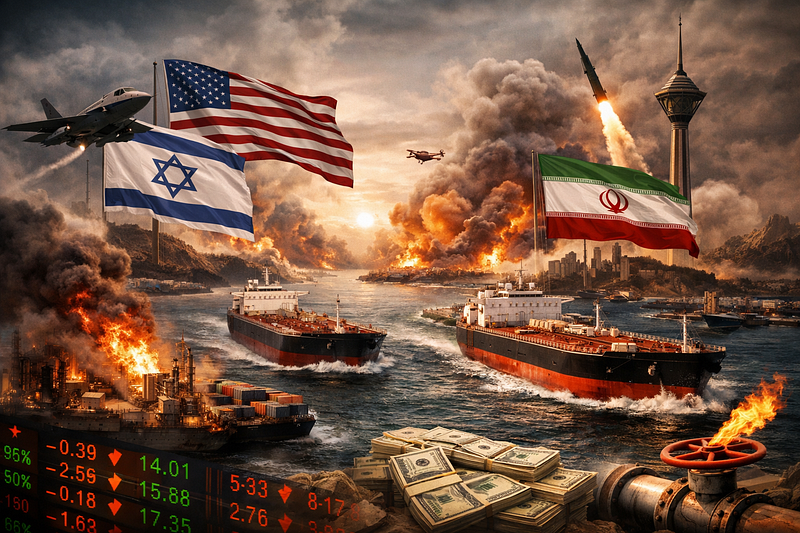
Israel and the US launched strikes on Iran, and that decision turned a regional escalation into a global invoice. The trigger was not a formal closure. It was something colder and more decisive.
Risk became unpriceable.
Trade does not stop because someone declares it should.
Trade stops when risk can no longer be priced.
That sentence is not a metaphor. It is a description of how the modern world functions. The news arrives as a headline, but the crisis arrives as a clause. It arrives as a refusal.
In the public imagination, war begins with explosions and ends with a signature. In the real economy, war begins when someone refuses to insure the route, and it ends when they quietly return.
Rotterdam At Dawn, And The First Question That Matters
Imagine Rotterdam at dawn, not as poetry but as logistics.
A risk desk gets a call from a shipowner. The voice on the line is not angry. It is careful. It sounds like a person who knows that one sentence can turn a ship into a liability.
A bank asks one question before anything else: is the cargo still financeable? Not morally, not politically. Financeable. The underwriter does not talk about ideology. The underwriter talks about exposure, terms, and whether war cover still exists at a price that does not turn the shipment into a financial grenade.
Then the second question arrives, quieter and more lethal.
If war risk cover is uncertain, letters of credit get questioned. Without credible cover, banks hesitate, trade finance slows, and the ship becomes a stranded asset even before it leaves port.
A corridor can still exist on charts and still disappear from commerce.
This is how crises arrive in Europe now. Not as tanks. As clauses.
Modern power announces itself in paperwork before it announces itself in ruins.
You can watch politicians debate narratives. The market does not debate. It reprices. Insurance is not an opinion. Insurance is the settlement between fear and movement.
The Bet That Was Sold As Controlled
Every escalation is sold with the same vocabulary. Necessary. Limited. Controlled. Preventive. The implied promise is always the same. It will not spiral.
But behind that promise sits a wager about psychology. The opponent will be disoriented. The leadership will fracture. The population will turn inward against its own rulers. The system will crack under shock.
When that wager fails, everything after it becomes more expensive.
Then came the event that shifted the conflict’s center of gravity. Iran’s Supreme Leader, Ayatollah Ali Khamenei, was killed in the strikes of 28 February; after first denying it, Iranian state media confirmed his death on 1 March.
You can kill a leader. You can enlarge a symbol.
A leader is not only a person. A leader is political infrastructure. A leader is an off ramp. When that figure is removed violently, the conflict does not stay in the realm of interests. It moves into legitimacy. It moves into the kind of psychology that makes quick de escalation harder.
That shift matters because it changes what rational looks like on the Iranian side. A state can accept compromise when the story is policy. It struggles to accept compromise when the story is humiliation, mourning, and survival.
The Martyr Multiplier
A martyr is a multiplier because it converts grief into meaning, and meaning into endurance.
This does not mean an entire society suddenly becomes loyal. It does not erase dissent. It does not heal internal fractures. It means something simpler and more human. When an external attack is framed as existential, internal arguments often pause. The pause can be uneven across cities and classes. It can be temporary. It can coexist with private hatred of the regime.
But it matters, because it reduces the probability of rapid capitulation.
A strategy that expects fast internal collapse can accidentally manufacture the opposite. A narrative of survival. A permission structure for harsher repression. A public mood that treats compromise as humiliation.
If you gamble on rebellion, martyrdom is the worst outcome.
Here is the bridge that makes the logic explicit.
Martyrdom makes a quick settlement politically toxic, and a long conflict is exactly what turns shipping routes into weapons.
A long conflict does not need to win on the battlefield. It only needs to remain present. It only needs to keep risk alive long enough for insurers, shippers, banks, and buyers to treat the corridor as structurally compromised.
Time is the multiplier that turns a strike into a regime.
How Could They Misread This So Badly
Because they confused the removal of a person with the collapse of a system.
A regime is not a man. A regime is a network. Institutions, loyalties, enforcement, routine. Kill the symbol and you do not automatically fracture the machine. You can give the machine a story that tightens it.
A martyr story turns private doubt into public silence, not forever, not everywhere, but long enough to harden the posture of a state. It turns grief into discipline. Discipline into endurance. Endurance into time.
Time is what makes chokepoints lethal.
Decapitation is a tactic.
Martyrdom is a timeline.
This is the hidden error of modern power. It believes that if it can strike with precision, it can control the consequences with precision. It confuses accuracy with containment. It confuses the ability to hit a target with the ability to shape a system.
A state that thinks in shock often underestimates friction. A state that worships speed often forgets what happens when speed meets a bottleneck.
The Trap In The Logic
Here is where the strike becomes a trap.
The wager in Washington and Tel Aviv appeared simple: remove the symbol, fracture the system, accelerate collapse. But the removal of a symbol can do the opposite. It can manufacture martyrdom, and martyrdom is a multiplier. It turns grief into discipline, discipline into endurance, and endurance into time.
And time is exactly what makes chokepoints lethal.
The shipping route does not need to be officially closed to become economically closed. It only needs risk that insurers will not carry.
In that sense, the strike did not just hit Iran. It stepped into a conflict structurally primed to spread through premiums, shipping, energy, and inflation.
A sea lane can be open on a map and closed in the economy.
The Strait Of Hormuz, Explained As A Shipping Route
Not everyone knows the name, so put it plainly.
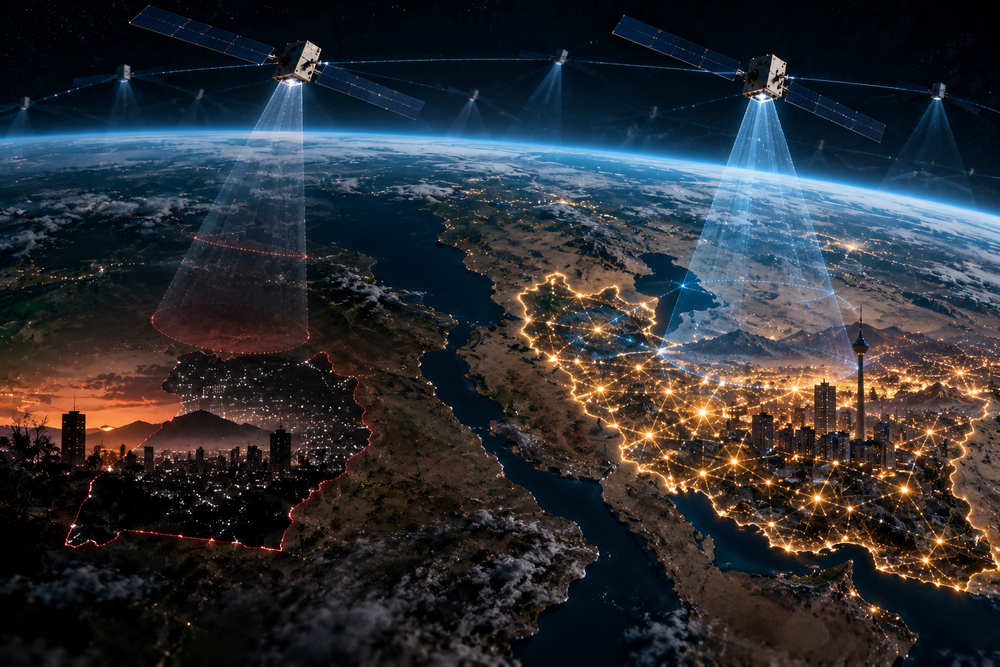
The Strait of Hormuz is the narrow shipping route at the mouth of the Persian Gulf. It is the corridor tankers use to move oil and liquefied natural gas out of Gulf exporters and into the wider world. It is not a slogan. It is a physical bottleneck.
If you want one anchor point for what that means, here it is.
The U.S. Energy Information Administration reports that flows through Hormuz in 2024 and early 2025 amounted to more than a quarter of global seaborne oil trade and about a fifth of global oil and petroleum products consumption, and that around a fifth of global LNG trade transited the strait in 2024, largely from Qatar.
That is why Hormuz is not regional. It is global infrastructure concentrated in a narrow place.
A shipping route does not need a barricade to stop functioning.
It only needs risk that insurers refuse to carry.
The Moment Insurance Makes The Route Vanish
Most public debate asks whether Hormuz is officially closed. Markets rarely wait for official language. Markets react to behavior.
On March 1, Maersk said it was suspending crossings through the Strait of Hormuz until further notice.
Then the insurance layer delivered the message that matters more than any politician’s tone. On the same day the Norwegian club Gard, followed by Skuld, NorthStandard, London P&I, the American Club and Steamship Mutual, gave notice that standing war-risk cover would end from 5 March and be reinstated with Iran, the Persian Gulf and the Gulf of Oman excluded. Cover for single voyages could still be bought back, at a far higher price. Daily transits had already fallen from around 138 to 28.
This is not commentary. This is the private sector telling you the corridor has crossed the line where normal commerce cannot function.
Without cover, ships do not move as normal commercial instruments. Cargo becomes harder to finance. Delivery becomes uncertain. Contracts become lawsuits waiting to happen. Crews refuse routes. Ports hesitate. Banks hesitate. Trade finance slows, then freezes.
When standing cover disappears, ordinary trade stops.
When insurers step back, the market hears war louder than any government does.
This is the part most readers miss. Not because they are unintelligent, but because the modern economy hides its vital organs behind invisible agreements.
A ship at sea is not just steel and fuel. It is credit. It is a chain of promises. It is a timing instrument for refineries and utilities. It is a timetable for supermarkets and factories. It is a floating contract.
When insurers withdraw cover, the contract breaks first. The ship stops second. Prices move third. Politics reacts last.
The Comforting Myth Of Bypass Routes
There is always a reflex in crises like this: surely there are alternatives.
There are bypasses. They are not salvation.
The same EIA analysis notes pipeline routes that can bypass Hormuz for some crude volumes, but also makes clear that bypass capacity is limited relative to normal Hormuz flows and that disruption would still leave large volumes exposed to the shipping route.
This is the uncomfortable arithmetic. The bypass story does not remove vulnerability. It exposes it. It tells you that the world has no elegant substitute for a corridor it treats as normal.
The more governments insist alternatives exist, the more they reveal the real problem. Alternatives exist on paper. But paper is not the same as capacity at scale, at speed, under stress.
Two Weeks Of Constraint: The Shift From Volatility To Planning
Two weeks is not short in energy markets. It is long enough for volatility to become planning.
Days one to three are the premium shock. War risk costs surge. Freight adds emergency surcharges. Traders stop treating the corridor as normal.
Days four to ten are the behavior shift. Importers draw down stocks and reserves. Buyers stop waiting for calm and start competing for replacement cargoes that avoid the Gulf. Asia and Europe begin bidding against each other in real time.
Days ten to fourteen are the political phase. Households notice bills. Industry sees margins collapse. Governments prepare cushioning measures because they have learned what happens when they do not.
Two weeks is when a system stops asking is this real and starts asking how long do we budget for this.
Markets can absorb a spike.
They struggle with a new calendar.
Now widen the lens and watch how planning becomes a weapon.
A buyer who believes this is temporary will pay the spot price and wait. A buyer who believes this could persist will lock future deliveries at almost any cost. That is how fear becomes structure. Not through hysteria, but through hedging.
Once hedging becomes desperate, the market stops reflecting reality and starts manufacturing it. High prices do not just describe scarcity. They create new scarcity by pulling cargoes away from others.
Longer Than A Month: When Shock Becomes Structure
A month is where the shock becomes a regime.
Freight and war risk surcharges begin to feel semi permanent. Contract language changes. Supply chains reroute and accept higher baseline costs. Energy stops behaving like a price and starts behaving like a constraint. Inflation returns to the policy agenda. Central banks lose room. Rate cuts disappear from the conversation.
A month is also when industrial curtailment becomes plausible. Not everywhere, not all at once, but in the sectors where energy is not an input. It is the foundation.
This is where a maritime bottleneck starts behaving like a domestic crisis. Not because missiles land in Europe, but because continuity becomes unaffordable.
The economy does not break from one explosion.
It breaks from sustained uncertainty in the corridors it depends on.
Here is how it looks from inside a company, offered as an illustration rather than a reported case.
Picture the energy procurement team of a German manufacturer. It does not react to headlines. It reacts to curves. It watches the gas benchmark, then the power forward, then the margin requirements. Then it asks whether to slow production. Not because the factory has been hit, but because the price of continuity has.
A curtailment decision is not dramatic. It does not look like war. It looks like management. It looks like responsibility. It looks like a spreadsheet.
But it is how conflict enters the real economy. It does not arrive as a flag. It arrives as a decision to stop making something.
Month Two And Three: The Hidden Cascade
If this lasts beyond a month, the second and third month is where the real damage appears, because the buffers that protect society are designed for shocks, not regimes.
In month two, credit begins to tighten in ways that are not visible on television. Companies facing higher input costs and softer demand look riskier. Banks become conservative. Not because they are evil, but because their models begin to flash warnings.
When banks become conservative, investment slows. When investment slows, layoffs begin. When layoffs begin, politics turns brittle.
In month three, governments that tried to cushion the shock face a second bill. Subsidies and caps strain budgets. Budgets strain borrowing. Borrowing meets higher rates. Higher rates shrink fiscal space. Fiscal space shrinks political space.
Constraint arrives before debate. Policy arrives after constraint. Democracy arrives last, inside the constraint.
That is why long energy crises feel like social crises. They are not only expensive. They are compressive. They narrow the range of choices until governments look incompetent even when they are merely trapped.
Why The Real Damage Begins With Gas, Not Just Oil
Oil shocks are visible at the pump. Gas shocks are deeper.
Gas rewrites electricity pricing, industrial competitiveness, fertilizer costs, and food chains. It touches household budgets and manufacturing margins at the same time. That is why the gas dimension is not optional. It is the European core of the story.
On March 2, QatarEnergy halted production at Ras Laffan after an Iranian drone attack, taking roughly a fifth of global LNG supply offline. Europe’s TTF benchmark rose as much as 54 percent during the day and closed 39 percent higher, at €44.51 per MWh, according to Bloomberg.
Energy is the base layer of prices. When the base layer shifts, everything shifts.
Oil hits your car.
Gas hits your electricity, your factory, your food chain, and your inflation.
Now add the layer that matters most politically, described as a type rather than a reported case.
A supermarket logistics manager does not talk about geopolitics. They talk about refrigeration. They talk about cold chains. They talk about diesel, electricity, and delivery windows.
When fuel surcharges rise, the food chain does not stop. It becomes more expensive. When electricity spikes, refrigeration becomes an operating crisis. The prices on shelves lag behind the curves, then suddenly jump.
That lag is what makes people feel lied to. Governments say the crisis is over. The shelf says otherwise.
Their Strike, Our Inflation
This is the latest move by the United States, our so called ally, that drags Europe deeper into financial strain. Not by occupying our streets, but by destabilizing the routes and risks that set our prices.
When insurance withdraws and energy reprices, inflation returns. When inflation returns, rate cuts disappear. When rate cuts disappear, growth weakens and budgets crack. The rhetoric calls it strategy. For Europeans it arrives as bills.
Their decisions become our constraints.
Europe pays early because Europe imports fragility through energy. Then governments are pressured to cushion households. Cushioning costs money. Money becomes debt. Debt tightens fiscal space. Fiscal space collapses into political space. Political space collapses into instability.
Just as debt limits policy before parliament votes, risk limits trade before ministers speak.
The most expensive war is the war that taxes your allies.
The Legal Dimension Is Not Morality. It Is A Cost Engine.
International law is often treated as decoration until it is needed. In practice, it functions as a predictability framework.
The UN Charter’s baseline is simple. Members must refrain from the threat or use of force against another state’s territorial integrity or political independence.
The self defence exception is narrow in its core phrasing: it applies if an armed attack occurs.
You do not have to become a lawyer to see the economic point.
A widely contested use of force widens the distribution of outcomes. It increases uncertainty about escalation and retaliation. Uncertainty increases risk pricing. Risk pricing increases premiums. Premiums increase costs. Costs feed inflation. Inflation constrains rate cuts. Rates constrain growth.
On 28 February the UN Secretary-General condemned both the use of force by the United States and Israel against Iran and Iran’s retaliation across the region, warning that both undermined international peace and security.
When rules stop acting as brakes, price becomes the only brake left.
This is why legality and economics belong in the same paragraph. Predictability is a financial input. When the rules of escalation become elastic, everything becomes more expensive, not only in the Gulf but everywhere.
A Short Counterargument, And Why It Does Not Change The Bill
The strongest pro strike argument will be framed as necessity: deterrence, prevention, self defence, and the claim that pain now avoids catastrophe later.
Even if you grant that logic, the structural point remains.
You do not get to choose whether a chokepoint crisis is worth it after you trigger it. The corridor reprices anyway. Insurance reprices anyway. LNG reprices anyway. Europe pays anyway.
That is what makes the decision economically reckless. Not only its intent, but its unavoidable mechanism.
You can debate justification.
You cannot debate the invoice once the corridor is uninsurable.
How Severe Is This, Really
Most people hear Hormuz for the first time only when prices jump. So here is the severity scale, anchored in behavior, not rhetoric.
At the bottom is noise. Headlines spike. Prices twitch. Ships keep moving. Insurance stays normal.
Then comes regional disruption. Delays, rerouting, a temporary premium, but the corridor remains commercially usable.
Then comes economic friction. Carriers pause crossings. War risk costs jump. Trade slows. Prices stay elevated beyond a news cycle.
Then comes system stress. Insurance becomes punitive or withdraws. Large numbers of vessels wait or avoid the route. LNG and oil risk becomes persistent. Inflation expectations shift.
At the top sits global crisis. Prolonged disruption leads to rationing talk, industrial shutdowns, recession pressure, and financial instability.
Right now, the combination of carrier suspensions, insurer withdrawals, and LNG vulnerability places this closer to system stress than to noise.
Who Pays First
If you want to know who gets hit before the statistics catch up, look at the sectors that cannot wait.
Transport firms that burn fuel daily. Food chains that rely on refrigerated logistics. Small and medium businesses with thin margins and variable rate debt. Energy intensive industry that cannot absorb another cost shock.
This is where geopolitics becomes rent, groceries, and interest payments.
If you want to see the war’s map, look at the pump, the power bill, and the rate path.
Probability, Not Prophecy
There is a temptation in moments like this to talk like a prophet. That is not necessary. The architecture already tells you enough.
The most likely path is not apocalypse. It is sustained pressure.
It looks like a new risk premium on shipping, energy, and credit. It looks like stubborn inflation. It looks like rates that stay higher than politics wants. It looks like governments spending to cushion, then discovering they have less room to govern.
The negative realistic path is months of constraint that spill into layoffs, defaults in vulnerable sectors, and political instability driven by cost of living.
The tail risk is not a 1930s style depression announced in one day. It is a financial accident inside an overstressed system. A margin cascade. A liquidity freeze. A mispriced derivative that suddenly becomes everyone’s problem.
None of this requires conspiracy. It requires only a chokepoint and time.
How Close Are We To A Global Conflict
The financial shock is already here. The question now is whether the military logic remains regional, or whether it begins to behave like a global system problem.
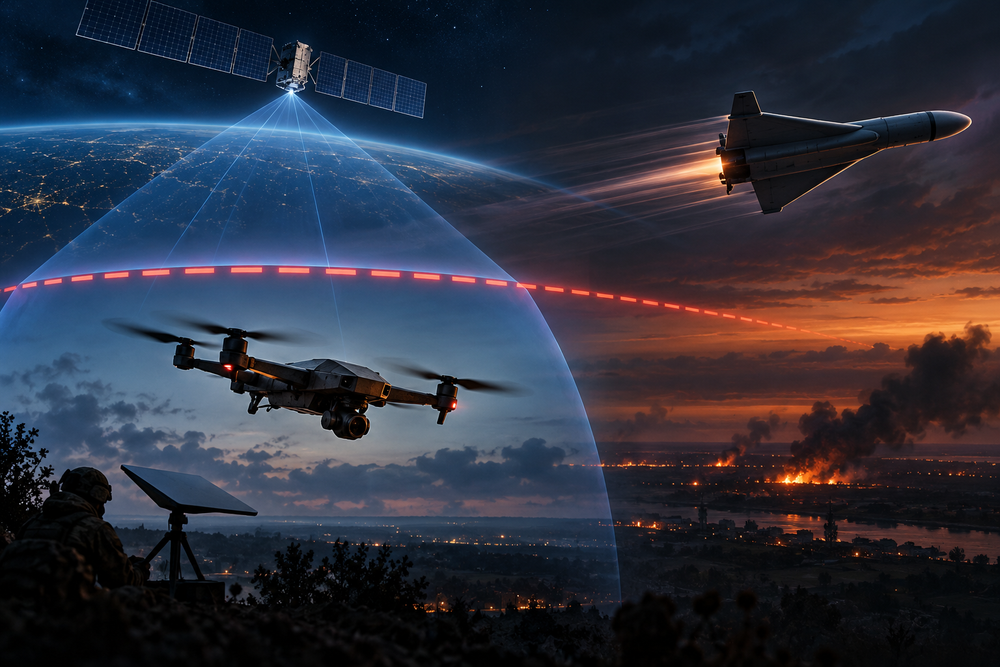
Not because armies will march across Europe tomorrow, but because modern conflict spreads through networks. Bases. Shipping routes. Alliances. Proxies. Accidents. Commitments. Misreads. Overreactions. The kind of chain where every actor insists they are responding, never initiating.
This is not 1962, when the world stared at a visible nuclear escalator. It is something messier: a regional war sitting on global chokepoints, with markets, insurers, and energy infrastructure already reacting as if the corridor has crossed into a systemic zone.
A global conflict rarely begins with a declaration.
It begins with an escalation ladder that no one can step off without humiliation.
Close does not mean global war is announced on television.
Close means something colder.
A shipping incident triggers a broader naval engagement.
A base strike triggers a chain of retaliations.
A misread radar track becomes a political point of no return.
A domestic political crisis forces leaders to escalate to appear strong.
Once the conflict spreads into trade and energy, every day it continues becomes more expensive. The cost becomes a weapon. The weapon compresses time. Compressed time produces rushed decisions. Rushed decisions produce miscalculation.
Speed is not a solution in a chokepoint war.
Speed is how you lose control.
What Ends This
There are only a few real exit conditions.
War risk cover has to return at a price that allows normal trade. Carriers must resume routine transits. LNG exports must be stable enough that buyers stop bidding in panic. And the corridor must become financeable again, which means banks stop treating every shipment like a liability.
If those conditions do not return, the news ends and the regime begins.
This is also how you can disprove the argument in this chapter. If insurance normalises, transits resume, LNG stabilises, and prices settle within a few weeks, then this was a spike, not a structural shift.
If those conditions do not materialise, then the architecture remains in place, and the invoice keeps running.
Strategic Self-Harm, Not A Clean Win
It is tempting to call this financial suicide. The phrase fits the mood. It feels final, deserved, irreversible.
But in economics, suicide is rare. What is common is strategic self-harm: a decision that does not collapse you overnight, but steadily reduces your room to maneuver until you are governing inside a narrowing corridor of costs, inflation, debt, and political backlash.
That is what this escalation risks becoming.
You do not need to implode to lose. You only need to make the world expensive enough that your own alliances begin to fracture.
Closing Reflection
The operation was sold as controlled. The consequences behave as uncontrolled.
It was sold as a shortcut. The aftermath looks like a longer road.
And the bitter lesson is simple.
You do not have to occupy a continent to make it poorer. You only have to make its chokepoints uninsurable.
Israel and the US attacked Iran. The invoice is ours.
Further Reading from The Manifest
If you want to follow the wider structure behind this crisis, continue here:
- Strait of Hormuz: The Chokepoint That Could Break the World Economy
- The Iran Escalation Is Bigger Than the Headlines
- Europe and the Strait of Hormuz: Drifting Into a War It Cannot Control
- The Manifest, Week 12, 2026: What This Week Revealed About Power
Follow The Manifest if you want to see the structure before it becomes visible.
Related from The Manifest Archive