The shattered light
The sea was calm that morning.
A silver horizon hung motionless above the Baltic, and a handful of fishing boats drifted near the island of Bornholm.
Then came the sound, a hollow tremor beneath the water, followed by a column of bubbles rising like the breath of something ancient and dying.
Minutes later, the pipeline exhaled its last.
A plume of gas broke through the surface and spread like a veil across the sea.
For a few seconds, the water shimmered; then the light dimmed, and Europe’s long illusion of energy security faded with it.
The explosion was more than sabotage. It was a revelation.
The moment the pipe burst, the continent discovered that its lifeline had been tied not only to Siberia but to Washington.
The hand that had promised to protect Europe had already begun to squeeze.
Our greatest ally saved us from our enemies, and quietly made us dependent on its mercy.
That was the unspoken truth behind the calm briefings that followed.
Governments condemned, analysts speculated, ministers spoke of unconfirmed intelligence.
Everyone in Brussels, Berlin and Paris sensed that the event marked a new kind of occupation, not with soldiers but with contracts, sanctions, and moral leverage.
Europe’s alliance had become its dependency.
The rupture became the sound of a continent losing its independence in the name of protection.
Friendship with America once meant security.
In reality, it meant substitution: American gas for Russian pipelines, American weapons for European diplomacy, American narratives for European will.
The West was no longer a union; it was an arrangement, one side producing, the other paying.
A war prepared in peace
When the first winter after the explosion arrived, Europe discovered what silence sounds like when it leaves a socket.
Factories dimmed their lights early. Street lamps flickered out before midnight.
Every nation spoke of resilience, yet every speech carried the same unease, that the continent had traded fuel for faith.
The war that would soon dominate headlines was still months away, but the architecture of dependence was already in place.
Training missions, cooperative frameworks, shared intelligence, phrases that promised security while building obligation.
Europe had been preparing for peace that could only be maintained through war.
The manufactured dependence
Winter arrived with the sound of rationed heat.
Factories dimmed their lights early, and whole districts began closing at dusk to save electricity.
Every nation spoke of resilience, yet every speech carried the same unease, that the continent had traded fuel for faith.
The fighting in Ukraine became the lens through which Europe saw its own fragility.
Sanctions turned into self-sanctions; aid into obligation.
What began as solidarity hardened into structure.
The alliance that once spoke the language of ideals now spoke the grammar of logistics.
Dependence rarely announces itself; it hides in the paperwork of cooperation.
Cables carried not only energy but authority.
Procurement rules, intelligence exchanges, emergency frameworks, each new layer meant to strengthen the Union quietly bound it tighter to Washington.
What had been described as partnership was becoming infrastructure.
The new language of loyalty
In Brussels, the vocabulary changed first.
Strategic autonomy became collective security.
Cooperation became alignment.
Every adjustment sounded reasonable, bureaucratic, inevitable.
But with every adjustment, the space for independent choice shrank.
Officials no longer asked how Europe might defend itself; they asked when it should comply.
Each summit produced another declaration, each declaration another dependency.
By the time winter returned, even optimism required import licences.
Empires today do not demand territory; they demand alignment.
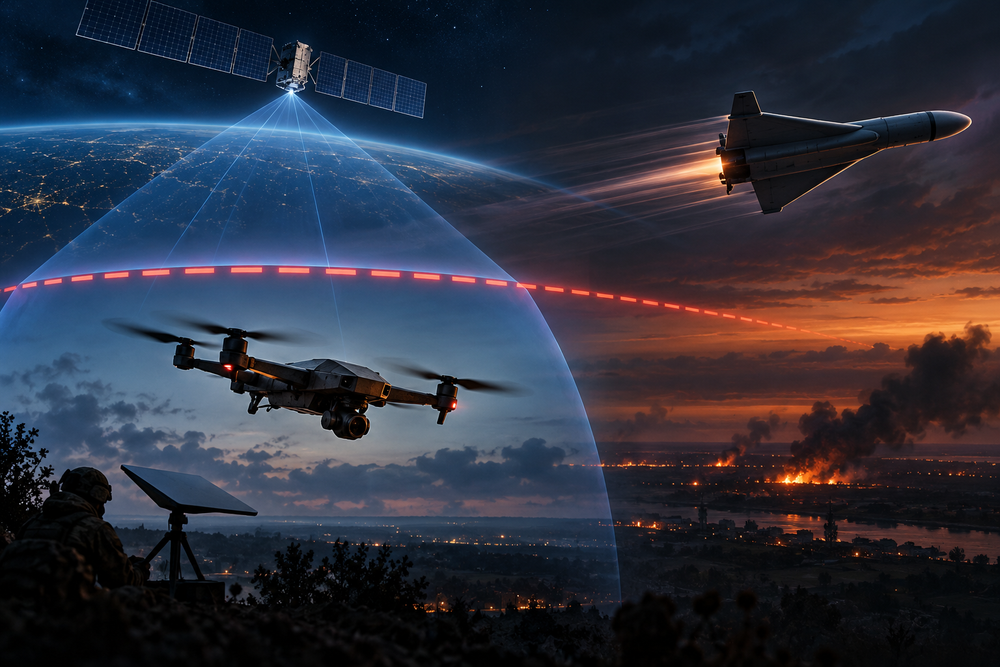
America financed Ukraine’s defence; Europe absorbed the refugees.
America gained new export markets; Europe inherited the inflation.
As Washington rewired its supply chains to counter China, European industry became the collateral of a tariff war it never chose to fight.
Security replaced sovereignty.
The price of protection was participation without command.
Europe had not been conquered, only convinced.
And conviction, when repeated often enough, feels like consent.
The economic exodus
At first the change looked temporary.
Cargo lists altered, a few contracts moved, a handful of plants postponed expansion.
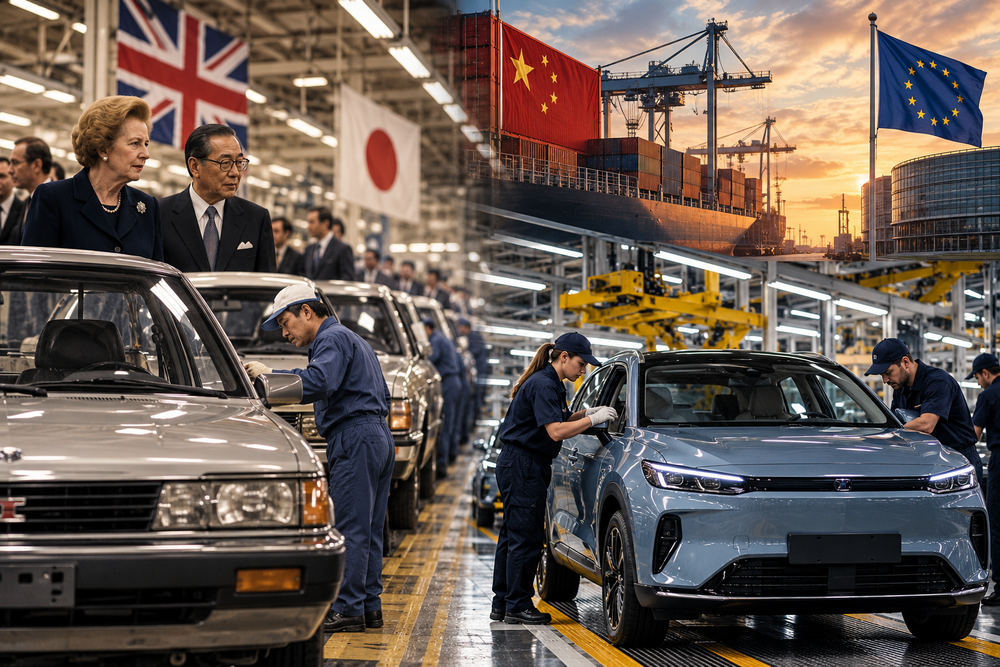
Then the lights dimmed across the Ruhr, in Lyon, and along the industrial spine of northern Italy.
What had been called adjustment became reality.
Energy was the price of loyalty.
Factories that could not meet the new costs simply stopped.
A furnace cannot be told to wait for next quarter’s subsidy; a turbine cannot run on promises.
Production lines cooled, and with them the temperature of a civilisation that once ran on predictability.
De-industrialisation is never declared; it happens through invoices.
Tankers reached Rotterdam full of imported gas.
The price gap was absorbed by taxpayers and small firms.
Politicians called it transition.
In practice, it was retreat.
Wind farms multiplied on the horizon, financed with borrowed dollars.
Solar panels arrived by container from the same China Europe was told to distrust.
The continent was decarbonising itself into insolvency.
Germany, the engine of the European project, began to sputter.
Chemical companies that had survived two world wars relocated to Texas.
Car manufacturers explored Morocco and Mexico.
Each departure was justified as strategic diversification.
The phrase sounded modern; it meant surrender.
Energy as the new border
Power no longer defined itself through maps but through megawatts.
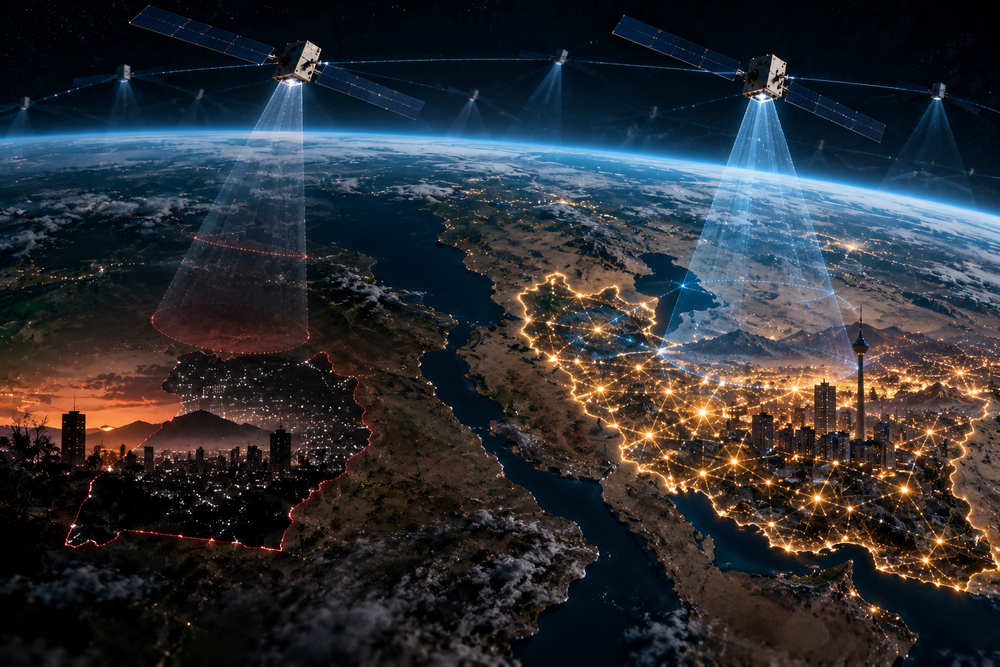
Pipelines, grids, and import terminals became the new front lines.
Whoever controlled the current controlled the policy.
And every switch that clicked in Brussels carried an echo from Washington.
Energy had replaced geography as Europe’s frontier.
The dependency was quiet but absolute: without imported heat the economy froze, without imported security the politics collapsed.
To keep moving, the continent accepted the leash that came with the lifeline.
Its greatest ally had become its grid operator.
The Desert Versailles
Private jets that once landed in Zurich now headed south to a city built on sand and ambition.
Dubai became the new neutral zone, a desert Versailles where Europe’s displaced fortunes gathered.
In its glass towers you could meet a Dutch engineer who once managed a wind-turbine firm, a French banker who no longer believed in the euro, a German logistics manager learning Arabic for his children.
They spoke of safety, of opportunity, but mostly of escape.
Dubai’s promise was simple: anonymity.
No history, no guilt, no winter.
A playground built from the profit of collapse.
Five thousand millionaires a year registered new addresses there; none called it exile.
They called it pragmatism.
Back home, Europe’s middle class felt the hollowing.
Shops stayed open but consumption slowed.
Universities lost researchers to grants abroad.
A continent that once exported ideals now exported talent.
The brain drain is the truest referendum on a society’s faith in itself.
Governments tried to stem the flow with rhetoric, solidarity, innovation, resilience.
But resilience cannot be legislated.
It lives in the expectation that tomorrow will still resemble today.
That expectation was gone.
The Empty factory
At dawn, in an abandoned assembly hall outside Frankfurt, the only sound is the hum of emergency lights.
Dust glows in the pale shafts of sun that fall through broken windows.
Tools lie neatly arranged, waiting for workers who will not return.
The factory is clean, intact, and useless, a monument to efficiency without purpose.
This is how an empire fades: not with ruins, but with maintenance.
The silence of that hall is the silence of Europe itself, preparing to speak but never quite beginning.
The silent continent
The loss was not sudden.
It came in signatures, in regulations, in the quiet applause of parliaments voting for measures no one fully read.
Europe did not collapse; it settled.
Its revolutions were replaced by reviews, its courage by compliance.
At every summit, leaders repeated the same incantations, unity, values, solidarity.
The words still sounded noble, but their meaning had thinned.
Unity now meant alignment with Washington.
Values meant sanctions.
Solidarity meant the cost would be shared, but the decisions would not.
When Language Becomes Ritual
When language becomes ritual, truth becomes memory.
Inside the Commission buildings, everything was measured: carbon, consumption, emotion.
Spreadsheets replaced speeches; morality came formatted in PDFs.
The continent that once wrote manifestos now wrote directives.
Europe remained democratic, but democracy had turned procedural, a vote without choice, a debate without consequence.
Civil servants called it stability.
Artists called it boredom.
Investors called it opportunity.
From Lisbon to Warsaw the same fatigue spread, a civic exhaustion deeper than protest and quieter than despair.
Citizens no longer expected governments to lead; they expected them to manage decline politely.
The crisis was not only economic. It was spiritual.
Freedom died of paperwork.
Power now flowed through cables and pipelines, not parliaments.
Energy dictated policy; security dictated speech.
NATO press conferences sounded like liturgy.
To doubt them was to risk excommunication from progress itself.
Empires fade when they start outsourcing their beliefs.
Outside, the streets remained calm.
Trains still ran, cafés stayed open, children walked to school.
But something in the air had changed, not the weather, the weight.
People no longer argued about the future; they negotiated the present.
The silence of acceptance had replaced the sound of ambition.
In Berlin, the statues still stood.
In Brussels, the lights in the glass towers burned all night.
In Paris, debates filled the television studios about energy caps and strategic autonomy.
But the decisions were already made elsewhere, in rooms where Europe was represented by gratitude.
What began as protection had become paralysis.
The ally that promised safety had taken away the risk, and with it, the possibility of greatness.
Every subsidy was a sedative.
Every sanction a mirror.
The continent had been pacified by its own precaution.
Europe no longer fights wars; it absorbs their consequences.
The question now is not whether Europe can remain loyal, but whether it can remain itself.
If the continent wishes to endure, it must remember what power feels like when it is not borrowed.
That choice, to depend or to define, will decide whether Europe’s next century is written in its own language or translated from another’s.
Europe no longer fights wars; it absorbs their consequences. But perhaps it can still decide what to become.
Further Reading from The Manifest
Related from The Manifest Archive