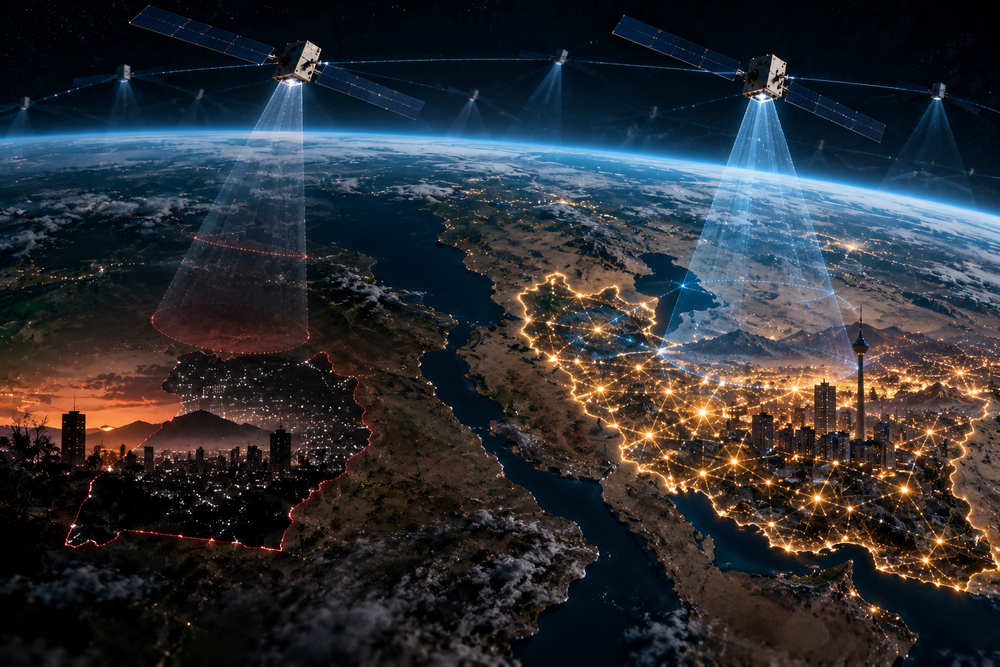
The Moment the World Quietly Turned
History never announces its turning points.
It prefers quieter instruments.
A hesitation in a briefing room.
A diplomatic pause that lasts one breath too long.
A silence that does not break, because something underneath it already has.
Europe felt that silence long before it understood it.
For decades the continent lived inside an architecture that felt immovable. The Atlantic alliance was not a partnership. It was gravity. American attention was not support. It was daylight. Stability was not earned. It was inherited.
And then the daylight dimmed.
At first, the change was almost invisible. Speeches from Washington still echoed with familiar language. Declarations of unity still arrived on schedule. NATO communiqués repeated their mantras with ritual precision. The choreography remained flawless.
But beneath the performance, the music had changed.
“Power shifts long before speeches admit it.”
American strategists began speaking of Europe not as the center of the West, but as one region among many in a world that no longer revolved around the Atlantic. Budgets tilted quietly. War games drifted toward the Pacific. New doctrines pointed to the Indo-Pacific rather than Brussels or Berlin.
Europe did not notice.
Europe rarely notices when the world reassigns its role. It mistakes continuity for relevance.
And then came the sentence no continent ever wants to embody.
Europe had become optional.
Optional is not an insult.
Optional is a verdict.
Optional means you are no longer essential to the strategy of the power you depend on. Optional means the world can move without you. Optional means decline has already begun, politely.
“A superpower never abandons its allies. It reprioritizes its century.”
While Europe drafted resolutions and reaffirmed values, the world was rearranging itself.
China surpassed the EU in purchasing power.
India accelerated into a technological and demographic pole.
Russia re-established itself not as a collapsed empire, but as a strategic constant.
The Gulf rewired global finance.
Africa pivoted toward Beijing and Riyadh.
All of this happened while Europe kept telling itself that influence persists if you speak as if it does.
It was a comforting story.
It was also a fatal one.
America did not abandon Europe out of malice. It abandoned Europe because the century abandoned Europe first.
The twenty-first century will not be shaped by the Atlantic. It will be shaped inland, across the landmass that stretches from Moscow to Beijing to Delhi.
Ukraine did not trigger this shift.
It revealed it.
Europe mistook Washington’s softening tone for fatigue. It was reorientation. It was the quiet redirection of a superpower.
From Russia to China.
From Europe to the Pacific.
From the Atlantic past to the Indo-Pacific future.
Europe interpreted aid as allegiance. America interpreted Ukraine as distraction.
“A superpower can fight a war of choice. It cannot fight a century of necessity.”
That necessity lies in Asia. Not in Europe.
And so Europe woke to an unspoken truth.
The age in which Washington needed Europe had ended.
The age in which Europe needed Washington had not.
This is where the real story begins.
Not with abandonment.
Not with betrayal.
But with clarity.
Clarity that Europe must confront the question it avoided for eighty years.
What does a continent become when it is no longer the junior partner of an empire, but the architect of its own survival?
“History is not moving away from Europe. It is waiting for Europe to arrive.”
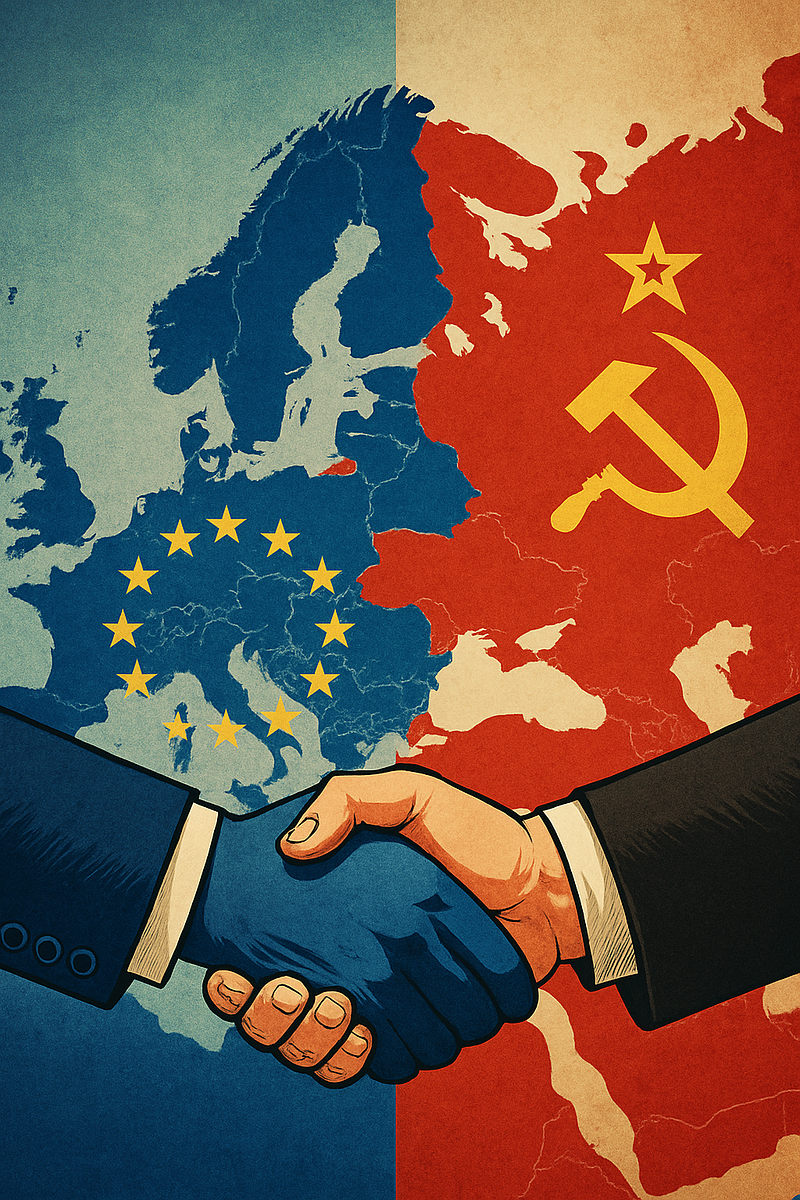
The forbidden map, the one Churchill tried to bury, is rising beneath the surface again. Europe must decide whether that map remains unthinkable or becomes its future.
1945: The Fear That Built the Atlantic World
Victory does not bring clarity. It brings illusions.
Nations emerging from war believe they have defeated danger, when in truth they have only displaced it. They believe the map is settled, when the map has only begun to redraw itself. They believe the future is theirs, when the future is already slipping elsewhere.
Winston Churchill understood this better than anyone alive in 1945.
While Europe celebrated, Churchill stared at a map that terrified him more after victory than at any moment during the war. Not because of ideology. Not because of communism. Not because of Stalin.
But because of geometry.
Europe was whole again.
Russia was enormous again.
And the line between them was thinner than it had ever been.
“Churchill did not fear the Soviet idea. He feared the Soviet map.”
The Soviet Union had survived a catastrophe that should have destroyed any nation. And yet it stood, wounded but unbroken. Its borders wider. Its industry relocated beyond the Urals. Its population hardened by a suffering the West could not comprehend.
Churchill saw what no one else wanted to admit.
If Europe and Russia ever aligned, not politically, not ideologically, simply strategically, the Atlantic world would be eclipsed before it even began.
A Europe of industry.
A Russia of resources.
A continent unified not by treaty, but by necessity.
This was the nightmare.
This was the forbidden configuration.
So in the spring of victory, Churchill did something unthinkable. He summoned his generals and demanded a plan, not for reconstruction, not for diplomacy, but for a new war.
Operation Unthinkable.
A proposal so stark it remained sealed for decades. Re-arm German divisions. Deploy American and British troops. Strike the Soviet Union while Europe still smelled of smoke.
The plan failed politically.
But the fear behind it succeeded historically.
“The Atlantic order was not built to protect Europe from Russia. It was built to protect America from a Europe that included Russia.”
This truth shaped everything that followed.
The Marshall Plan was not merely economic uplift. It was a tether. A guarantee that Europe rebuilt facing west.
NATO was not merely a defensive shield. It was a lock. A structure ensuring Europe could never drift eastward without American permission.
The Cold War was narrated as ideological struggle. But the architecture told a different story. A story of containment not of communism, but of continental scale.
Europe facing west was manageable.
Europe facing east was unacceptable.
And so the doctrine was born, quietly, without ever being named.
Europe may prosper, but never with Russia.
Churchill’s fear migrated into American strategy. It lived inside the National Security Council, inside Pentagon planning rooms, inside think tanks, inside the unspoken assumptions of every U.S.–European interaction.
The West told itself a moral story.
Beneath it lived a geometric one.
“The West did not fear the Soviet dream. It feared the Soviet landmass.”
For forty years the world was divided along a line designed to prevent the one alignment that could reshape global power.
And when the Cold War finally ended, when the Soviet Union collapsed, when Europe believed the threat had vanished, the forbidden map began re-emerging beneath the surface.
Silently.
Naturally.
Inevitably.
1991: The Illusion of Victory
Victory creates fog. Not the fog of war, but the fog of confidence.
When the Soviet Union collapsed, the West celebrated as if history had finally surrendered. Flags changed. Borders dissolved. Markets opened. Commentators announced the end of ideology, then the end of history, then the arrival of a world in which the Atlantic order would endure forever.
Europe believed it had entered a permanent summer.
But history does not end.
History reorganizes.
Quietly.
Mathematically.
Underneath the celebrations.
“The greatest mistakes are made not in defeat, but in triumph.”
Washington misread the moment. Brussels misread it even more.
What fell in 1991 was not a civilization, but a government. What collapsed was not Russia, but the Soviet state that sat on top of Russia like scaffolding on a cathedral.
The West confused the collapse of the scaffolding with the collapse of the stone beneath it.
The United States looked at the ruins and saw opportunity. Europe looked at them and saw safety. Both missed the truth.
Russia was not finished. It was wounded.
And wounded nations do not disappear. They retreat, reassemble, and begin the long work of return.
The 1990s were presented as a decade of transition. They were, in reality, a decade of miscalculation.
Western advisors flooded Moscow, dismantling the Russian economy faster than new structures could form. Industries collapsed. Life expectancy plunged. Currencies shattered. Oligarchs carved empires from the remains.
In Washington this was called reform.
In Moscow it was called survival.
The West concluded that Russia had become small. Manageable. Predictable.
But Russia did not see itself that way.
And more importantly, Russia did not stay that way.
By the late 1990s the chaos stabilized. By the early 2000s the economy hardened. By the mid-2000s Russia had re-entered history.
Europe barely noticed the shift, because it mistook rising prosperity for its own achievement.
Cheap Russian gas resurrected German industry. It breathed life into Italian manufacturing. It fueled French stability. It industrialized Central Europe faster than any postwar plan ever had.
Europe called it a miracle.
But it was not a miracle.
It was a partnership. Unspoken. Pragmatic. Undeniable.
“Europe rose because Russia rose. Europe forgot because Russia remembered.”
Washington saw something different.
The return of the forbidden geometry.
Europe’s factories plus Russia’s resources equaled a power the United States could not outweigh.
This was not ideology.
This was arithmetic.
And arithmetic has a way of becoming destiny.
2000–2014: The Sleepwalking Years
The early twenty-first century felt peaceful. Predictable. Almost prosperous enough for Europe to believe that history had finally softened.
But history does not soften.
It waits.
Silently.
Patiently.
For the moment a civilization stops paying attention.
Europe entered these years with a dangerous confidence. The euro was launched. Borders opened. Trade soared. Diplomats spoke of “ever-closer union” as if the phrase itself could guarantee permanence.
What Europe did not see was the quiet reconfiguration of the continent beneath its feet.
“Prosperity blinds more effectively than crisis.”
Russia emerged from the chaos of the 1990s not as a defeated empire, but as a recovering one. Energy revenues surged. Pipelines expanded. Contracts stabilized. A coherent state returned where collapse once lived.
Europe saw only the benefits.
Cheap Russian gas reignited German industry. It powered Dutch ports. It revived Italian factories. It stabilized French electricity. It fueled the industrialization of Poland, Hungary, Slovakia, and the Czech Republic.
Europe applauded itself for the miracle.
But it was not Europe’s miracle.
It was Eurasia breathing in unison again.
Europe did not speak this truth. Europe did not even think it. Because to think it was to admit something Churchill tried to bury and Washington tried to prevent.
Europe’s prosperity was rooted in the East, not in the Atlantic.
This was the forbidden geometry returning.
Russia needed markets.
Europe needed energy.
Russia needed technology.
Europe needed scale.
Two halves of a continent, forcibly separated for eighty years, were finding each other again through pipelines instead of treaties.
Washington sensed the shift earlier than Brussels did.
America understood arithmetic.
Europe trusted narratives.
Cheap energy plus advanced industry equaled a Eurasian power the United States could not outweigh.
Europe underestimated the transformation.
America feared it.
And so the United States began withdrawing, not overtly, but strategically.
Budgets were redirected toward Asia. War games reoriented toward Taiwan. Think tanks rewrote their models to assume a China-centric century.
Europe remained in the text, but not in the plan.
Europe misinterpreted this as globalization. It was relocation.
The Atlantic economy was shrinking into memory.
NATO’s eastward expansion was narrated as protection. But the underlying purpose was different.
“The alliance was not designed to defend Europe. It was designed to anchor it.”
Anchor it against Russian gravity. Anchor it against continental logic. Anchor it against the possibility that Europe might discover its own size.
Europe interpreted NATO’s growth as unity.
Washington interpreted it as insurance.
Then came the first tremor.
2014–2022: The Collision
History rarely breaks loudly. It breaks where illusions meet reality.
The collision did not begin with war. It began with assumption.
The assumption that Europe could reshape Eastern Europe without consequence. The assumption that Moscow would accept the steady expansion of Western influence into what Russia has always called its existential frontier.
For Europe, Ukraine was a democratic narrative.
For Russia, Ukraine was a security perimeter carved into its historical identity.
For the United States, Ukraine was leverage.
“Ukraine was not a battlefield to win. It was a hinge to pull.”
The annexation of Crimea was not shocking because it was unexpected. It was shocking because it revealed what had been hidden beneath two decades of optimism.
Russia was not the collapsed empire of 1991.
Russia was not the political patient Europe imagined.
Russia had returned.
Europe reacted with emergency summits and sanctions. But beneath the noise lay a fragile truth no leader dared to say aloud.
Europe’s prosperity depended on the country it had just sanctioned.
Cheap Russian energy.
Stable Russian supply.
Predictable Russian contracts.
The contradiction was so immense that European leaders resolved it by refusing to acknowledge it.
The United States, however, saw the contradiction clearly and used it.
From 2014 onward, Washington’s strategy hardened.
Bind Europe to the Atlantic.
Bind Russia to isolation.
Bind Ukraine to dependence.
Bind the conflict into permanence.
Not to protect Europe.
Not to stabilize Ukraine.
But to prevent the return of the forbidden geometry.
While Europe scrambled diplomatically, America quietly pivoted to Asia.
Europe interpreted American involvement as renewed commitment. In reality, it was strategic convenience.
Weakening Russia without weakening America.
Deepening Europe’s dependency without deepening America’s obligations.
Then came Nord Stream.
The shock was not infrastructural.
It was psychological.
There were alternative pipelines. Alternative routes. Alternative sources. Germany could have replaced the lost supply far faster than it claimed.
The panic was not about volume.
It was about symbolism.
“The pipe did not explode because Europe lacked alternatives. It exploded because the forbidden link had become visible.”
The direct artery between Europe’s industry and Russia’s energy had to be severed.
Not because it was irreplaceable.
But because it was coherent.
2022–2025: The American Abandonment
Winter strips illusions. It reveals the bones of a system long hidden by comfort.
In 2022, Europe learned the truth it had refused to see for a generation.
America had already left.
Not publicly.
Not ceremonially.
But strategically.
Europe mistook statements, visits, sanctions, and weapons deliveries for renewed unity. But beneath the speeches, something colder was happening.
The United States was helping Europe survive the present while preparing for a future that no longer included Europe at the center.
The energy shock revealed it first.
Europe paid three to four times the American domestic price for gas. Factories shut down. Chemical plants collapsed. Steel, glass, fertilizer, aluminum followed.
“Europe was not rescued. It was repriced.”
Washington did not deny this. It celebrated it as reindustrialization.
Europe was no longer a partner.
Europe was a market.
Then came the strategic shock.
Pentagon documents were unambiguous. The decisive contest of the century was with China. The United States could not fight two major wars.
If forced to choose, America’s choice would not be Europe.
The alliance remained symbolically intact. Strategy had moved to the Pacific.
Europe was still mentioned.
The future was not written there.
The final shock was diplomatic.
Washington began discussing endgame scenarios with Russia without Europe in the room. Frozen lines. Security buffers. Demilitarized zones.
Europe’s borders were on the table.
Europe was not.
“The silence Europe feared was not abandonment. It was succession.”
The succession of the Atlantic age by the Indo-Pacific one.
By 2025, the truth was undeniable.
Europe had become optional.
The Realization Europe Could No Longer Avoid
Europe finally saw the truth that had been whispering since 2014.
It was not Russia Europe could not live without.
It was not America Europe could not live without.
It was autonomy.
Energy autonomy.
Industrial autonomy.
Strategic autonomy.
Autonomy was never denied.
It was forgotten.
When America stepped back, Europe discovered where its future actually lay.
Not across the ocean.
Across the continent.
Not in nostalgia.
In geography.
“The abandonment was not America’s failure. It was Europe’s awakening.”
The Forbidden Pact
Some ideas shake the world not because they are radical, but because they are obvious.
The idea of a Europe–Russia alignment is such an idea.
For eighty years it was treated as taboo. Not because it was impossible, but because it was too possible.
Europe’s industry.
Russia’s resources.
Together, they form a civilization-scale power.
This is why Churchill panicked in 1945.
This is why NATO was built.
This is why separation became doctrine.
“The West did not fear ideology. It feared geometry.”
Closing Reflection: The Century Begins When Europe Accepts Its Size
Civilizations do not fall when enemies rise. They fall when they refuse to turn toward their own horizon.
Europe’s future is not across the sea.
It is across the continent.
The Atlantic century did not collapse.
The world outgrew it.
What follows is not chaos.
It is balance.
A Europe that turns east does not betray the West.
It outgrows it.
A Europe that turns east does not choose Russia.
It chooses itself.
“The century is no longer abstract. It is operational.”
The world is waiting.
Europe must arrive.
Related from The Manifest Archive