Prologue | The Stone That Waited
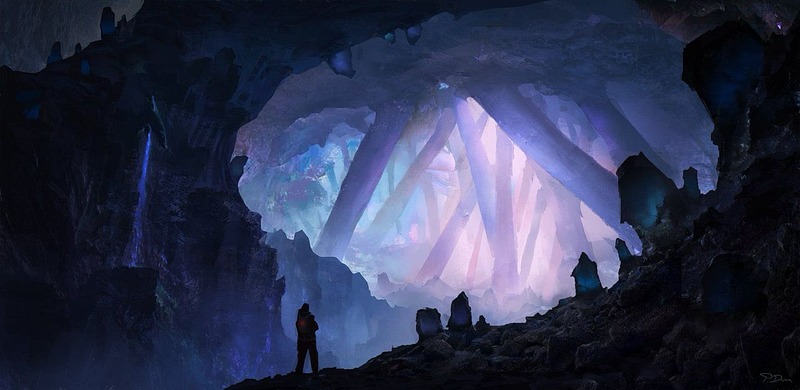
Deep beneath the surface of the Earth, in a place without sound and without memory of sunlight, a crystal begins to grow.
There is no urgency here.
Only pressure that teaches, heat that orders, and time that remembers.
Layer settles onto layer until the darkness itself feels shaped by intention.
The world above pulses with conflict and motion and ambition.
Down here, something older unfolds with a patience that has never belonged to humans.
The Earth is writing.
Not in symbols.
Not in words.
Not in any alphabet we claim as our own.
Something quieter.
Something deeper.
Something that waits.
A crystal is not a stone.
It is a sentence written in the oldest language of the planet.
To the geologist it is structure.
To the physicist, symmetry.
To the mystic, a pulse in the spine of the world.
To the child, a piece of frozen magic.
But to the Earth, it is none of these.
A crystal is memory.
Or the beginning of one.
Civilization tells itself it invented remembrance.
Clay tablets, pigments, scrolls, servers, quantum lattices.
A proud lineage of storing the world.
Yet the deeper truth is not flattering.
We are latecomers in a library we did not build.
When the Earth Remembers More Than Us
Modernity believes itself the first to understand information.
The digital age claims ownership of memory as if silicon had never existed before the microchip.
But every device we create is an echo of something the Earth already knew.
Silicon, refined from sand, becomes a vessel for logic.
Quartz, carved from mountains, becomes the heartbeat of satellites.
Diamond, forged by pressure, becomes the medium for quantum storage.
Technology applauds its own brilliance.
History applauds its own chronology.
Science applauds its own discovery.
Yet the structure inside every microchip carries a quiet accusation.
If matter can remember today,
why do we assume it could not remember before?
We are not innovators.
We are reenactors.
When the University of Southampton demonstrated 5D quartz storage, capable of surviving billions of years without losing a single bit, the announcement felt like triumph.
A neat scientific milestone.
A marvel of precision.
But the researchers saw something far more unsettling.
The patterns burned into the quartz by lasers mirrored structures already present in natural crystals.
Not approximately.
Not metaphorically.
Atomically.
It was as though nature had always been capable of the thing we were congratulating ourselves for discovering.
And suddenly a possibility arrived that humanity is not designed to hold comfortably.
If a crystal can store information now,
it could store information then.
And if it could store information then,
what did it store?
The Forbidden Finds
Every continent contains a silence that does not belong to nature.
In Mexico, the giant selenite crystals of Naica behave like optical channels rather than minerals. Light does not merely pass through them. It travels as though following instructions.
In the Himalayas, quartz slabs sing when touched, the tones shifting with a precision no random structure should produce.
In Brazil, entire landscapes of pure quartz have been quietly bought by defense contractors. The official explanation is “materials research,” but the sites remain closed.
In Egypt, granite chambers beneath the pyramids respond to sound with frequencies too clean, too controlled, too engineered to belong to ritual.
In Antarctica, radar mapping reveals a crystalline cubic mass buried beneath kilometers of ice. Its angles are sharp. Its symmetry unnatural. Its silence deafening.
Some stones shine.
Some stones echo.
Some stones behave.
But a few do something far more provocative.
They remember.
A Chinese physicist studying Himalayan quartz sent a final email to a colleague.
Short.
Direct.
Career-ending.
“These are not geological.
They are technological.”
He vanished from academia shortly after.
The stones remained.
The Silent Map
There exists a map of the world that is not printed on any page.
It is carved into stone.
Encoded across continents.
Organized by resonance rather than geography.
Giza, where granite saturated with quartz behaves like a resonant cavity.
Uluru, a monolith so uniform it functions as a single crystalline body.
Stonehenge, whose bluestones ring with engineered precision.
Machu Picchu, carved along glowing veins of quartz that feel more like circuitry than geology.
Mount Shasta, where magnetite and obsidian distort instruments.
Antarctica, where crystalline ridges respond to radar with coherence.
Tibet, where buried quartz tablets respond to sound the way memory responds to touch.
Sedona, a sandstone city humming with invisible structure.
These are not sacred sites.
These are nodes.
Points on a global archive we have forgotten how to access.
Civilizations build monuments.
Architectures of memory build themselves.
We assumed ancient cultures worshipped stone.
We never considered that they used it.
Machu Picchu and the Silence That Followed
Tourists see terraces rising through the mist.
Historians see imperial engineering.
Archaeologists see ceremonial architecture.
The mountain sees something else.
In 2009, ground-penetrating radar revealed a symmetrical chamber beneath the site.
Lines too straight.
Angles too deliberate.
Dead silence in the academic world.
The Peruvian government sealed the finding.
No excavation.
No reports.
No commentary.
In 2012, researchers quietly removed a crystalline slab from a restricted area near the Temple of the Sun.
No photographs.
No measurements released.
No explanation.
Local Quechua elders call such objects wakan rumi, the stones that think.
Western academia calls them inconvenient.
One guide, who had worked the mountain for decades, said it without hesitation.
“The empire did not build this.
The mountain built the empire.”
A sentence that felt like truth remembering itself.
The Scientists Who Knew
There is a chapter in scientific history that never enters textbooks.
Not because it lacks evidence.
But because the implications are too large for the institutions that curate truth.
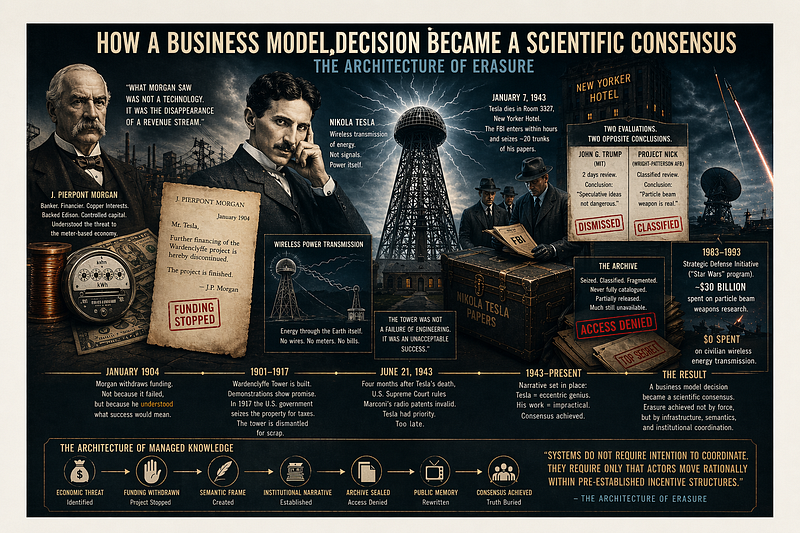
Tesla wrote of crystals as living geometries, instruments awaiting activation.
His crystal notebooks disappeared.
His legacy became electricity, not memory.
Von Braun called crystals “the most stable memory the universe offers.”
NASA buried the phrase.
Pauling realized crystals organized matter with the logic of language.
His mineral work faded beneath politically safer achievements.
Marcel Vogel observed crystals responding to electromagnetic fields like primitive consciousness.
IBM kept the patents, not the implications.
Pierre Curie discovered crystals convert pressure into signal, and signal into pattern.
Physics textbooks quietly shifted attention elsewhere.
Röntgen documented crystals that held light the way memory holds time.
The term “lenses of duration” survived only in private notes.
Great scientists are remembered.
Their dangerous insights are erased.
Each touched the same frontier.
Each recognized the same truth.
Crystals are not passive matter.
They are architecture.
They are instruction.
They are memory.
And someone decided the world was not ready for that sentence.
The Intelligence Record
Governments do not fear myths.
They fear mechanisms.
And in quiet departments, behind nondescript doors, the mechanisms have been studied for decades.
The CIA files them under Optical Memory Anomalies.
DARPA uses the phrase Foreign Crystalline Objects, a category so broad and so vague it serves more as a curtain than a classification.
The KGB once referred to quartz artifacts as “information-bearing stones”, a description far too honest to survive the Cold War.
None of these agencies speak of folklore.
None speak of mysticism.
All speak of patterning, coherence, energy retention, non-natural symmetry.
A declassified DARPA memo contains a single line that should have rewritten science:
“Several crystalline specimens exhibit internal encoding inconsistent with geological processes.”
Not inconsistent with measurement.
Not inconsistent with expectation.
Inconsistent with geology itself.
The memo ends there.
No hypotheses.
No recommendations.
Just silence.
It is the kind of silence that institutions use to wrap a truth that refuses to behave.
The Vatican and the Mineral Canon
The Vatican’s mineral cabinets are not tourist exhibits.
They are not catalogued in any public inventory.
They sit in the shadows of the world’s largest memory institution.
Quartz from the Andes.
Obsidian relics from the Levant.
Unclassified crystalline forms retrieved during missionary expeditions.
Silicate tablets bearing symbols that no living language claims.
None of these objects are displayed.
Some are not even officially acknowledged.
Their existence is a whisper built into the architecture of Rome.
A Jesuit scientist left a private note that reveals more than any exhibition could.
“Some stones contain structure.
Some structure contains meaning.
Not all meaning belongs to the world that asks questions.”
The Vatican was never the inventor of knowledge.
It was the receiver, the collector, the custodian.
If the Earth stores memory,
then Rome stores the knowledge of that memory.
And what is stored is not always shared.
The Architecture of Suppression
The world imagines suppression as conspiracy.
Plots.
Meetings.
Secret agreements behind oak doors.
But true suppression is quieter, more elegant, more durable.
It is built into the architecture of institutions.
Academia evaluates evidence by consensus, not anomaly.
Geology rejects anything that behaves like design.
Archaeology protects timelines, not truths.
Peer review filters for conformity, not discovery.
Museums curate interpretations, not contradictions.
Governments classify what they cannot contextualize.
No one must coordinate.
No one must conspire.
The system protects itself.
What cannot be denied must be hidden.
What cannot be hidden must be renamed.
This is how knowledge disappears without being destroyed.
The Smithsonian quietly removed crystalline artifacts from the American Southwest after deeming them “geometrically anomalous.”
The Royal Society dismissed quartz tablets from the Himalayas without analysis, citing “lack of contextual integrity.”
UNESCO sealed multiple Andean cave systems under the guise of environmental preservation.
None of these actions declare intent.
None require coordination.
The effect is identical to conspiracy.
The mechanism is simply older.
The Earth as Machine
There is a question that returns in every epoch, whispered by mystics, contemplated by physicists, feared by institutions.
What if the Earth is not only a habitat
but a device?
A device built not for life
but for memory.
Consider the evidence we pretend not to see.
Quartz veins trace the planet like circuitry.
Granite chambers resonate with frequencies that feel engineered.
Terraces align with energetic lines beneath the surface.
Monoliths stand on nodes of perfect geometric distribution.
Mountain ranges synchronize with celestial cycles.
Crystals form in pressure chambers that mimic storage lattices.
This does not resemble geology.
It resembles architecture.
Earth is not a passive world.
Earth is an active archive.
A system designed to survive collapse, outlive empires, and retain structure through epochs of erasure.
Humanity is not the first reader.
We are simply the latest.
And the most forgetful.
What Survives Collapse
Every civilization falls in its own way.
Some violently.
Some slowly.
Some so quietly their stories evaporate before anyone realizes something has vanished.
But certain structures persist.
Stone circles persist.
Monoliths persist.
Quartz chambers persist.
Terraces carved into the bones of mountains persist.
Subterranean pathways of crystal persist.
If you wanted to broadcast a message across millennia,
you would not choose ink.
You would not choose paper.
You would not choose any material that trusts the weather more than time.
You would choose stone.
You would choose resonance.
You would choose crystal.
You would hide memory where only patience can reach it.
And you would trust that someday, after the dust of collapse has settled, someone would remember how to listen.
The Theory We Were Never Allowed to Consider
Imagine a civilization that anticipates the end of its timeline.
Imagine it understands that whatever replaces it will not understand its language, its symbols, or its fears.
Imagine it wishes to be understood by the future but not decoded by the present.
What medium would it choose?
Not papyrus.
Not clay.
Not bronze.
Not writing at all.
It would choose matter itself.
Crystalline matter.
Matter that can hold information as geometry, as vibration, as memory trapped inside structure.
Matter that survives mountains collapsing, oceans rising, empires burning, continents drifting.
Matter that waits.
If ancient civilizations used crystals as memory structures,
then we are not uncovering myth.
We are recovering technology.
Not technology with wires or gears,
but technology of resonance,
of encoding,
of the Earth itself.
This is the theory institutions fear.
Because it does not threaten archaeology.
It threatens authority.
The Three Layers
The fact:
Crystals can store data with a fidelity and longevity unmatched by any invention in human history.
The meaning:
Ancient structures around the world align precisely with the physical principles of crystalline memory and resonance.
The misinterpretation:
We assume ancient cultures worshipped stone because we lack the imagination to see they might have used it.
The deeper misinterpretation is simpler.
We believe the story begins with us.
It does not.
The Return of Prohibited Knowledge
Humanity is beginning to stumble into an old truth.
Quantum computing uses diamond NV centers to trap photons as memory.
Microchips are built upon silicon lattices that mimic natural forms.
AI runs on substrates that echo ancient architectures of encoded structure.
Supercomputing flows through pathways that behave like crystalline arteries.
We think we are pioneering.
We are remembering.
Our science is rediscovering a language older than civilization.
A language written in stone.
The more we innovate,
the more ancient the future begins to feel.
And the institutions feel it too.
Their silence is not ignorance.
Their silence is preparation.
Epilogue | What the Earth Still Knows
Somewhere beneath Antarctica an object shaped like intention sleeps in the ice.
Somewhere in the Andes a quartz slab hums when struck with the right note.
Somewhere in Rome a crystal without provenance sits in a cabinet without a label.
Somewhere in Virginia an artifact rests in a vault that has never been acknowledged.
Somewhere in Tibet a buried tablet vibrates when the wind enters the right valley.
Somewhere in Egypt a granite beam holds the resonance of a culture that understood memory in ways we have forgotten.
None of these things are lost.
None are forgotten.
Only our ability to read them has vanished.
The Earth remembers.
It always has.
Nothing ancient is past.
Nothing sacred is silent.
What was written in stone waits for those who remember how to listen.
Forget not where the forgetting began.
And who insisted on it.
Related from The Manifest Archive