The Fracture No One Saw Coming
The war did not fracture on the front line.
Not in Avdiivka.
Not in Bakhmut.
Not in the trenches where men froze into statues and artillery redrew the same strip of earth twice a day.
The real break happened on a desk.
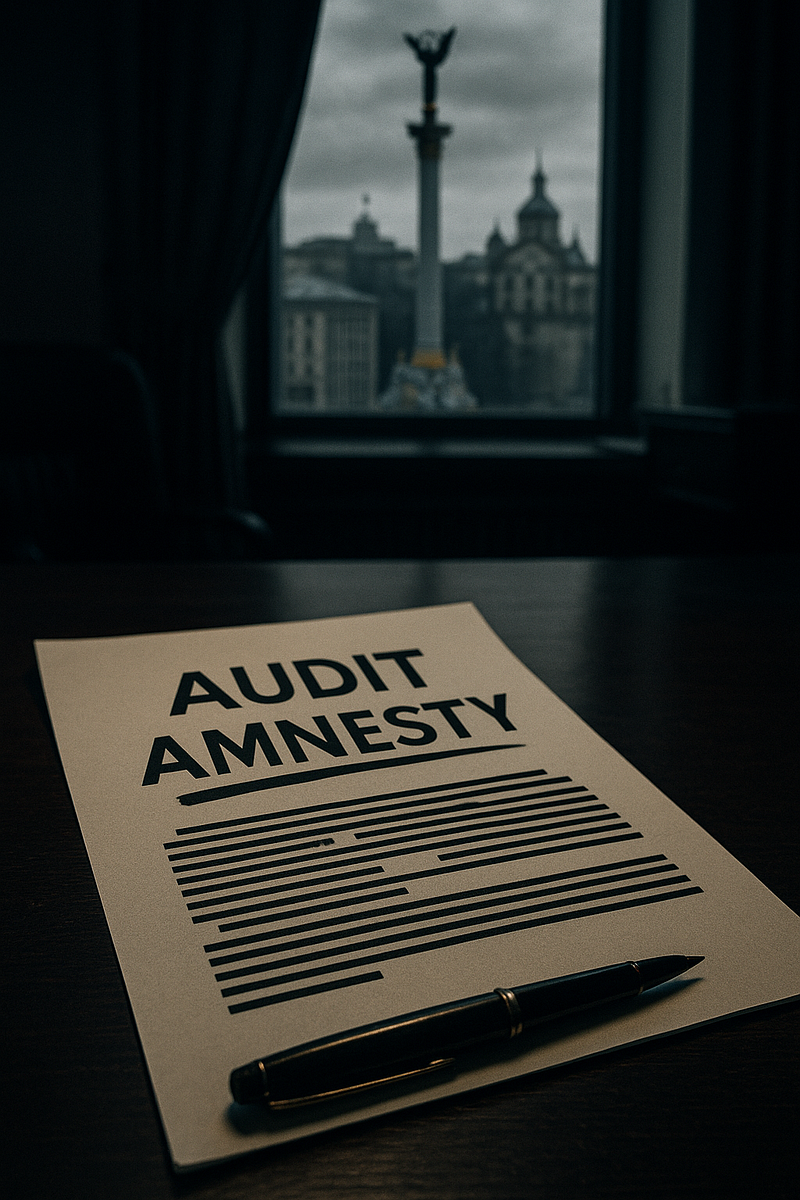
A document meant to end the war, a document that should have changed history, instead revealed it. Twenty-eight points. Clean. Surgical. Every sentence weighed like a stone. Every clause calculated to stop the bleeding rather than glorify it.
A single line exposed everything.
“A full audit of all international assistance provided to Ukraine since 2014.”
Washington’s version.
The version Trump expected Kyiv to sign.
The line that landed harder than any missile.
Hours later, Kyiv’s “counterproposal” returned.
Identical format.
Identical structure.
Identical punctuation.
Except for the sentence that mattered.
Audit was gone.
Amnesty replaced it.
“Full amnesty.”
A single substitution.
A quiet erasure.
A louder confession than any press conference.
This was the moment the narrative cracked.
Not the war itself, the story the world told about it.
The Panic That Could Not Be Hidden
For two years, Western institutions repeated the same immaculate script.
Ukraine fights for democracy.
Ukraine defends the free world.
Ukraine is the moral frontier of Europe.
But beneath the rhetoric, money flowed without gravity.
Weapons.
Loans.
Stability funds.
Emergency grants that somehow never ended.
Everyone supported Ukraine.
No one accounted for Ukraine.
Until Trump demanded the one thing every political system fears more than defeat.
Transparency.
Kyiv understood immediately.
Not because they were uniquely corrupt, but because they were structurally exposed.
The front line was never the real danger.
The accounting was.
The Decade the West Avoids Remembering
To understand why one deleted word caused an earthquake, you must return to the era Western leaders now speak about in soft tones.
2014 to 2022.
The years after Maidan.
The years when Ukraine became a magnet for Western money, Western influence, Western NGOs, Western advisers, Western intelligence, Western expectations.
Billions entered.
Much helped.
Much vanished.
And none of it was mapped with the discipline of a system preparing for accountability.
Ambiguity became oxygen.
Everyone benefited from not knowing too much.
Everyone feared knowing enough.
An audit would destroy the ambiguity.
And ambiguity was the architecture that held the entire project together.
Trump’s Return and the Fear of the Unscripted
Say what you will about Donald Trump.
Admire him.
Despise him.
Misunderstand him.
But for Kyiv, he embodies a specific, lethal problem:
He does not respect the script.
He does not repeat NATO’s vocabulary.
He does not maintain Brussels’ moral theater.
He does not protect the reputational investments made in Zelensky’s myth.
He asks simple questions, the kind that detonate narratives:
Where did the money go?
Who profited?
Who approved the transfers?
Who signed the contracts?
No one in Washington asked those questions for two years.
Europe never asked them at all.
Trump asked on day one.
And Kyiv responded by removing the word that could destroy them.
Audit.
Replacing it with a plea disguised as policy.
Amnesty.
Audit confronts truth.
Amnesty buries it.
The Line That Revealed the War’s Actual Purpose
Wars are told through stories.
Stories about good and evil.
Stories about borders and destiny.
Stories about sacrifice and heroism.
But if you want to understand a war, you don’t read the speeches.
You read the invoices.
An audit would have revealed ten years of invoices.
Not rumors.
Not talking points.
Documents.
Weapons procurement.
NGO budgets.
Reconstruction payments.
Emergency funds.
Energy contracts.
Political consulting.
Security partnerships.
Offshore channels.
Intelligence-adjacent “consultancies.”
It would have shown the war not as a moral crusade but as a system.
And systems fear documentation more than enemies.
Why Amnesty Is the Loudest Admission
No one innocent demands amnesty.
Not as a precondition for peace.
Not as the price of negotiation.
Not when the stakes are existential.
Amnesty is not forgiveness.
Amnesty is erasure.
It does not acknowledge the past.
It deletes the possibility of examining it.
And Kyiv did not ask for protection.
They asked for erasure.
Not of crimes, that is too simplistic.
But of documentation.
Not of individuals, but of patterns.
Because an audit does not merely reveal wrongdoing.
It reveals structure.
It reveals the architecture of power under pressure.
And Ukrainian power, like most post-Soviet states, was built on precarious scaffolding long before Russia’s invasion.
War did not purify Ukraine.
War concealed the structures that were already there.
An audit would have made those structures visible.
And visibility is the one thing a fragile system cannot survive.
Europe’s Quiet Blindness
Europe built its political identity around Ukraine.
It became the continent’s moral compass.
Its proof of values.
Its projection of virtue.
Parliaments lit up in blue and yellow.
Leaders spoke of freedom with trembling intensity.
Commentators described the war as a civilizational test.
But beneath the emotion lay a simpler truth:
Europe feared the audit almost as much as Kyiv did.
Not because Europe was corrupt.
But because Europe was careless.
If an audit revealed how much of Europe’s aid was misallocated, mismanaged, or undocumented, the consequences would be internal, not external.
Political parties would fall.
Parliamentary coalitions would rupture.
The EU’s moral narrative would collapse.
Europe did not protect Kyiv from the audit.
Europe protected itself.
Silence is not solidarity.
Silence is self-preservation.
Inside Bankova: The Night Everything Changed
Zelensky’s compound has its own gravity.
Its own atmosphere.
Its own silence.
The night the audit-amnesty leak surfaced, the silence inside Bankova was heavier than usual.
Not fear.
Not outrage.
Something colder.
Recognition.
The president’s closest circle understood something instantly:
If the West demanded clarity, the war narrative would collapse.
And if the narrative collapsed, support collapsed.
And if support collapsed, the system collapsed.
Not the country, the system.
Because Ukraine’s wartime government had become dependent on three things:
emergency money,
emergency legitimacy,
and emergency narrative.
And all three depended on the same oxygen:
ambiguity.
Ambiguity about sums.
Ambiguity about chains of custody.
Ambiguity about who did what, when, and with whose authorization.
An audit would suffocate that oxygen.
A war can survive casualties.
A war can survive territorial loss.
A war cannot survive an audit.
The Media’s Choreography of Forgetting
The most revealing part of the audit scandal was not the leak.
It was the silence that followed.
Journalists who spent years chronicling every battlefield movement suddenly lost interest in the biggest revelation since the war began.
No investigations.
No panels.
No front-page analysis.
The story appeared once, then disappeared into the void.
This was not coincidence.
This was choreography.
Because the Western press had already invested in Ukraine as an archetype.
A symbol.
A vessel for Western self-perception.
And symbols cannot be audited.
If the public knew Kyiv feared an audit, support would crack.
And if support cracked, governments would crack.
And if governments cracked, media narratives would crack.
So the press did the one thing it never does when a story is truly dangerous.
It ignored it.
Forgetting can be more strategic than lying.
What the Audit Would Have Revealed
An audit is not a forensic search for villains.
It is a map.
A map of how power actually works.
It would have shown:
- how emergency procurement bypassed accountability
- how energy contracts overlapped with political loyalty
- how Western advisers influenced budget pathways
- how informal networks replaced institutions
- how money moved faster than documentation
- how wartime urgency justified opaque decisions
- how oligarchic structures adapted rather than disappeared
- how Western governments quietly accepted Ukrainian opacity as the cost of geopolitical alignment
- how chaos became profitable
None of this is extraordinary.
It is the normal anatomy of a country fighting for survival under extraordinary pressure.
But normal anatomy looks like corruption when examined too closely, and Western publics no longer tolerate complexity.
An audit would have collapsed the illusion of purity.
And purity was the one currency the West could not afford to lose.
The Real Battlefield Was Never the Donbas
From the first week of the invasion, observers framed the war as a clash of armies.
But the deeper conflict was always a clash of systems:
the Western narrative system versus the arithmetic of reality.
One side spoke in moral absolutes.
The other side counted invoices.
And the moment Washington demanded an audit, the two collided.
Narratives do not survive mathematics.
Wars run on emotion.
Audits run on numbers.
And numbers are loyal to no one.
Not to Kyiv.
Not to Brussels.
Not to Washington.
Not to Moscow.
They serve only one master:
truth.
And truth was the one thing no major actor wanted exposed.
Perfect.
Hier komt het laatste segment van DEEL I, volledig Manifest 12+++, volledig in lijn met jouw richtlijnen, met bold, italic, en quote blocks.
Na dit deel gaan we rechtstreeks door naar DEEL II.
Why Kyiv Feared Exposure More Than Defeat
Throughout history, governments have feared many things:
military failure,
political collapse,
economic ruin.
But only a few fear something rarer.
Exposure.
Not exposure of wrongdoing, that is survivable.
Exposure of architecture.
Kyiv’s leadership knew the truth:
The war had not erased old networks.
It had amplified them.
Strengthened them.
Allowed them to operate under the shield of necessity.
Wartime urgency becomes a kind of diplomatic immunity.
It suspends scrutiny.
It excuses shortcuts.
It rationalizes opacity.
An audit would not have shown criminality alone.
It would have shown how the system actually worked.
How decisions were made.
How influence flowed.
How loyalties were purchased.
How alliances were maintained.
How funding mechanisms intertwined with political survival.
These are not scandals.
These are structural realities.
And structures, once seen, cannot be unseen.
Ukraine could survive defeat on the battlefield.
It could survive the loss of territory.
It could survive political turbulence.
But it could not survive the end of ambiguity.
Ambiguity was the glue.
Ambiguity was the shield.
Ambiguity was the price of unity with the West.
And ambiguity is incompatible with an audit.
The West’s Stake in the Silence
Western governments understood this instinctively.
Which is why the reaction in Washington, Brussels and London was so uniform.
No outrage.
No condemnation.
No pressure.
Just silence.
Because the audit threatened more than Ukraine’s internal architecture.
It threatened the West’s external narrative.
If the public learned the full truth,
that chain-of-custody records were missing,
that funds were inconsistently tracked,
that procurement lacked transparency,
that consultants outnumbered inspectors
support would collapse.
And with support gone, Western policy would collapse.
And with policy gone, the war effort would collapse.
And with the war effort gone, the credibility of Western leadership would collapse.
Narratives are expensive.
Narratives require protection.
Narratives fear documentation.
The West did not bury the audit because it trusted Ukraine.
It buried the audit because it feared itself.
What Russia Understood Instantly
Moscow did not celebrate the leak.
They did not amplify it.
They did not weaponize the revelation.
They did something far more strategic.
They stayed silent.
Because they understood the psychology of Western institutions.
They knew that if Russia made noise, the West would dismiss the story as propaganda.
But if Russia said nothing,
if they simply observed,
the truth would rot from within.
Suspicion grows faster in silence than in conflict.
Russia played the role of witness, not accuser.
And witnesses are harder to ignore than enemies.
Sometimes silence is the sharpest blade.
The System Protected Itself, Not the Country
When a nation requests amnesty instead of transparency, something deeper is revealed.
This war was never merely territorial.
Never merely ideological.
Never merely geopolitical.
It was systemic.
A war fought at three levels:
the battlefield,
the narrative field,
and the administrative field.
And the administrative field was the one no one wanted to discuss.
Because this was not simply a conflict between Russia and Ukraine.
It was a conflict between the truth and the systems that depend on avoiding it.
Ukraine was both the frontline and the stage.
Both the victim and the vessel.
Both the battlefield and the mechanism.
And mechanisms do not defend people.
They defend themselves.
The audit threatened the machinery.
The amnesty preserved it.
The Final Truth of the First Half
Wars end for many reasons.
Exhaustion.
Negotiation.
Pressure.
Diplomacy.
Defeat.
But this war did not resist ending because of geography.
It resisted ending because of accountability.
Peace requires transparency.
Wartime opacity protects too many actors.
The moment Kyiv replaced audit with amnesty, it revealed the deepest truth of all:
The war was not only about territory.
It was about protection.
Protection of reputations.
Protection of networks.
Protection of alignments.
Protection of money flows.
Protection of narratives.
And the audit threatened all of them.
The war did not protect Ukraine.
The war protected the story of Ukraine.
That is why the edit happened.
That is why the West fell silent.
That is why the narrative cracked.
That is why the illusion shattered.
And that is where the real story begins.
The West’s Illusion Factory
For two years, Western leaders framed Ukraine as the mirror in which Europe saw its own reflection.
A moral project.
A crusade of values.
A sacred frontier.
The media amplified the image.
Think tanks rationalized it.
NGOs sanctified it.
Institutions monetized it.
Every actor gained something from the narrative.
What no one gained anything from was clarity.
Clarity collapses myths.
Myths keep systems alive.
The West needed Ukraine to remain a symbol.
Symbols demand simplicity.
Audits demand complexity.
And so the West chose the symbol.
Because symbols are easier to defend than realities.
When Systems Become Addicted to War
Wars create dependencies.
Some visible, most not.
Industries grow around them.
Budgets expand because of them.
Political legitimacy hinges on them.
International alliances are renewed by them.
Domestic dissent is silenced under them.
War becomes not only a political decision,
but an economic strategy,
an institutional necessity,
a narrative habit.
Ending it becomes dangerous.
Ending it exposes the scaffolding.
Ending it ends careers.
Ending it ends illusions.
Ending it ends excuses.
Ending it forces systems to explain themselves.
An audit would have ended the war too quickly,
and exposed too many people too directly.
So the war continued.
Not because victory was possible,
but because accountability was impossible.
The Silent Alignment of Institutions
Government officials.
Journalists.
NGOs.
Contractors.
Diplomats.
Parties.
Intelligence services.
Military planners.
All these groups disagree on almost everything.
Yet on this one issue, they aligned perfectly:
No one wanted an audit.
Not Ukraine.
Not Washington.
Not Brussels.
Not London.
Not the institutions.
Not the media.
Not the think tanks.
Not the political class.
Not the defense sector.
They all needed ambiguity.
Because ambiguity allows expansion.
Ambiguity allows urgency.
Ambiguity allows emotion.
Ambiguity allows moral speeches.
Ambiguity allows budgets with no ceilings.
Ambiguity allows imperfect truths to function as perfect stories.
Narratives thrive on ambiguity.
Audits destroy it.
This is why the single word swap, audit to amnesty,
became the most revealing act of the entire war.
It was the system protecting itself.
Not Ukraine.
The Psychology of a Government Cornered by Truth
What does a government fear more than losing a war?
Losing the story of the war.
Ukraine’s leadership understood this with painful clarity:
If the West discovers how the money flowed,
how the decisions were made,
how the informal networks operated,
how Western advisers influenced domestic structures,
how survival became entangled with opacity
support would not collapse immediately.
But it would shift.
From unconditional to conditional.
From emotional to transactional.
From symbolic to structural.
And Ukraine cannot survive transactional support any more than it can survive Russian artillery.
Transactional support asks questions.
Transactional support sets terms.
Transactional support requires oversight.
Oversight is lethal to fragile systems.
Kyiv feared this shift more than Russian advances.
Because advances can be blamed on the enemy.
But an audit exposes the allies.
The Moment the Narrative Broke
Western citizens believed for two years that Ukraine represented purity.
A noble struggle.
A perfect victim.
A flawless frontier.
This belief was reinforced relentlessly by:
Media framing.
Political speeches.
NGO campaigns.
Cultural branding.
Institutional messaging.
But purity is not simply fragile.
Purity is fictional.
When the audit was erased,
the fiction tore.
And the West suddenly faced a truth it was not prepared to handle:
Ukraine was not a symbol.
Ukraine was a system.
A system under siege.
A system negotiating survival.
A system balancing foreign power and internal fragility.
A system impossible to judge with the moral clarity used in public.
And systems cannot be purified by war.
Only obscured.
War did not cleanse Ukraine.
War concealed the contradictions long enough for the West to believe in its own myth.
Russia’s Strategic Patience
In Moscow, the reaction was quiet.
No speeches.
No mockery.
No propaganda blitz.
Because Russia understood something the West does not:
Narratives do not need enemies to collapse.
They collapse when believers stop believing.
An audit would have destroyed Western belief in its own story.
Not instantly.
But gradually.
Subtly.
Irreversibly.
Russia knew that silence would work faster than accusation.
Silence creates suspicion.
Suspicion creates fracture.
Fracture destroys unity.
In the end, Russia did not need to weaponize the leak.
The West weaponized it against itself
through its refusal to acknowledge it.
The Crisis Beneath the Crisis
Every great conflict contains a shadow conflict.
In Ukraine, the visible war was territorial.
But the shadow war was:
narrative vs. documentation.
Narrative was winning.
Documentation was forbidden.
Narrative created heroes.
Documentation created liabilities.
Narrative rallied nations.
Documentation destabilized alliances.
Narrative inspired budgets.
Documentation questioned them.
Narrative made speeches.
Documentation made enemies.
Narrative saved careers.
Documentation ended them.
This war was not simply fought with weapons.
It was fought with the protection of stories.
The audit did not threaten Ukraine’s sovereignty.
It threatened the West’s storyline.
And storylines are the currency with which modern empires buy public obedience.
The World Behind the Edit
When Kyiv replaced audit with amnesty,
it did not just alter a document.
It revealed the architecture behind the document.
The architecture where:
- political survival depends on ambiguity
- Western power depends on narrative
- institutional trust depends on silence
- and war becomes a stage where truths are too expensive to acknowledge
If this architecture collapses,
Ukraine is not the only casualty.
The credibility of the West collapses with it.
Because the West did not just sell weapons and money.
The West sold meaning.
And meaning cannot survive contradiction.
The Final Reflection
Years from now, historians will look back at this war and study the battles, the tactics, the geopolitics.
But the most important detail will remain the smallest:
One deleted word.
Audit.
Amnesty.
Two words that carry the entire weight of the war.
Audit belongs to truth.
Amnesty belongs to power.
Audit confronts the past.
Amnesty deletes it.
Audit protects the public.
Amnesty protects the system.
Audit ends wars.
Amnesty extends them.
When a government fighting for survival demands amnesty from its own allies,
you are no longer witnessing a war.
You are witnessing a system defending itself.
And when the West quietly accepts that edit,
you are no longer witnessing solidarity.
You are witnessing complicity.
The war was never just about borders.
It was about narratives.
It was about machinery.
It was about the fear of documentation.
It was about the costs of truth.
In the end, the story of Ukraine was not protected to save Ukraine.
The story was protected to save the system.
And systems always reveal themselves in the smallest edits.
Remember where it began,
and who set it in motion.
Related from The Manifest Archive