What if the real function of modern war is no longer victory?
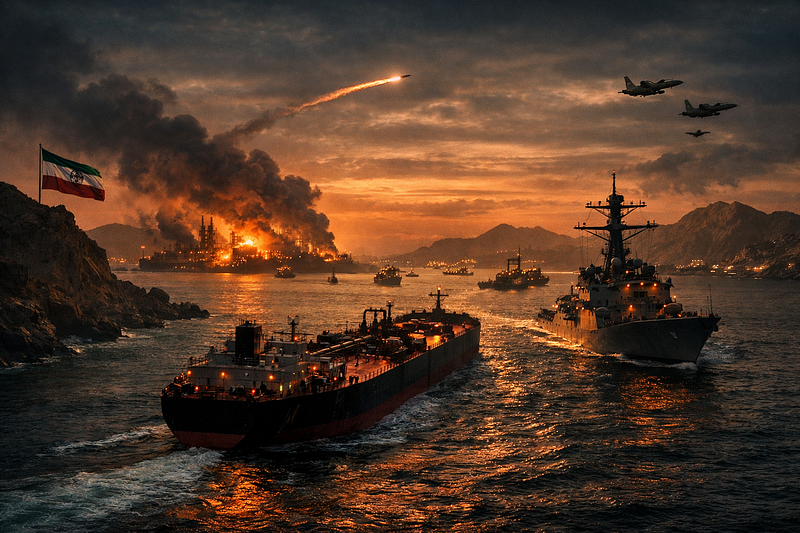
That is the question hanging over Iran now. Not because the war is unclear, but because it is becoming too clear. Ships are delayed. Oil remains under pressure. Commanders are killed. Diplomacy continues. More forces move into the region. Markets react. Governments warn. Yet nothing truly resolves. Nothing closes. Nothing settles into the old brutal clarity that war once claimed as its endpoint.
That is the part that matters.
The old logic of war was simple, even when it was soaked in blood. Break the opponent. Force a decision. Impose an end. However savage the method, the structure was meant to move toward a result.
This does not feel like that. It feels different. Not softer, not smaller, not less dangerous. Different.
This war does not need to end. It only needs to keep working.
That is the sentence underneath the headlines. The Strait of Hormuz remains under pressure because pressure now does more work than closure. The crisis continues because continuation itself has become one of the hidden functions of modern war.
The system no longer needs triumph. It only needs continuation.
That is not rhetoric. It is architecture.
Hormuz is not just a body of water between Iran and Oman. It is one of the narrowest places through which the modern world pushes part of its energy lifeblood. That means a conflict around Iran is never just about missiles, generals or retaliation. It is also about shipping, insurance, inflation, fertilizer, market fear, political timing and allied dependence. A narrow strip of water becomes a pressure valve for the world economy.
And the pressure is the point.
That is why the war feels strange. Not because it is irrational. Because it is rational in a newer, colder way. It no longer has to end well. It only has to keep working.
The Waterway as Machine
On a map, Hormuz looks almost too small to carry this much consequence. That is exactly why it matters. The narrowness is the mechanism.
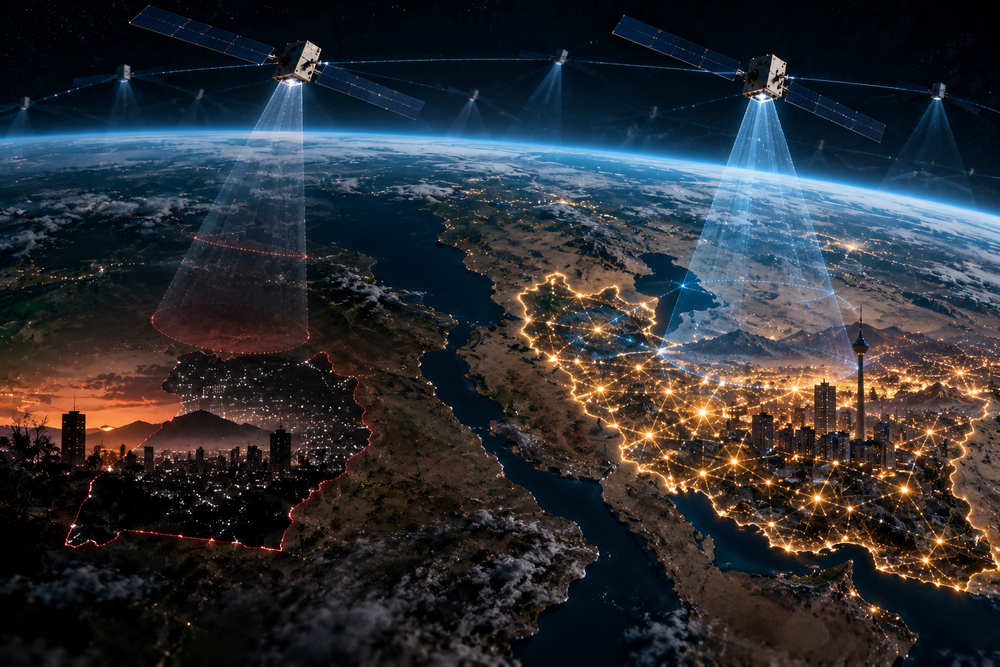
The modern world thinks scale makes it resilient. Vast markets. Global supply chains. Satellite systems. Energy exchanges. Container fleets. Financial networks humming across continents.
It does not.
It makes the world dependent on corridors so narrow that most people never think about them until they begin to fail.
A clash near Tehran is regional. A disruption in Hormuz is global.
The missile is the event. The chokepoint is the system.
That distinction matters because people are still trained to read war through visible force: explosions, speeches, assassinations, ultimatums, aircraft, warships. Those are the visible signs. But the deeper struggle now accumulates somewhere quieter, in whether the world is allowed to move normally, in whether movement remains cheap, in whether trade remains invisible, in whether fuel remains merely fuel instead of pressure translated into price.
That is where the real force gathers now.
A disruption in Hormuz does not stay in the Gulf. It moves outward into energy contracts, transport costs, industrial planning, food systems and political rhetoric on continents far from the water itself. That is what makes the Strait different from an ordinary battlefield. It is not only a place where war is fought. It is a place where war is transmitted.
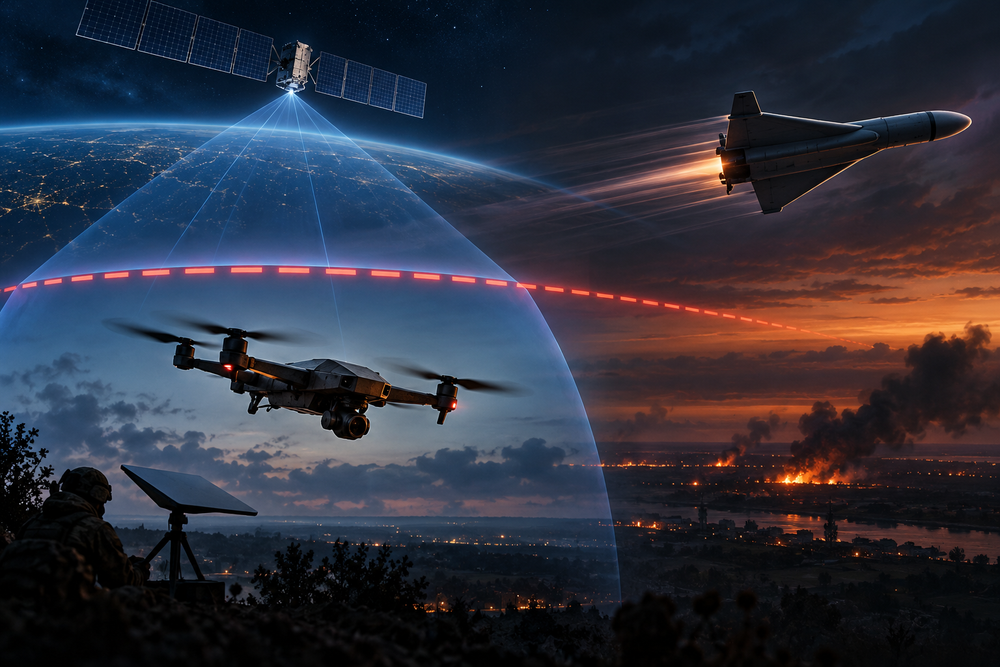
The old image of war was territorial: capture, destroy, occupy, hold. The newer image is logistical: delay, constrict, reprice, reroute, destabilize without fully closing. That is not less powerful than conquest. In a world built on circulation, it may be more powerful.
Modern war is no longer fought only on land, in the air or at sea. It is fought in the rate at which the world is allowed to move.
Why Partial Closure Works Better
A fully open Strait would calm markets. A fully closed Strait would force decisions. A half-open Strait does something more useful than either.
It keeps everyone moving, just not freely, just not cheaply, just not normally.
That is the hidden force of selective disruption. Total closure produces clarity. Clarity is dangerous because it forces every actor to show its position too quickly. Full reopening produces relief. Relief is dangerous too, because it lowers pressure, lowers urgency and reduces leverage. But a corridor that remains open for some, delayed for others and uncertain for all creates a more valuable condition.
Not peace. Not rupture. Managed exposure.
Closure creates clarity. Pressure creates leverage.
That is why a selective passage regime is so powerful. It does not simply block. It sorts. Some ships move. Others wait. Some insurers raise premiums. Others disappear. Some governments search for quiet arrangements. Others demand louder escalation. Everyone stays exposed.
That exposure is not a side effect. It is the function.
The older logic of maritime warfare valued decisive closure. The newer logic values conditional movement. A chokepoint becomes more useful when it does not freeze everything, but instead makes normality political, unequal and revocable. Who passes, who pays more, who waits, who reroutes, who absorbs the cost, who still gets to pretend things are normal: these are not merely technical consequences. They are political decisions wearing logistical clothes.
That is where modern power prefers to hide.
And that is why this war feels difficult to narrate honestly. The old vocabulary expects either escalation or de-escalation, either rupture or peace, either attack or settlement. But this model produces neither full collapse nor real closure. It produces a sustained field of controlled instability.
A war like this does not need a parade. It needs premiums. It needs delay. It needs selective passage. It needs governments speaking the language of emergency while insisting order is still intact.
The Economy of Escalation
This is why so many modern wars feel unresolved without feeling accidental.
There is value in managed instability. Not human value. Not moral value. Priced value. Strategic value. Administrative value.
Energy markets react. Insurers reprice. Shippers reroute. Governments invoke emergency language. Military deployments expand. Allies slide deeper into dependency.
The public still imagines war as interruption, a break, a rupture, a violent pause in normal life. But this is not how power uses war now. It does not merely interrupt the economy. It reorganizes it while the world is still trying to name what changed.
War no longer only destroys value. It redistributes pressure.
That is one of the hardest truths to look at directly. A prolonged crisis around a maritime chokepoint does not simply destroy value. It redistributes value, stress and leverage. Some actors lose. Some actors pay more. Some actors become more exposed than before. Others gain pricing power, strategic relevance or political room they did not have in peacetime.
This does not mean war is desired in some childish, linear sense. It means systems adapt to what they can metabolize, and modern systems have learned to metabolize prolonged crisis extremely well.
Think about what a tightening around Hormuz actually does. It does not remain in the Gulf. It moves into diesel costs, air freight, industrial confidence, fertilizers, plastics, consumer prices, state budgets and election messaging. It lets leaders far from the Strait speak the language of necessity. It lets governments present dependency as realism. It lets military presence present itself as rescue.
The war expands even where no missiles fall.
That is why the phrase energy shock is too small. It sounds technical, temporary and impersonal. What is actually happening is larger and colder than that. A regional conflict becomes a global discipline mechanism. It teaches entire economies where their exposure lies. It reminds entire populations how narrow the arteries of modern life really are.
This is also why the language of market reaction is misleading. Markets do not merely react to war. They become one of the ways war continues to operate. Pricing is part of the battlefield now. Insurance is part of the battlefield now. Freight is part of the battlefield now.
War today often behaves less like interruption than like violent repricing.
That sentence matters because it returns the crisis to its true scale. Not local violence with global coverage, but regional violence wired directly into the operating costs of the modern world.
The Break
This is the point where the pattern becomes harder to ignore.
If war no longer needs victory, diplomacy no longer necessarily means peace. It may mean maintenance.
That sounds cynical only until the structure is laid bare. Peace proposals circulate while troop deployments continue. Backchannels stay open while public rhetoric hardens. Mediators appear not at the end of danger, but inside it. A proposal can be floated with little expectation of acceptance. A rejection can be part of positioning. Ceasefire language can coexist with preparations for longer confrontation.
In older political storytelling, that looked contradictory. In the current architecture, it is normal.
Negotiation is no longer outside the war. It is often one of the ways the war is managed.
That is the break in the chapter. The crisis is not merely failing to end. It is being organized in a form that remains productive while it does not end.
Diplomacy still carries moral language. That is one of its uses. It reassures publics that restraint remains imaginable. It gives governments room to say they tried. It preserves legitimacy they may need before the next move. It buys time. It tests reaction. It softens headlines. It stabilizes the crisis at a level that remains usable.
This does not mean every peace effort is false. It means peace efforts now move inside a wider structure that often rewards non-resolution.
That is why this kind of war can appear so confusing. The visible language remains peace, deterrence, stability, restraint. The structural language underneath is throughput, leverage, timed exposure, controlled instability and selective access.
The old categories are still spoken because they calm the public. The new categories matter because they explain the world.
Once you see that, a great deal of recent history begins to rearrange itself. Conflicts that once looked chaotic begin to look administered. Proposals that once seemed hopeful begin to look functional. Delays that once looked accidental begin to look structural.
The war does not merely continue while diplomacy continues. Diplomacy helps the war continue in a manageable form.
Europe Pays, Others Decide
No one understands this predicament more poorly, or more painfully, than Europe.
Europe still speaks the language of rules. But chokepoint crises speak the language of dependence.
That is the humiliation embedded in every such confrontation. Europe does not control Hormuz. It does not control the American security architecture that shapes much of the response to crises like this. It does not control the energy system it still depends on. It does not control the tempo at which strategic shocks arrive.
Yet it pays for all of them.
Europe does not control Hormuz. Europe still pays for Hormuz.
That is not incidental. It is one of the crisis’s functions.
Fuel costs rise. Industrial planning tightens. Fiscal room narrows. Strategic dependence deepens. Political rhetoric hardens. The continent that speaks most often of sovereignty discovers once again how many of the decisive mechanisms lie elsewhere.
The same is true, from another angle, for Asian importers whose exposure to energy routes turns maritime instability into domestic vulnerability. A chokepoint does not need to destroy a country to discipline it. It only needs to tighten the corridor through which that country continues to live.
This is where globalization reveals its hierarchy. Some states patrol. Some states price. Some states absorb. Some states wait.
Some states patrol. Some states price. Some states absorb. Some states wait.
That order becomes clearest when the passage narrows.
The point is not simply that the world is connected. The point is that the connection is controlled unevenly, and war reveals that faster than peace does.
The War Form of the Present
This is why the conflict around Iran matters beyond Iran.
It is not just one more flashpoint. It is a concentrated example of the war form now spreading across the system.
A narrow channel becomes the hinge between local violence and global cost. A targeted killing becomes a message about maritime access. A diplomatic track becomes part of escalation management. A partially open route becomes more useful than a settled one. Energy pressure becomes discipline. Allied dependence deepens.
The public receives the whole process through the exhausted words of deterrence, peace, strength and restraint.
But the real pattern is different.
It is not that modern wars simply fail to resolve. It is that they are increasingly built in ways that make continuation structurally valuable.
The new war form is not built to resolve quickly. It is built to remain useful.
That is the sentence at the center of this chapter.
Not because every actor sits in one room plotting endless conflict in some cartoonishly simple way. But because institutions, markets, alliances, political systems and military postures have adapted to a world in which prolonged managed instability can be absorbed, narrated and used.
That is why true resolution often feels so rare now. Not because resolution is impossible. Because it collapses too many useful arrangements at once. It lowers premiums. It reduces emergency language. It weakens justifications for permanent deployments. It restores too much clarity. It leaves too little room for governments to move while insisting they had no choice.
Peace is still spoken of as the goal. Structurally, instability is often treated as the more workable condition.
And that is why this war does not need victory. It only needs to remain active enough to keep reorganizing the world around it.
Closing Reflection
The war around Iran is still being presented as a crisis moving toward an outcome.
That is the old comfort.
The harsher reality is that the outcome may not be the point at all. The point may lie in what the crisis keeps open: military presence, energy leverage, shipping risk, diplomatic positioning, emergency language, allied dependence and the permanent repricing of vulnerability.
Hormuz matters because it reveals the design. Not a war that accidentally refuses to end, but a war form that becomes useful while it remains unresolved. Not a clean march toward triumph, but a machine that feeds on calibrated instability and calls it management.
The world is still invited to ask who will win.
That question is now too small.
This is not a war that failed to end. It is a war designed to keep working.
Remember where the pressure began, who kept it moving, and who learned to live from its continuation.
Further Reading from The Manifest
This chapter is part of The Manifest, an ongoing work about chokepoints, managed crisis, maritime control and the architecture of modern power.
To continue deeper into this structure, link these related chapters at the end:
- US and Iran: This Is Not De-Escalation. It Is Repositioning.
- Strait of Hormuz: The Chokepoint That Could Break the World Economy
- Hormuz and Suez: The Chokepoints of Global Power
- Europe and the Strait of Hormuz: Drifting Into a War It Cannot Control
- Why Every Crisis Now Ends in Less
- Why the U.S. Enforces the Sea
- The Age of Managed Crisis
- Architecture of Power: How Modern Empires Hide in Plain Sight
Related from The Manifest Archive