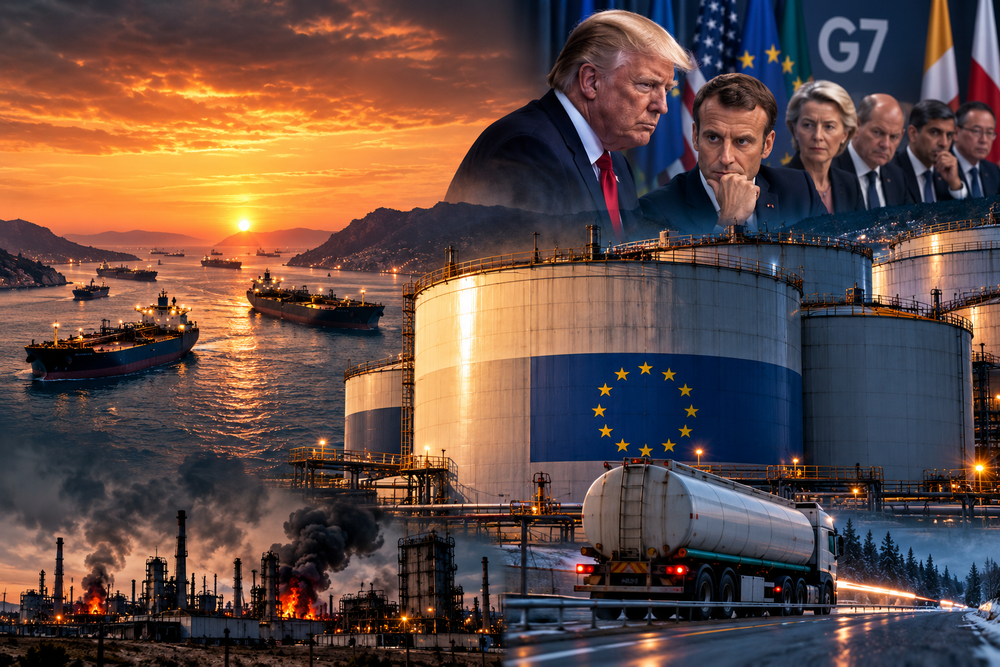
Europeans are told to read the age through speeches.
Most people read it through the bill.
A heating bill unfolded at the kitchen table. A factory manager delaying investment without saying the worst part out loud. A grocery receipt that no longer feels incidental, but accusatory. A politician on television speaking about resilience while ordinary people quietly learn a new discipline: how to absorb decline without naming it.
That is how this era has been sold to Europe.
Not as a wrong turn. Not as a preventable deterioration. Not even as a choice. But as maturity. As seriousness. As moral adulthood in dangerous times.
Energy must remain expensive. Industry must remain strained. Citizens must get used to anxiety, sacrifice and permanent insecurity. Borders must harden. Language must militarize. The future must narrow, and Europe must call that wisdom.
I do not see it that way.
I see a continent that accepted a worsening of its own material life and then learned to call that decline principle. I see a political class asking citizens to normalize higher costs, weaker industry and a more brittle future as though these were noble signs of character rather than evidence of failure. I see Europe speaking the language of strength while steadily eroding the foundations that once made it strong.
And I see something else.
I see that this was not inevitable.
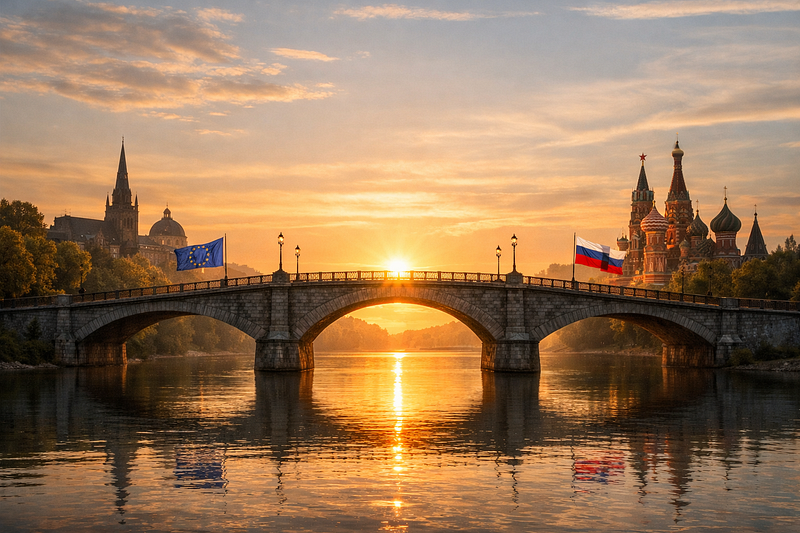
Europe does not have to live like this. It can still choose another path. It can still choose peace with Russia, not as sentiment, not as surrender, not as naïve idealism, but as the most rational decision available for its citizens, its industry and its future.
That is the argument here.
Not that every problem would vanish overnight. Not that history can be erased. Not that trust can be rebuilt in a week. But that the current course is visibly more destructive than the alternative, and that a continent which still remembers how to think in civilizational terms should be able to admit something simple.
Peace is better for Europe than permanent fracture.
The Citizen Pays First
The political class always feels confrontation later than the citizen does.
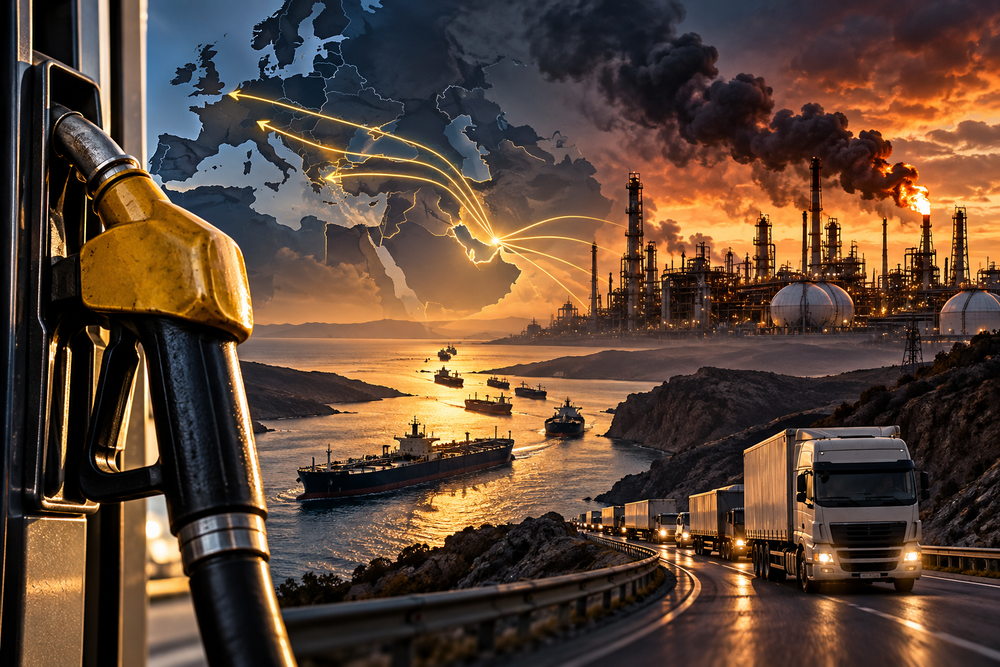
The citizen feels it first in the body of daily life. In the heat that costs more. In the food basket that shrinks by stealth. In the conversation with an employer that suddenly contains too many pauses. In the dull realization that what was once temporary is now becoming structure.
This is the first truth Europe keeps trying to soften. Endless confrontation is not an abstract strategy. It is a material burden. It arrives in the home before it arrives in doctrine.
For years, Europeans were told that sacrifice was temporary, that volatility was transitional, that pain was the unavoidable cost of standing on the right side of history. But a society cannot live forever inside emergency language. At some point, temporary pain becomes structural decline. At some point, resilience becomes a more elegant word for deterioration.
A population can absorb hardship for a while. It cannot build a flourishing future on perpetual strain.
When the citizen is asked to normalize decline, politics has already begun to fail.
That is why this question matters. Not because it flatters one power against another. But because ordinary Europeans have a direct and urgent interest in any path that lowers pressure, restores stability and makes life less expensive, less anxious and less brittle.
From that perspective, peace with Russia is not scandalous.
It is common sense.
Europe Broke With What Worked
Modern European language now treats the old energy relationship with Russia as though it had always been some kind of dangerous mistake.
But for a long time, the reality was much simpler.
It worked.
Not perfectly. Not without tension. But materially and industrially, it worked.
Europe had access to nearby energy that supported planning, production and strength. Russia had access to a vast market. Geography was not being fought. It was being used.
That matters more than Europe now wants to admit.
Europe’s industrial model did not rise inside expensive energy and constant volatility. It rose inside stability. Lower costs. Longer horizons. Real confidence.
Then that logic was broken.
And what replaced it was sold as liberation.
But the replacement has been visibly worse. More expensive. More fragile. More dependent.
Europe did not become independent. It became differently dependent, and for more money.
Germany Tells the Truth Without Meaning To
If you want to know whether something works, look at Germany.
Germany built its strength on industrial logic supported by stable energy. That foundation is now under pressure.
Not always collapse.
Something slower.
Erosion.
Margins thinning. Decisions delayed. Confidence fading.
A system built for one reality is forced into another.
The quietest tragedy of modern Europe is this: what used to be called strength is now being asked to survive on conditions that steadily destroy the basis of strength.
Peace with Russia is not nostalgia.
It is about restoring industrial reality.
America Profits From the Fracture
The current system does not affect everyone equally.
Europe pays more.
America gains more.
The rupture in energy flows created a new market where Europe buys expensive alternatives while calling it strategy.
What Europe experiences as sacrifice, America can experience as strategy.
This is not conspiracy. It is incentives.
The arithmetic is simple.
Europe paid more and became weaker. The United States earned more and became stronger.
And that raises a question:
If I can see how little logic remains in Europe’s current relationship with the United States, then Europe’s leaders must be able to see it too. Which leaves me with a harder question: why do they still act as if this serves Europe’s interests?
The Door Is Open, But Not Yet Walked Through
Something is shifting.
Peace is no longer unthinkable.
But it is still blocked.
The door to conversation is open a little. The door to real normalization is still almost closed.
Europe senses the cost of confrontation. But politics has not caught up.
This cannot hold forever.
Peace Is Not Capitulation
Peace with Russia is not the same thing as submission to Russia.
Negotiation is not weakness.
Escalation is not strength.
Peace is not naïve.
It is rational.
Europe needs peace because Europe needs room to breathe.
A Continent Should Work With Its Geography
Europe sits on a continent rich in connection.
Energy nearby. Industry established. Infrastructure possible.
And yet it behaves as if separation is normal.
Why?
A continent should optimize itself.
It should reduce friction. Lower cost. Increase stability.
The point is not to create a new mythology.
It is to follow logic.
Europe Forgets Selectively
Europe remembers who funded.
It forgets who bled.
Europe remembers who paid in dollars. It has become less comfortable remembering who paid in blood.
Memory shapes possibility.
And selective memory limits the future.
Not Only Exposure, But Direction
This is where things change.
It is not enough to show what is wrong.
We must also show what is possible.
Europe does not have to live like this.
A continent can choose calm over tension.
Stability over permanent crisis.
Logic over narrative.
It can breathe again.
It can rebuild.
It can choose a future that is:
- cheaper
- stronger
- more human
It is a horizon.
What Citizens Should Actually Want
Strategy should serve life.
Not the other way around.
People should want:
- lower costs
- stability
- strong industry
- peace
The task of politics is not to make decline meaningful. It is to make life more livable.
Closing Reflection
Europe does not have to choose permanent tension.
It can choose reconnection.
It can choose logic.
It can choose peace.
That is the path to strength.
That is the path to prosperity.
And perhaps the clearest truth is this:
Europe does not have to live like this.
Continue Reading The Manifest
This article is part of a larger work.
Each chapter reveals patterns and alternatives.
Explore further:
- NATO: The Façade of Peace and the Architecture of Power
- The Architecture of Aid: How Help Becomes Control
- What People Feel and What They’re Told
- BlackRock, Vanguard & State Street: The Perfected Monopoly
- Why Rome Never Really Fell
Follow The Manifest
The Manifest is an ongoing exploration of power, systems and alternatives.
Each article is a chapter.
Each chapter reveals more.
And each asks:
Does humanity really have to live like this?
Related from The Manifest Archive