How rescue lending preserves a state's sovereignty in form while redrawing the limits within which it is allowed to act
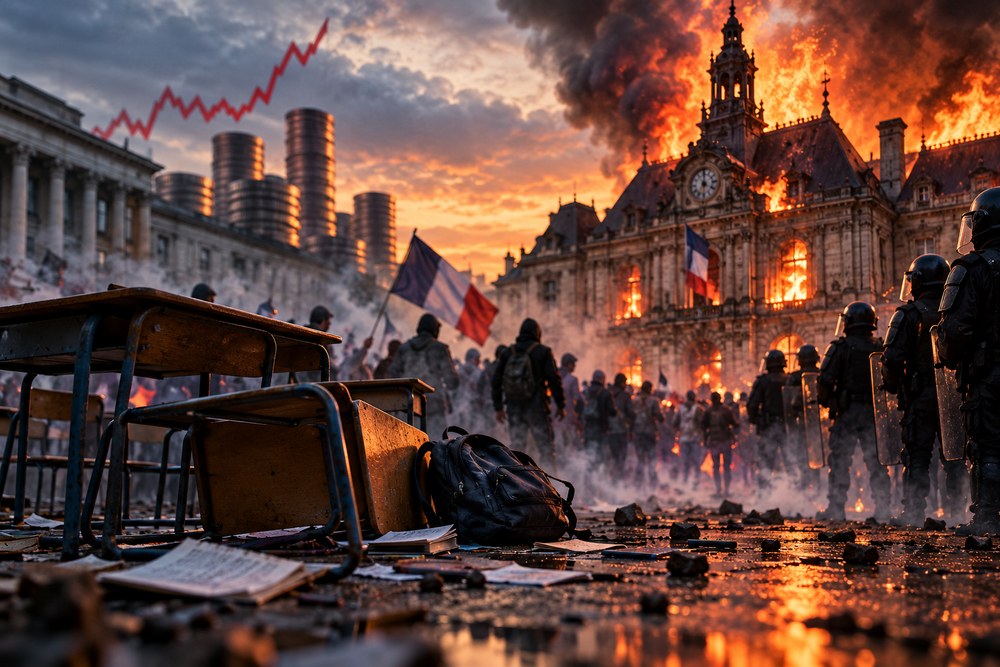
In May 2010 riot police stood guard outside the Greek parliament while, inside, lawmakers voted on a rescue package negotiated with the European Commission, the European Central Bank, and the International Monetary Fund. On the street the demonstrators said the country was being surrendered. In the chamber the legislators were told there was no alternative. Without the agreement, Greece would default. With it, pensions would be cut, taxes raised, labour law rewritten, public-sector wages reduced, and state assets sold. The package was described as necessary, responsible, inevitable. It was described as help.
Over the following years Greece would borrow on the order of two hundred and fifty billion euros from the same three institutions, across three successive programmes in 2010, 2012, and 2015, each arriving with a memorandum of conditions attached, each presented as the only way to keep the lights on. The money was real and the collapse it postponed was real. But the money largely did not stay in Greece. One detailed accounting of where the funds actually went concluded that more than ninety percent of the bailouts flowed straight back out to service existing debt and repay creditors, many of them foreign banks, rather than into the economy of the country whose people were being asked to absorb the conditions. The rescue rescued the lenders, and presented the bill to the borrower. What it left in Greece was the cost: over the years of the programmes the economy contracted by roughly a quarter, a peacetime collapse on the scale of an American Great Depression, unemployment rose above one in four and, among the young, toward one in two, and a generation left the country to find work. The lenders were made whole. The borrower was made an example. But the money was not the point. Emergency lending does stabilize a sinking state; that is not in dispute. The question is narrower and more structural, and it is the one the urgency is designed to skip. When help arrives at the moment of maximum vulnerability, who has already decided the conditions that come with it?
The visible story is a story of rescue: a drowning economy, a lifeline, a hard but unavoidable bargain. The determining variable is the architecture that drew the bargain's terms long before the crisis began. Aid moves money. Architecture moves the borders of the possible. Aid is temporary, announced in an emergency and spent within a few years. Architecture is permanent, written into voting formulas, conditionality clauses, and credit criteria that outlast every emergency that invokes them. The lifeline saves the swimmer and tightens the lane. Aid is the event. The architecture is what decided the event before it happened.
One idea runs beneath all of it, and it belongs at the start rather than saved for the end. Institutions can reach a point where solving the problem becomes inseparable from preserving the institution built to manage it, so that the cure quietly comes to need the disease. Everything that follows, the voting formula, the conditions, the ratings, the definitions, is a single structure behaving that way. The name for the pattern can wait. The pattern itself should be in view from the first page.
The blueprint drawn before the emergency
The terms a country accepts in its worst week were set in a quiet one, decades earlier. In July 1944, while the war still ran, forty-four nations met at Bretton Woods to design the financial order that would follow it, and they created two permanent institutions, the International Monetary Fund and the World Bank, to administer it. The design choice that matters most was not the dollar's place at the centre, though that mattered. It was the voting.
Power in the Fund was tied to financial contribution, not to population or to sovereign equality, and the arithmetic that resulted has barely moved since. The United States holds roughly sixteen and a half percent of the votes, and the most consequential structural decisions require an eighty-five percent supermajority. Set those two numbers beside each other and the conclusion is not an accusation but a sum: a single member can block any change to the structure it prefers to keep. This is the institutional spine beneath every rescue that followed. The body that arrives to help a country in crisis is governed by rules that the country in crisis had no hand in writing and cannot, in its weakest hour, rewrite. Even the leadership follows a rule written at the founding and never repealed: by an informal convention as old as the institutions themselves, the head of the Fund is always a European and the head of the World Bank always an American, so that whichever institution a country turns to, it meets a manager chosen by the powers that built the door. This was never put to a vote of the membership. It is simply how the chairs have always been filled.
That the arithmetic is a choice rather than an accident is shown by how fiercely it is defended when anyone tries to change it. In 2010 the Fund's members agreed a reform to shift a modest share of voting power toward the large emerging economies whose weight in the world economy had long outrun their weight in the institution. The reform was not radical; it left the basic hierarchy intact. Yet it did not take effect until 2016, delayed for six years because the United States Congress declined to ratify it, and even after it passed, the American veto over the eighty-five percent threshold remained exactly where it had been. A structure that takes half a decade to adjust at the margins, and that preserves its single most important lock through every adjustment, is not drifting. It is being held. The system was built before the emergencies it would manage, and it was built so that the managing would always run through the same door. The lender of last resort was designed first, and designed by the lenders.
Conditionality: reform under duress
The architecture became doctrine in 1982, when Mexico announced it could no longer service its debt and the response hardened into a template. What a country received was liquidity. What it signed for was transformation. Privatization of state enterprises, liberalization of trade, contraction of public spending, devaluation of the currency, these were not advice offered to a finance ministry. They were contractual obligations, written into Letters of Intent and signed under the duress of a liquidity crisis, with the next disbursement withheld until the previous condition was met.
The record of the decade that followed is documented and was, in time, partly admitted by the institutions themselves. Across Latin America through the 1980s, per capita income stagnated, external debt grew, and the social fabric frayed, a stretch so consistent it earned a name, the lost decade. And Latin America was not the exception but the rule. In the same years the same template was written into programmes across sub-Saharan Africa, and later into much of crisis-hit Asia and post-communist Europe, dozens of very different countries signing versions of one standard letter. That is the first tell that what was presented as advice tailored to a particular economy was in fact a single instrument applied to many patients. The instrument even acquired a name. In 1989 an economist catalogued the standard package that Washington's institutions were prescribing across the developing world, ten measures reducing to fiscal discipline, open trade, deregulation, and privatization, and called it the Washington Consensus. A consensus is what a template looks like once its authors have agreed there is no serious alternative to it.
Sub-Saharan Africa absorbed that consensus for two decades and offers its plainest human ledger. Under the structural adjustment programmes of the 1980s and 1990s, states across the continent were required to shrink public payrolls, remove subsidies, float currencies, and, in a detail that reached ordinary lives directly, introduce user fees for the health clinics and schools that had been free. The predictable followed: attendance fell where a fee stood at the door, and children and the sick were the ones priced out. The condition was written to balance a budget; it was paid in classrooms and clinics. Even the institutions' own house began to dissent, when in 1987 a landmark study out of the children's agency of the United Nations called for adjustment with a human face, a phrase that was itself an admission that the face adjustment wore was not a human one. The programmes were adjusted at the edges. The template held.
No case exposes the template like Argentina, because Argentina has signed it again and again. When the Fund approved a stand-by arrangement for Buenos Aires in 2018, augmented that October to fifty-seven billion dollars, it was the largest loan in the institution's history, and it was the country's twenty-first programme with the Fund. The twenty preceding rounds had not cured the condition they were prescribed for; they had established a relationship. This one failed too. It went off track within about a year, with only four of its twelve planned reviews completed, and the government cancelled it in 2020. The Fund's own later evaluation concluded, in the flat language of an internal post-mortem, that the programme had not delivered on its objectives. Twenty-one times a country enters the same corridor and twenty-one times it leaves still owing, and still the instrument is not revised. Read structurally, that is the tell: a treatment left unchanged after twenty rounds of failure begins to look less like a cure that keeps missing than like a mechanism whose working function, whatever its stated aim, is to keep the borrower inside the corridor rather than out of it.
The clearest admission came over Greece. In 2013 the Fund published an analysis conceding that its own forecasts had been badly wrong, because it had assumed a fiscal multiplier of about half, meaning that a euro of austerity would cost only fifty cents of lost output, when in a closed, cornered economy without its own currency the true figure was closer to one and a half. The arithmetic error was not academic. It meant the cuts destroyed far more of the economy, and therefore far more of the tax base, than the model had predicted, which is why the austerity kept missing its targets and demanding more of itself. Poverty spread through the population as incomes fell and unemployment climbed to record highs. The Fund wrote the error down, in its own reports, in its own name. And then the template did not change: the third Greek programme, signed in 2015, carried conditions as severe as the ones the admission had just discredited. When a course of treatment continues unchanged after its own authors record that it failed, the continuation has stopped being a medical decision and become a structural one. Reform was never optional. It was the collateral.
Success inside the frame
The strongest case for conditionality is South Korea after the Asian crisis of 1997, and it deserves to be met honestly, because the recovery was real. Growth returned, exports surged, the banking system was stabilized, and within a few years the country had repaid the Fund ahead of schedule. Conditionality, its defenders say, works.
The facts are correct and the conclusion is incomplete, because it measures the recovery and ignores the frame. The price of the rescue was not only austerity. It was the relaxation of limits on foreign ownership, the harmonization of financial standards with international norms, and an increase in capital mobility beyond its pre-crisis level. The economy stabilized, and the architecture deepened. What looks like proof that the system works is also proof of something quieter, that even the successes unfold inside boundaries drawn in advance. The patient recovered, and recovered into a smaller room.
The other half of that crisis is the reason the honest case cannot stop at Korea. In Indonesia, hit by the same contagion, the Fund's programme demanded the removal of fuel and food subsidies in the middle of a collapse, and the price shocks that followed helped turn a financial panic into riots and, within months, into the fall of a government that had ruled for three decades. One of the era's defining photographs shows the Fund's managing director standing over the Indonesian president with his arms folded while the president signs. Even a former chief economist of the World Bank would later argue in print that the conditions imposed on Asia deepened the very crisis they were meant to cure. Architecture does not need a country to fail in order to endure, and it does not need it to succeed either. It only needs the country to keep operating within the lines, in victory as in defeat. The system does not require its subjects to lose. It requires them to stay inside the frame while they win, and to stay inside it while they burn.
The quiet reinforcement
The architecture does not rely on the Fund alone. A second mechanism tightens the corridor before any negotiation begins, and it wears the costume of neutral measurement. Three private agencies, Moody's, Standard and Poor's, and Fitch, assign the ratings that set what a sovereign pays to borrow, and between them they account for almost the entire market. A downgrade raises a country's yields. Higher yields compress its fiscal space. Compressed fiscal space increases its vulnerability to exactly the conditional assistance the architecture provides. The loop is not theatrical and needs no coordination. It is procedural, and it runs on its own.
It also runs, by design, in the wrong direction at the worst moment. Ratings are procyclical: they fall as a country weakens, which raises its borrowing costs precisely when it can least afford them, which weakens it further. The eurozone crisis was the mechanism made visible. As Greece was cut to junk, the downgrades cascaded outward to Portugal, Ireland, Spain, and Italy, each cut raising the cost of the next country's debt and pulling it closer to the corridor. And the authority of these graders survived the one episode that should have ended it. The same three agencies had stamped their highest marks, triple-A, on the mortgage-backed securities that detonated in 2008, misrating as safe the very instruments that brought down the global financial system. They faced no loss of function for it. A few years later, undiminished, they were grading the creditworthiness of entire nations, and the nations had no equivalent power to grade them back. A private judgement, issued as an opinion and protected as speech, becomes a public constraint that governments cannot appeal, and the pressure has already accumulated before the first official meeting is called. By the time a finance minister sits down to negotiate, the room has already been made small. The vote is taken in a corridor whose width was set by people no one elected.
Why it persists without a plan
It is tempting to read all this as a conspiracy of creditors, and the temptation should be refused, because the truth is more durable than a plot. The architecture persists for the reason any deep institution persists. Once rules are embedded, changing them requires redistributing the influence the rules protect, and influence does not vote to dilute itself. International arrangements stabilize expectations and reduce uncertainty; stability attracts capital; capital prefers predictability; and predictability favours the incumbents who wrote the predictable rules. Each link in that chain is an ordinary incentive, and together they hold the structure in place without anyone needing to defend it.
This is the pattern promised at the outset, and it has a name. Ivan Illich observed that a certain kind of institution crosses a threshold where the solution it offers becomes the dependency it feeds on, past which the cure no longer competes with the disease but requires it, because a world without the problem would be a world without the institution. Rescue lending sits on exactly that line. A Fund whose reason for existing is to manage debt crises has no institutional interest in a world with fewer of them, and a channel whose tolls are collected in conditions has no interest in a borrower who never returns. This is the move at the centre of the Manifest's method, and it applies here exactly. The argument does not require intent. It requires only incentive, and incentive is structural where intent is optional. The corridor is also staffed by a single professional class that carries its assumptions between every seat. The senior officials who design a rescue at the Fund are drawn from, and return to, the finance ministries, central banks, and private financial houses on the other side of the table, so that the lender, the borrower's adviser, and the creditor are often people formed in the same institutions, trained in the same models, fluent in the same word for what is realistic. No instruction is needed for such a class to reproduce the corridor; it reproduces it the way any profession reproduces its common sense, by promoting the people who already share it. No cabal maintains the corridor. The corridor maintains itself, because everyone positioned to widen it does better by leaving it where it is, and because the people positioned to question it were selected for not questioning it. A structure that rewards its own continuation needs no conspiracy to continue.
Who defines sustainability
The corridor has one more device, and it is the quietest of all, because it looks like a calculation rather than a decision. Before any rescue is designed, the Fund produces a document called a debt sustainability analysis, a technical exercise that projects a country's future growth, revenues, and interest costs and pronounces its debt either sustainable or not. Everything downstream flows from that verdict. If the debt is judged sustainable, the answer is a loan and conditions, the country kept paying in full. If it is judged unsustainable, the door to restructuring or relief can open. The word "sustainable" is doing enormous work, and it rests on forecasts, and the forecasts rest on assumptions, the very kind of assumption, like a fiscal multiplier of one half, that the Fund later admitted it had set wrong in Greece.
This is where the architecture does its most consequential work while appearing to do none. The choice of how fast an economy will grow, how much austerity it can bear, what counts as a realistic revenue projection, is presented as arithmetic and is in fact the whole argument, because it determines whether a country is told to keep paying or allowed to stop. Who defines sustainability defines the outcome. And the definition sits with the institution, not the borrower. A number that decides the fate of a nation is produced inside the very body that will also be its creditor, its adviser, and the enforcer of the conditions the number implies. The debtor does not get to mark its own exam, and it does not get to mark the examiner's either.
Integration without a referendum
The corridor reaches further than governments. It reaches into the citizen, and it does so without ever appearing on a ballot. Pension funds hold the sovereign bonds tied to adjustment programmes. Retirement portfolios contain the privatized infrastructure those programmes required a country to sell. Banks depend on the stability of the repayments. Slowly, the population that bears the cost of the architecture also becomes financially invested in its maintenance, so that unwinding it would now hurt the very people it constrains. Greece again made the mechanism literal. When its debt was restructured in 2012 and private holders were made to write down more than half of what they were owed, among those holding Greek government bonds were Greek pension funds and Greek savers, so that the losses imposed to make the debt sustainable fell in part on the retirements of the same citizens the programme was meant to save. The public was not merely constrained by the architecture; it was invested in it, and then cut by it, on both edges of the same blade. No referendum ever endorsed the template. The template embedded itself through interdependence, until opposing it came to feel like opposing one's own pension. The structure is not imposed on the public against its will. It is woven into the public until its will has nowhere to stand.
What is never put to a vote
Here is the layer the rescue narrative is built to keep out of view, and it is the deepest one. In the week of an emergency, a parliament votes on the package. It does not vote on the quota formula that gives one country a veto. It does not vote on whether conditionality should be the instrument at all. It does not vote on the rating criteria that narrowed the room before anyone entered it. Those things are not on the ballot, were never on the ballot, and the urgency of the crisis guarantees they never will be, because urgency collapses the field of vision down to survival and survival is exactly what the package offers.
So the most important decisions are the ones no one is ever asked, and Greece supplied the clearest demonstration on record. In the summer of 2015 the Greek government put the creditors' terms to a national referendum, and the vote was held under conditions that showed exactly where power lay. In the days before the ballot the country's banks were shut, the stock exchange closed, and citizens rationed to sixty euros a day from cash machines, as liquidity was withdrawn from a financial system that depended on the very institutions whose terms were being voted on. The population was asked to judge a rescue while being shown, in the length of the queue at the ATM, what refusing it would feel like. They voted anyway, and the people answered with a clear no, around sixty-one percent rejecting the conditions. Within a week the same government signed a third programme carrying conditions as severe as the ones the public had just refused. The vote had been real, the result had been unambiguous, and it changed almost nothing, because the architecture beneath the ballot was not what the ballot was about. The referendum could refuse a memorandum. It could not refuse the framework that made a memorandum the only thing on the table. What cannot be rejected is the structure that made austerity the only item on the agenda, because that structure is never presented as a choice. It arrives as the shape of reality, the fixed background against which the only available options appear. The power on display is not the power to win the vote. It is the power to decide, long in advance and far from any chamber, which questions a country in crisis will ever get to vote on. A nation can vote down the terms. It cannot vote down the architecture, because the architecture was never on the paper.
The alternative that is kept exceptional
The architecture is most clearly exposed by the thing it could do and chooses not to. Debt forgiveness is not unthinkable. It has happened, and on a transformative scale, for the right country at the right moment. In 1953, by the London Debt Agreement, West Germany had roughly half of its external debt cancelled outright, the rest stretched over decades. And the settlement contained a clause more radical than the cancellation itself: repayment was tied to what the country could actually earn, so that Germany would service its debt only out of its trade surpluses, which meant its creditors now had a direct interest in buying German goods rather than merely extracting German payments. The burden could never grow faster than the capacity to bear it. Economists widely credit that design with clearing the path for the German economic miracle. Forgiveness, structured so that it aligned the creditor with the debtor's recovery rather than against it, works, and the institutions know it works, because they administered it.
It is worth being precise about why West Germany received it, because the reason is the rule, not the exception to it. The generosity was strategic. A prostrate Germany in 1953 sat on the front line of a new war against the Soviet Union, and the West needed it strong, prosperous, and anchored to the western side, so the creditors were willing to subordinate repayment to recovery. The mercy was extended not because the debt was unpayable, though it was, but because a recovered debtor served the interests of the powers who wrote the terms. That is the tell. The corridor opens when opening it serves the architects and stays shut when it does not, which means even forgiveness runs through the same logic as the conditions. Who is rescued kindly and who is held in the corridor is decided by the same hand, on the same principle, and the principle is not the borrower's need.
Yet it is always the exception, granted selectively and never made the default. Greece's private creditors accepted a write-down in 2012. From the late 1990s a pair of initiatives, born partly of a global campaign for jubilee debt relief, cancelled portions of the debt of the poorest countries, but only after each qualified through years of conditions, which is to say the relief itself was routed through the corridor. Here and there the corridor opens. But for most borrowers, most of the time, the standard remains rollover plus conditions, the loan preserved and the policy rewritten, and the choice of which country receives mercy and which receives the corridor is itself an exercise of the architecture. That a kinder instrument exists, has been used, and is reserved, is the strongest sign the harsh one is a decision rather than a law of nature. The system can forgive a debt. It rarely does, and the choice reads, structurally, less as mercy weighed case by case than as a borrower kept inside the corridor by default.
The corridor in 2026
None of this is history. The same structure is doing the same work right now, on a new set of borrowers, and the only thing that has visibly changed is the crowd of gatekeepers standing in the corridor. A wave of debt distress has moved through the developing world since the pandemic, and the scale of it is easy to state and hard to absorb: by the United Nations' own count, more than three billion people now live in countries that spend more on servicing their debt than on health or on education. And the creditors collecting that service have shifted. Across the poorest borrowers, a large share of debt repayments over the first half of this decade went not to other governments or to the Fund but to private commercial lenders, the bondholders whose claims are the hardest of all to restructure because they answer to no framework and no vote. The instrument built to manage this, the G20's Common Framework, launched in 2020, is the corridor rebuilt for the present: a structured process a distressed country must enter, on the creditors' terms, to be considered for relief.
It is not delivering relief so much as demonstrating the point. Only four countries, Chad, Ethiopia, Ghana, and Zambia, have entered the Framework at all, and the deals that eventually emerged came slowly and gave little. Chad's, the first to conclude, in 2022, rescheduled its debt without reducing it, leaving the country as dependent on its future oil revenues as before, and the wider process was still being described at the close of 2025 as having failed to resolve the crisis it was built to manage. Zambia became the emblem. It defaulted in late 2020, the first African country to fall over in the pandemic, and then spent the better part of four years locked in the process before terms were struck, held up not by the debtor's refusal but by the creditors' wrangling among themselves, private bondholders unwilling to take the losses that Chinese state lenders were being asked to match, each waiting for the other to move first while a nation's schools and clinics waited on the outcome. Set that beside 1953. West Germany's creditors were made to accept that repayment would come only out of the country's export earnings, so that lending and recovery pulled in the same direction. Zambia's creditors spent four years arguing over which of them would lose least, with the country's recovery an afterthought to the division of the spoils. The difference is not economics. It is who the architecture is built to protect, and in the ordinary case it is not the borrower. And that standoff names the one genuinely new fact. China has become the largest single creditor to the developing world, having committed more than four hundred billion dollars through its policy banks, which means the corridor now has a second architect whose interests do not align with the first. The structure did not dissolve when the roster of lenders changed. It absorbed the newcomer and grew slower, and the country at the bottom still waits inside it, still unable to obtain the clean, capacity-linked forgiveness that rebuilt West Germany in 1953, because that remains the reserved exception it has always been. The names on the doors are different. The corridor is the same corridor.
The durable line
Aid prevents collapse, and that should not be minimized, because liquidity can mean survival and survival is not nothing. But liquidity delivered through a permanent institutional corridor carries the design of that corridor forward with it, and each programme that looks temporary renews a structure that is not. The disbursement is spent in three years. The voting formula that authorized it is a lifetime old and will outlast everyone in the room. Power at this level does not look like occupation. It looks like definition. Who defines sustainability, who defines reform, who defines discipline, and once those definitions are written into contracts and statutes they travel quietly, invoked in every future crisis as though they were laws of nature rather than decisions taken by particular people in a particular year for particular reasons.
History records the revolutions, the votes, the governments that rose and fell on the promise to resist. Architecture records the continuity underneath them, the corridor that survived every one. No parliament votes on a global quota formula during an emergency week. Urgency narrows the eye to the lifeline and leaves the lane unexamined, and in that space between the urgency and the design, the boundaries of the possible shift, not loudly, not theatrically, but durably. And durability, far more than force, is what defines power on the world stage. The loan is forgotten in a decade. The architecture that wrote its terms is still writing them.
Evidence Map
Facts, interpretations, forecasts, and disconfirming signals.
Core claim. Emergency financial rescue moves money in the short term but writes conditions into permanent institutions, so the lending architecture, not the loan, sets the borders of a state's possible policy long after the crisis passes. The instrument persists unchanged across borrowers, decades, and even its own admitted failures, because it is held in place by structural incentive, not by conspiracy or by evidence of success.
Evidence level. Facts (high): Greek bailouts (~€250bn across 2010/2012/2015, funds largely routed to creditors); Bretton Woods 1944 and the quota-weighted vote (US ~16.5%, 85% supermajority, blocking veto intact); the 2010 quota reform delayed to 2016 by the US Congress; the 1982 Mexico template and the Latin American "lost decade"; Argentina's 2018 stand-by ($57bn, largest in Fund history, its 21st programme, off track within a year, cancelled 2020, judged by the Fund's own evaluation not to have met its objectives); the IMF's 2013 admission of the fiscal-multiplier error on Greece (assumed ~0.5, nearer ~1.5); South Korea 1997 (real recovery, deepened capital-account opening); Indonesia 1998 (subsidy removal, unrest, regime fall); the credit-rating oligopoly and procyclical eurozone downgrade cascade; the July 2015 Greek referendum (~61% "no") followed within a week by a third programme; the 1953 London Debt Agreement (~50% cancellation, repayment tied to export earnings); HIPC/MDRI-type relief routed through conditions; the G20 Common Framework (2020), its four applicants (Chad, Ethiopia, Ghana, Zambia) whose restructurings came slowly and delivered little (Chad's 2022 deal rescheduled rather than reduced its debt), Zambia's roughly four-year process, and China as the largest single developing-world creditor (>$400bn). Interpretation (medium, marked): the financing-governance corridor as the determining variable; Illich's solution-becomes-dependency applied to rescue lending; durability, not force, as the form of power.
What would confirm this. Rescue conditions converging on the same template regardless of the specific crisis; quota and governance reform staying incremental and protecting the veto; anti-austerity referendums failing to change the framework even when they pass; new frameworks (the Common Framework) reproducing the corridor rather than replacing it.
What would disprove this. Conditionality varying substantively with each borrower's circumstances; IMF governance reformed to remove the effective single-country veto; a state rejecting the architecture in a crisis and securing comparable liquidity on materially different terms; or capacity-linked forgiveness of the 1953 kind becoming the default rather than the reserved exception.
Watchlist. IMF quota and governance reform; the conditions attached to new rescue programmes; sovereign-rating methodology; and whether the G20 Common Framework delivers any completed, capacity-linked restructuring or simply extends the corridor under new creditors.