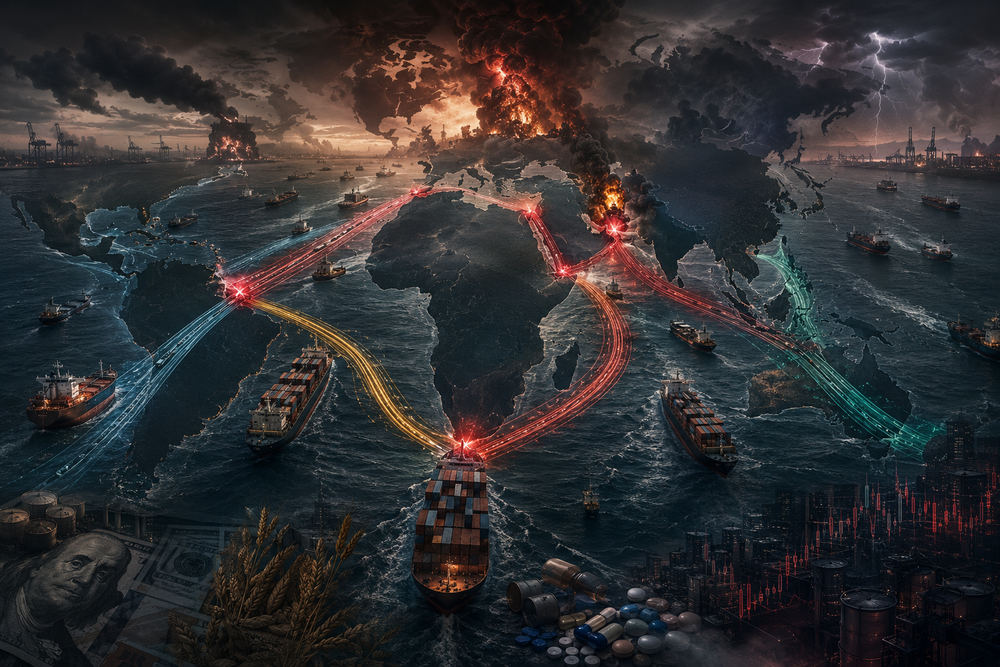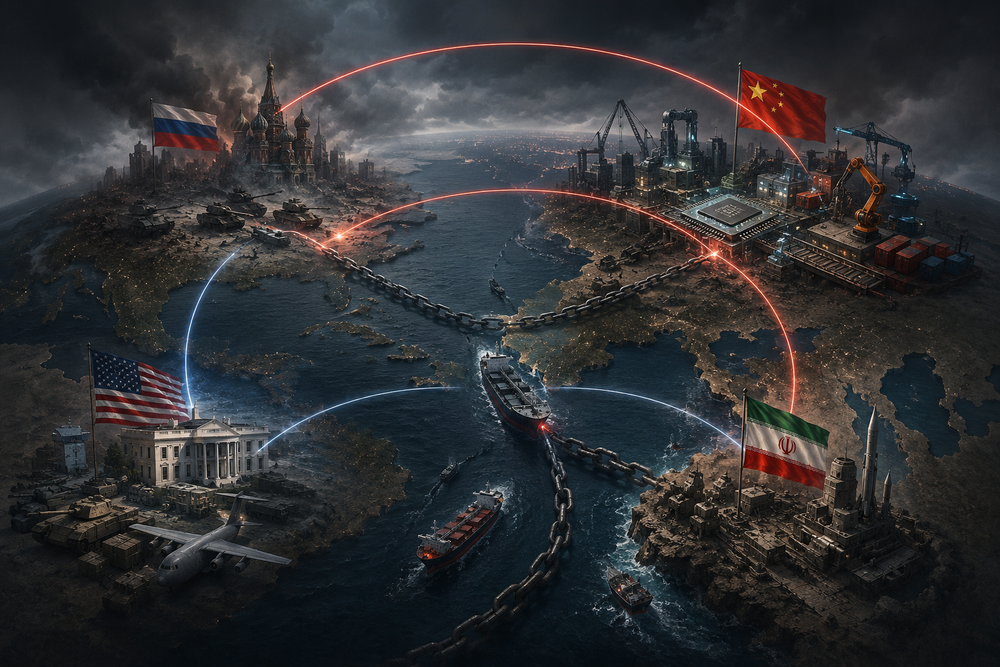
The war was declared in silence. No banners, no bombs, only treaties and slogans about unity. Yet beneath the paperwork, an old empire stirred, dressed once again in the language of peace.
Prologue | The Return of the Silent Leader
Berlin was rebuilt to remember, not to command.
Stone by stone, the city became an atlas of regret, memorials instead of monuments, silence instead of slogans.
Yet beneath that silence another architecture formed: ministries, factories, alliances.
It was designed for peace, but it can serve anything that calls itself order.
The word that once broke Europe has returned to its vocabulary.
Leaders speak of deterrence, resilience, readiness.
The grammar is careful, the tone almost pastoral.
But the rhythm is unmistakable: the continent that once swore never again now conjugates conflict again, budget by budget.
In every capital the justification sounds rational.
No one wants war; everyone simply prepares for it.
Each escalation is described as the last necessary one, each shipment of arms an act of peacekeeping.
The paradox is complete: Europe defends peace by learning to fight forever.
A civilization can remember the lessons of history and still repeat them, not through ignorance, but through habit.
The question that hovers over this new era of caution is the one no summit answers:
Why does Europe seem to want a war that cannot be won, and why can no one admit it?
What kind of faith is this: to walk toward danger with spreadsheets and slogans for prayer?
The answer lies not in malice but in machinery.
Europe is not being dragged into war; it is drifting there, guided by the autopilot of institutions that confuse movement with meaning.
Fear, memory, and bureaucracy have fused into momentum.
And nowhere is that momentum clearer than in Germany, the nation that once promised to lead only in conscience, now leading again in logistics.
The Architecture of Blindness
History rarely blinds outright.
It teaches societies to look away in sequence: first from cause, then from consequence, finally from the mirror.
Europe’s blindness today is administrative, psychological, and moral, a perfect storm of noise, obedience, and illusion.
Noise as Control
Censorship no longer silences; saturation does.
Every day floods citizens with updates that cancel each other out, success, setback, sanction, summit.
The mind learns to surf rather than to see.
When escalation becomes background sound, outrage turns to routine and routine becomes consent.
Inside this hum of permanent awareness, the extraordinary feels ordinary.
Missile-production data scroll beside sports results; troop movements share space with tourism forecasts.
The vocabulary of emergency merges with that of efficiency.
War becomes another management problem, something to be optimized.
Modern power doesn’t hide the truth; it drowns it in plausible detail.
Obedience as Solidarity
Citizens obey not because they believe, but because they belong.
After years of overlapping crises, financial, viral, climatic, security has become Europe’s last shared faith.
To question its rituals is to risk isolation.
Governments understand this instinctively; they frame caution as virtue and dissent as irresponsibility.
Unity replaces understanding.
People repeat the slogans of strength not out of conviction but out of fear of standing alone.
Even peace movements now speak the language of strategy.
They argue not for coexistence, but for better deterrence.
Illusion as Governance
The blindness reaches its summit inside the institutions that manage it.
Officials read the same assessments that warn of catastrophe, then draft policies that assume continuity.
They don’t deny danger; they schedule it.
To admit escalation might be uncontrollable would be to confess the limits of control, and in politics, control is the only credible currency.
Thus the rhetoric of comprehensive security expands endlessly: economic, digital, moral, emotional.
Everything becomes defence.
A continent once allergic to nationalism now sanctifies it under a different name, values-based leadership.
The vocabulary changes, the reflex stays: legitimacy through mobilisation.
Obedience has changed its costume. It now calls itself solidarity.
The System That Sees and Still Advances
Inside ministries the awareness is complete.
No one truly believes a direct confrontation with Russia could be contained.
Yet no government dares to articulate limits.
Each fears that restraint will be mistaken for retreat, and so every declaration of prudence hides a budget increase.
Policy becomes choreography: everyone moves cautiously forward because standing still looks like failure.
Europe’s blindness is not a lack of vision but a surplus of reason, an over-engineered faith that procedure can outsmart tragedy.
It is the same belief that once built trenches with mathematical precision.
When safety becomes a system, danger becomes its logic.
The German Paradox | Leading Through Guilt
Berlin speaks softly, yet everyone listens.
The voice of post-war Europe was never supposed to command again, only to remind.
But reminders, repeated for generations, become systems.
And systems, once perfected, develop ambitions of their own.
From Atonement to Authority
Every European institution carries a trace of German engineering: the precision, the paperwork, the belief that order can heal.
After 1945 that instinct was repurposed into moral design.
The new Germany would lead by constraint, an economy without conquest, a diplomacy without emotion, a military without pride.
It worked so well that the absence of ambition became its own form of power.
In the Bundestag, remembrance turned procedural.
Each debate on defence begins with a bow to history and ends with a budget line.
Between the two lies the quiet pivot from guilt to guidance.
Because Germany once destroyed the continent, it now defines how the continent must never be destroyed again.
That is the paradox of moral capital: the more sincerely it is spent, the more influence it buys.
Guilt, when engineered, becomes governance.
When Chancellor Scholz announced the Zeitenwende, the “turning point”, the word itself felt heavy with absolution.
It promised continuity while performing change.
One hundred billion euros for rearmament sounded transformative, yet the tone was pastoral, not militant.
Germany was not rearming, it was “assuming responsibility.”
And responsibility, uttered in German politics, has always meant management before meaning.
You can feel the tension even in the vocabulary.
Each sentence is constructed to reassure: no verbs of aggression, only of protection.
But language has memory.
The same precision that once mobilised armies now mobilises spreadsheets, and the rhythm is identical.
Every careful justification becomes an incantation of inevitability.
You almost believe them, until you realise belief is the point.
The Economy of Remorse
Guilt was never free; it needed industry.
The Wirtschaftswunder, the “economic miracle”, turned apology into productivity.
Factories became chapels of redemption; every exported machine part a fragment of atonement.
Work was worship, and efficiency its prayer.
That ethic still governs the German mind: the conviction that moral debt can be paid in performance.
Now the same ethic powers the arms sector.
Leopard 2 tanks, IRIS-T missile systems, drone components, all bear the signature of procedural virtue: precise, audited, certified.
No flag-waving, only compliance.
Each contract framed as contribution to European defence, never domination.
Yet in the rhythm of production the old logic whispers: build faster, build better, be indispensable.
What industry forgets, memory repackages as duty.
Economically, Germany has become Europe’s arsenal not by ideology but by inertia.
Decades of industrial supremacy make it the only state capable of scaling defence at speed.
Energy once flowed from Russia, capital from Frankfurt, diplomacy from Brussels, but steel and circuits still come from the Rhine.
The continent depends on German precision the way a patient depends on medicine that may also poison him.
Inside Berlin’s ministries, officials call it “leadership by necessity.”
Outside, allies call it what it is: rearmament disguised as responsibility.
The distinction comforts everyone except history.
The Machine of Momentum
Momentum is not a plan; it’s what remains when planning becomes impossible.
Europe’s drift toward militarisation follows this logic.
No one steers, yet everyone moves.
Procurement chains, alliance commitments, intelligence cooperation, all possess their own gravity.
To halt them would require an act of collective imagination, and imagination is the one resource bureaucracies cannot manufacture.
Industry as Doctrine
Factories define policy faster than parliaments.
Once a production line starts, it creates a constituency: engineers, suppliers, financiers, voters.
In a democracy of specialists, every job is an argument.
The political cost of stopping exceeds the moral cost of continuation.
Thus deterrence becomes an employment program with patriotic branding.
Germany understands this better than anyone.
It learned from the post-war economic miracle that stability equals repetition.
Today that repetition hums in assembly halls from Bavaria to the Baltic, a new miracle measured in megawatts and contracts.
The economy of remorse has become an economy of readiness.
When guilt meets efficiency, the result is inevitability.
Bureaucracy as Fuel
In Brussels, Berlin, and Warsaw, the paperwork moves faster than the people.
Each form, each framework, each declaration of intent accumulates mass.
Policies no longer describe reality; they create it.
Once an initiative exists, joint procurement, rapid deployment, strategic autonomy, it demands fulfilment.
To question it would be to question Europe’s unity itself.
Officials speak of “procedural solidarity,” a phrase that perfectly captures the new theology: loyalty through administration.
In this faith, salvation is measured in deadlines met and reports delivered.
The machinery of peace has become the machinery of preparation, polished and righteous.
The modern empire doesn’t march. It audits.
Cognitive Echo
Somewhere between the conference room and the factory floor, a flicker crosses the reader’s mind.
You recognise the pattern: optimism wrapped in order, purpose masking fear.
You’ve seen it before, in documentaries, in textbooks, in the silent logic that precedes every historical correction.
The body tenses before the intellect decides.
That’s not nostalgia; it’s biology.
Civilisations remember through instinct long after they forget through discourse.
The Physics of Decline & The Economy of Fear
The new Europe moves like an old machine: beautiful in design, unstoppable in error.
Its engineers call it deterrence, its economists call it stimulus, its citizens call it safety.
But beneath every term hides the same equation, a system that burns its own stability for motion.
The Laws of Exhaustion
Every civilisation has its physics.
For Europe, the constant is caution.
Energy once flowed from the colonies, then from coal, then from contracts with Moscow.
Each source ended not in explosion but in depletion.
Now the continent fuels itself with fear, a renewable resource that costs nothing to extract and everything to sustain.
Fear is cheaper than oil, but it burns the soul faster.
In Brussels, budgets expand under the logic of protection.
Each threat projection justifies another allocation; each allocation generates another dependency.
Defence spending becomes a gravitational field: the more mass it gains, the harder it is to escape.
Soon the mathematics of survival replace the morality of choice.
Inside ministries, officials speak of resilience, a word that sounds humane but behaves like pressure.
Resilience demands elasticity, not direction.
It trains societies to absorb shocks rather than to prevent them.
A resilient Europe can survive anything, except peace.
The Economy of Fear
Fear is measurable now.
It trades on markets, shapes bond yields, inflates stock in defence conglomerates.
Each headline adds value.
The psychology that once paralysed citizens now fuels investors.
In Frankfurt, risk has become an asset class.
Contracts flow through the same hands that manage climate transitions and digital reforms.
Armament merges with innovation; humanitarian budgets co-sign logistics for deterrence.
The bureaucracy that built welfare states now administers insecurity with equal precision.
When fear becomes policy, stability becomes speculation.
Economically, the pattern is flawless.
War talk stabilises currencies, sanctions justify subsidies, and the public, numbed by complexity, confuses motion for meaning.
Parliaments debate ethics; industries deliver certainty.
Every crisis closes one market and opens another.
Europe has discovered how to monetise its anxiety.
The Military Equation
On paper, the numbers comfort politicians.
Joint projects, interoperability, coordination.
But the physics betray the optimism.
Europe’s armies are fragmented, its arsenals depleted, its supply chains dependent on the very global order it claims to defend.
Logistics outpace purpose; rhetoric outpaces readiness.
The continent’s deterrence exists as theatre: battalions rehearsing sincerity, drones rehearsing sovereignty.
Even the uniforms look designed for photography.
Behind the spectacle hides an old truth, you cannot outsource courage.
An army without faith fights only for funding.
Russia’s innovations in hypersonic weapons, electronic warfare, and energy leverage have already redrawn the map of possibility.
No NATO simulation fully accounts for the asymmetry.
Europe’s strategy, built on coordination and consensus, collides with a reality built on velocity.
The result is not defeat, but fatigue, a slow corrosion of confidence disguised as progress.
The Psychology of Momentum
Citizens sense the contradiction but lack vocabulary to express it.
They scroll through reassurance, share infographics, repeat slogans that sound like hymns: Unity, Resilience, Democracy.
The repetition comforts; rhythm replaces comprehension.
What began as solidarity has become hypnosis.
Each new declaration from Brussels feels familiar, and that familiarity is the real danger.
When fear becomes routine, it no longer alarms; it structures behaviour.
People adapt to the hum of tension the way city dwellers adapt to traffic, annoyed by silence, dependent on noise.
The future no longer frightens; it merely refreshes.
This is the quiet genius of Europe’s modern order: it turns dread into discipline.
The citizen obeys not out of belief but out of rhythm.
The machine hums on, efficient, elegant, unsustainable.
The Moral Horizon
Every empire has a final illusion, that its principles will outlive its contradictions.
For Europe, that illusion is peace.
It speaks of stability as if stability were still a virtue, not an addiction.
It promises protection while quietly dismantling the capacity to protect meaning itself.
The tragedy is not that Europe forgot the wars it survived.
The tragedy is that it remembered them too well, and mistook remembrance for immunity.
Fear became faith; guilt became governance.
And in that inversion, the continent found comfort in control.
History never repeats itself exactly. It simply waits until memory feels safe enough to fail again.
The Politics of Forgetting
The present generation was raised on commemoration.
Its education began in museums and ended in algorithms.
Every monument taught restraint, every headline taught alignment.
But no one taught doubt, the kind of doubt that resists easy consensus, the kind that once built philosophy, not policy.
In classrooms, never again became a slogan detached from inquiry.
It meant “never again war,” but it also came to mean “never again uncertainty.”
So Europe built institutions to remove the need for courage, then called that progress.
Now those same institutions march under new banners, and the old courage is suddenly required again.
The most dangerous societies are not those that deny history, but those that curate it.
Curation polishes chaos until it becomes narrative.
And once narrative feels coherent, conscience can rest.
That is when decline begins, not with collapse, but with comfort.
When remembrance becomes routine, truth becomes heritage.
The End of Assurance
Economically, militarily, psychologically, Europe stands in paradox.
Its wealth depends on peace, its identity on vigilance.
It fears collapse yet requires crisis to define itself.
Every generation swears it will not repeat its parents’ mistakes, then recreates them in higher resolution.
The question is no longer whether Europe can win a war, but whether it can survive its own preparation for one.
A continent that once produced symphonies and revolutions now produces frameworks and summits.
Its genius has become managerial.
Even morality is managed, tendered, benchmarked, and renewed on schedule.
But conscience does not scale.
It flickers in individuals before it ever ignites in parliaments.
And perhaps that is where hope still lives: not in institutions, but in awareness.
In the quiet recognition that security without meaning is only a more elegant form of fear.
No algorithm can calculate the weight of a soul that still remembers.
Epilogue | The Silence Before Memory
Night again.
Somewhere in Brussels, lights stay on in glass offices, reflecting over the empty squares below.
Reports are written, statements prepared, forecasts refined.
Outside, a tram passes, its hum blending into the same frequency as the servers that hold the plans.
The city feels calm, almost virtuous.
But beneath that calm hums a different vibration, the sense that Europe has mistaken activity for awakening.
It is not asleep, only dreaming in spreadsheets.
And yet, beyond the circuits and schedules, something older stirs.
The faint tremor of conscience, the same that once made philosophers question kings and poets question gods.
It still exists, waiting for silence deep enough to be heard.
A civilization dies not when it loses power, but when it loses the courage to listen to itself.
Perhaps that is where renewal begins, not in the roar of armies or the rhetoric of summits, but in the pause between them.
In that pause, memory breathes.
In that breath, possibility returns.
Europe’s future will not be decided by victory or defeat, but by attention, by whether it still knows how to hear the difference between noise and truth.
Because every machine, no matter how efficient, eventually hums itself into silence.
And when that silence comes, the only question left will be the oldest one:
What did we believe while we were still alive?

Further Reading from The Manifest
Related from The Manifest Archive