The sanction illusion: how the West punished itself
Inside the 2022 Russia sanctions that reshaped Europe’s economy, severed its energy lifeline, and revealed the limits of moral power.
Introduction | The fire and the freeze
The winter of 2022 began without soldiers crossing borders, yet Europe already felt under siege.
From Brussels to Berlin, leaders stood behind glass podiums, their breath visible in the cold, promising that economics would succeed where armies once failed.
They spoke of a new kind of power, one rooted in moral certainty.
Factories slowed. Currencies trembled. Household bills rose faster than wages.
Still the speeches grew louder. “Russia will pay,” officials repeated. “Freedom has a price.”
The crowds applauded. The cameras rolled. The pageant of righteousness had begun.
“Sanctions are our non-violent weapon,” said Ursula von der Leyen. “They will cripple the aggressor’s ability to wage war.”
Beneath those declarations another truth was stirring. Europe’s prosperity depended on the very arteries it was cutting.
For decades, gas from the east had warmed its homes and powered its peace.
To punish Moscow was to touch the pulse that kept Europe alive.
The applause faded into the first long silence of conviction.
The moment of rupture
In September the sea erupted.
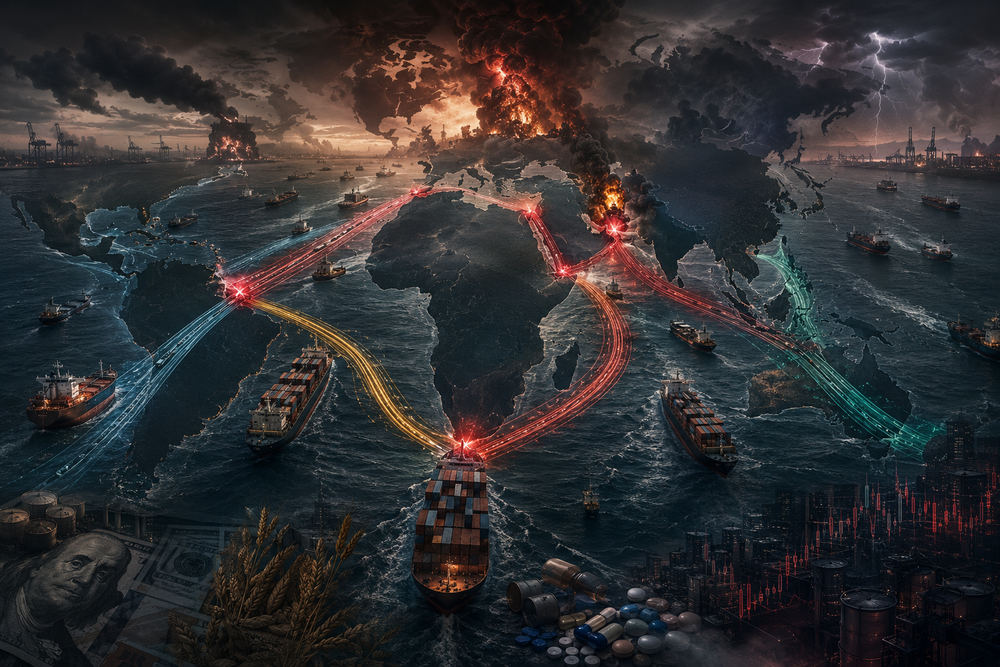
A deep explosion sent a column of gas twisting through the Baltic. The Nord Stream pipelines, steel veins that linked Russia and Germany, lay torn on the seabed.
Officials repeated the phrase “under investigation.” The public heard only silence.
“Who profits?” whispered the headlines.
The damage equalled the loss of an entire winter’s supply.
The International Energy Agency later estimated that Europe lost more than eighty percent of its Russian gas imports that year.
Across the continent heaters dimmed, factories halted, ministers preached resilience.
Their message was simple: pain proved principle.
Yet a quieter question lingered.
If virtue demands self-harm, whose victory is it?
The war had not only divided nations. It had divided truth from consequence.
The silence that began beneath the Baltic drifted inland, settling over boardrooms and parliaments alike.
The energy backfire
Energy was meant to be Europe’s weapon.
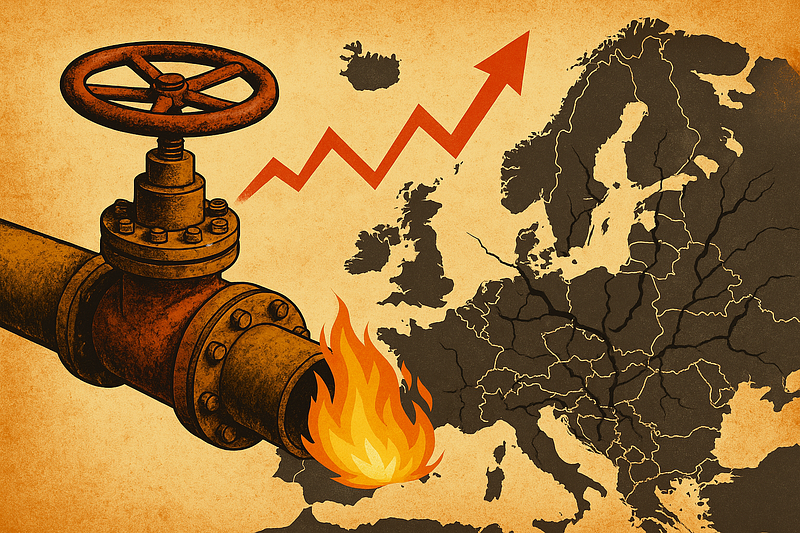
By cutting the pipelines from the east, leaders hoped to choke Moscow’s war chest and prove that morality could power a continent.
Within months the equation reversed. Prices climbed like smoke. Supply chains cracked. Factories that had run for generations fell quiet.
The war on dependence created a new dependence.
The blast beneath the Baltic became the emblem of that inversion.
Nord Stream had been both artery and mirror, showing how deeply Europe’s stability was tied to its rival.
When the gas plumes rose through dark water, the illusion dissolved. The continent had cut its own pulse.
LNG ships arrived from the Atlantic, each load costing three times more than the gas that once flowed by pipe.
In Washington it was called energy security.
In Europe it felt like austerity gilded with virtue.
Germany, the industrial heart of the Union, entered a long winter.
Steelworks dimmed, chemical plants paused, whole districts survived on subsidies.
Politicians spoke of transition. Workers spoke of bills.
The distance between speech and survival widened.
Inside ministries new words took root, resilience, diversification, shared sacrifice.
Language became the insulation that reality no longer provided.
The pipeline was gone. The silence remained.
Across the ocean, energy giants recorded profits unseen in decades.
Unity had become a currency, and Europe paid for it in silence.
Washington’s hand, Europe’s silence
Empires rarely announce their return; they simply resume their habits.
After the first sanctions, Washington moved like a conductor guiding an old orchestra.
Each package drafted in Brussels carried a familiar rhythm.
Behind closed doors exemptions were traded, priorities adjusted, supply lines redrawn.
Europe called it coordination.
Critics called it dependence.
Every alliance is a contract written in unequal ink.
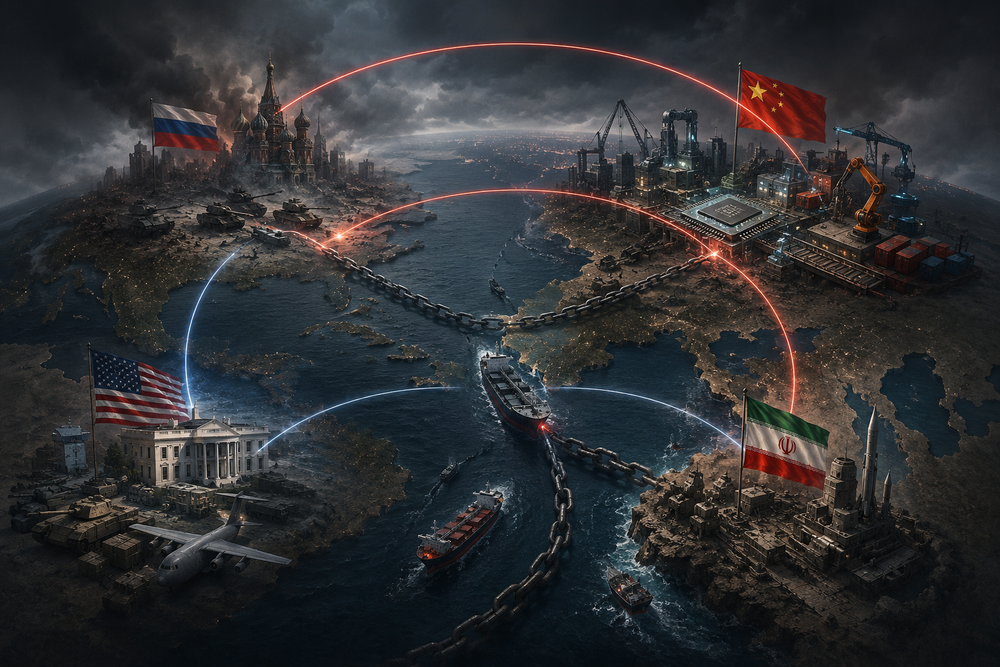
American gas replaced Russian pipelines. American arms filled European arsenals. American bonds absorbed European capital.
The same nations that once preached strategic autonomy now imported both protection and permission.
Officials in Berlin and Paris insisted the partnership was voluntary.
Perhaps it was, but voluntariness ends where necessity begins.
Across the Atlantic, officials praised Europe’s unity and moral clarity while European parliaments struggled to explain inflation, energy poverty, and the slow dismantling of industry.
The empire had not vanished. It had changed address.
The choreography continued. Every embargo tightened transatlantic routes, every sanction shifted markets westward.
It was not conspiracy; it was gravity.
And Europe danced, unwilling to miss a step, unable to find its own rhythm.
Through it all ran the measured silence of obedience.
The German dilemma
For half a century Germany had built prosperity on the promise that energy and peace could coexist.
That promise froze in 2022.
The model that powered its post-war miracle, cheap gas, stable euro, global demand, fractured.
Factories that once exported to every corner of the world began to weigh the cost of survival.
Steel, glass, fertilizer, cars, each industry felt the chill.
Executives moved production to Texas, where energy was cheap and subsidies generous.
What had been Europe’s engine began to sputter.
Empires rarely fall to enemies. They dissolve in obedience.
Inside the Bundestag debate turned from ambition to damage control.
A generation raised in stability now spoke the language of scarcity.
Relief packages replaced plans. Confidence thinned like winter light.
By year’s end the unthinkable had become ordinary.
Germany bought gas through intermediaries who bought it from Russia.
Energy still flowed, only the routes and prices had changed.
The principle survived; the logic inverted.
The war had become a mirror. Every sanction reflected its maker.
At night the streets of Berlin glowed faintly blue from efficient bulbs, the light of endurance, the hue of silence.
The parallel world
While Europe measured loss, another geography was forming.
Across Asia, Africa, and Latin America, new corridors of trade appeared.
The yuan and rupee began settling deals once ruled by dollars and euros.
Sanctions meant to isolate Russia accelerated the birth of a second financial world.
Energy flowed east. Technology travelled south.
Globalisation had not ended; it had shifted its axis.
Isolation became acceleration.
From Moscow to Mumbai, São Paulo to Shanghai, new systems flickered to life.
Europe watched, speaking still of unity while the world quietly reorganised.
The silence that blanketed the West was elsewhere the hum of opportunity.
Transition
By late 2023 the language of victory had faded into the language of endurance.
Sanctions remained, but conviction thinned.
Europe no longer spoke of punishing Russia. It spoke of surviving itself.
Even the silence had become administrative.
The economics of self-delusion
Press conferences replaced triumph with resilience and shared sacrifice.
Behind the graphs lay a quieter truth: Europe’s industrial base, once a symbol of precision, was eroding under the cost of its own virtue.
The price of purity
Energy-intensive industries migrated.
Steel left for Texas, chemicals for Shanghai, data for wherever current was cheapest.
Small workshops closed, their windows papered with invoices.
In cafés the talk was no longer politics but hours of light.
Every act of control reveals what cannot be controlled.
Sanctions promised a clean divide between aggressor and victim; instead the line blurred.
Profit and punishment shared the same balance sheets.
Economists debated multipliers, while citizens counted kilowatts.
A society that names pain as virtue eventually forgets comfort.
Policy as performance
In the echo of press rooms the same phrases returned.
Temporary hardship. Shared sacrifice. A small price for freedom.
They rolled through parliaments, faded through headlines, settled into habit.
When policy becomes ritual, failure becomes faith.
Behind the cameras aides tracked exhaustion.
Approval dipped, then steadied. Citizens adapted, turning resignation into routine.
Crisis became atmosphere. Atmosphere became silence.
The shadow of fear
Fear replaced strategy.
Officials feared division more than recession. Editors feared silence more than error.
To doubt was to stand outside the circle.
Universities avoided the subject. Think-tanks recycled the same frames.
Social media filled with slogans louder than thought.
Fear creates order. Order conceals decline.
For the first time in decades Europe sensed the borders of its own agency.
The war was no longer distant; it lived in power grids, in the price of bread, in the quiet between news bulletins.
The idea of the West as moral compass trembled beneath the weight of consequence.
The silent pivot
Time moved where politics could not.
New crises surfaced, new headlines replaced the old.
Sanctions stayed, unspoken, permanent.
They had become infrastructure of silence, invisible yet absolute.
History often hides inside what feels normal.
What began as moral clarity ended as quiet adjustment.
Dominance softened into endurance. Influence drifted east.
Europe looked inward and saw stillness staring back.
Power ends not with a bang, but with routine.
The broken mirror
Sanctions were meant to project strength.
Instead they revealed fragility, the fragility of belief in a world too plural for one truth.
They showed how ideals dissolve when they meet arithmetic.
The weapon worked, but not as intended.
Russia endured. The Global South adapted. The United States profited.
Europe turned discomfort into doctrine.
What began as punishment became confession: progress built on dependency, freedom tied to consumption, strength defined by alignment.
Perhaps the sanctions did not fail. Perhaps they succeeded in revealing the limits of the system that created them.
Closing reflection | The quiet after
Winter returned.
Streetlights glowed again, dimmer but still defiant.
Speeches were shorter, applause subdued.
There was no victory to announce, only persistence.
Between principle and fatigue, between unity and doubt, Europe had crossed an invisible threshold.
The sanctions were no longer policy but identity.
In the end, silence was the verdict. Power rarely ends in thunder; it fades into habit.
Related from The Manifest Archive