The board lights up before the battlefield does.
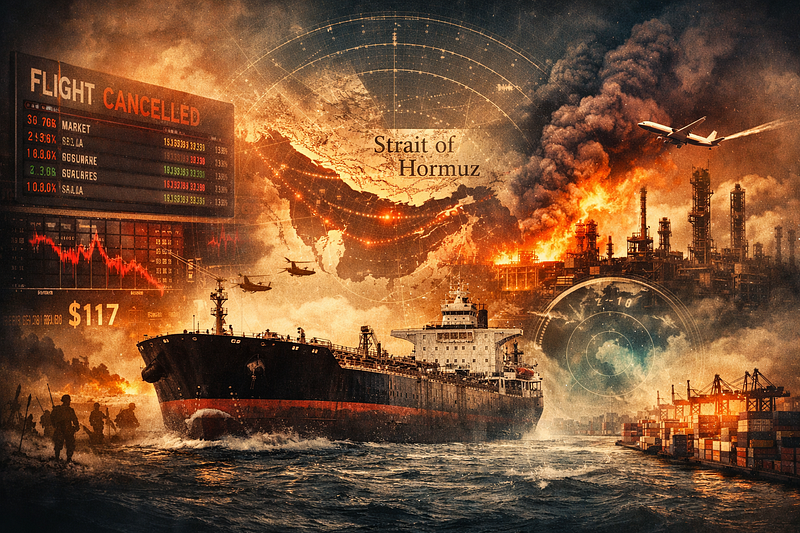
A route disappears from a departures screen in Europe. Somewhere else, a tanker slows in a corridor half the world depends on. An export terminal is named in a threat, and before another army crosses another frontier, crude jumps, insurers recalculate, freight risk widens, traders price fear into tomorrow, and governments begin speaking the language of contingency.
That is where the modern war begins for everyone else.
Not in the blast radius.
In the system.
For centuries, war arrived with visible force. It arrived in the movement of men, in the pressure of cavalry, in the geometry of artillery, in the long shadow of smoke over a city that knew it had become a target. Even when empires fought across continents, the public imagination could still point to where war “was.” It was where soldiers advanced, where flags fell, where treaties arrived after the decisive damage had already been done.
That grammar is breaking.
Sun Tzu’s The Art of War remains one of the oldest and most influential works ever written on conflict. Clausewitz’s On War remains one of the great classics of military thought. Their authority is earned. Sun Tzu taught that war is not brute collision but intelligence, deception, timing and pressure. Clausewitz taught that war is political, that it unfolds under friction and uncertainty, and that violence tends toward escalation even when policy still governs the aim.
But Iran exposes the limit in both.
Not because they were wrong.
Because the medium changed.
The old theorists taught us how war defeats armies.
Iran is showing how war now enters societies through systems.
The World Sun Tzu Could Still See
Sun Tzu wrote in a world of rulers, scouts, roads, terrain, formations and direct cunning. His battlefield was not simple, but it was still visible. Information mattered because the enemy could be known. Surprise mattered because movement could still be masked. Stratagem mattered because pressure was still ultimately applied against a recognizable opponent.
It was a hard world, but a readable one.
A commander looked outward. He studied the field, the weather, the slope of land, the position of troops, the temper of the enemy. He asked how to win before collision, how to bend another will before it had to be broken. Even deception still moved through visible space.
That world has not vanished. Much of war still looks like that.
But the pressure now travels farther than the opponent.
A threat to an oil terminal is not only pressure on a state. It is pressure on insurers, on freight assumptions, on reserve planning, and on households that will never hear the name of the facility yet will still meet its consequences in the price of fuel, food, transport and political fear.
Sun Tzu could explain how to deceive an enemy.
He did not have to explain a war that can move through marine insurance, export terminals and civilian flight corridors.
Sun Tzu explained deception.
Iran explains transmission.
The World Clausewitz Could Still Anchor
Clausewitz wrote in the shadow of mass state violence, in the long afterimage of the Napoleonic age. He understood something deeper than cunning. He understood subordination. War was not an irrational eruption detached from the life of states. It was a continuation of politics by other means.
His battlefield was brutal, but it still possessed an anchor. Governments mobilized. Armies moved. Policy set the aim. Violence served a purpose larger than itself, however terrible the instrument became in practice. Even uncertainty had a shape. There was a staff map, a march route, a line where battle began and from which consequences radiated outward.
That insight remains indispensable.
Iran is plainly political. The threats, the calibrated wording, the corridor pressure, the signaling to allies and adversaries, the language of reopening trade routes, all of it belongs to the same tradition Clausewitz understood so well. War is not outside politics here. It is politics under harder instruments.
But Clausewitz still wrote in a world where the event of war could be anchored, however imperfectly, in the battlefield. Civilians suffered because armies fought. Infrastructure mattered because armies needed it. Markets moved because states acted.
In our century, those relations have thickened and darkened.
Now the corridor is not merely a support for war. It is one of war’s principal media. The strike matters, but so does the shipping warning. The missile matters, but so does the closure in the sky. The threat matters, but so does the repricing that follows the threat. The political instrument no longer ends with military action. It extends through infrastructure.
A threatened strait becomes a fiscal event in Europe.
A named export hub becomes a market event in Asia.
A closure in the sky becomes a logistics event for civilians with no ideological stake in the war at all.
Clausewitz taught that politics pervades war.
Modern conflict adds something he could only partly foresee: infrastructure now pervades it too.
Clausewitz taught that war serves politics.
Modern conflict shows that infrastructure now serves war.
The Lesson Tuchman Would Recognize Immediately
Barbara Tuchman did not write theory in the abstract. She wrote the temperature of systems before disaster. The Guns of August endures because it showed how plans can harden faster than judgment, how prestige narrows options, how mobilization and sequence can take decisions away from the men who imagine they still control them.
Her great subject was not only war.
It was the moment before war fully understands itself.
A timetable becomes destiny. A doctrine becomes trap. A sequence begins to move with its own internal velocity. Men still speak as though they have choices, while the system has already started choosing for them. That is what makes her book feel modern. It knows that catastrophe often arrives not as decision, but as acceleration.
That lesson returns now, but in a different medium.
In 1914, rail schedules and mobilization tables hardened catastrophe. In the twenty-first century, networks do it faster. Airspace closures, tanker incidents, export threats and insurance repricing do not wait politely while leaders consider their next move. They begin transmitting consequence at once. The result is a war that feels both limited and everywhere, regional and global, contained and invasive. No formal widening is required for the event to widen functionally. The system performs the expansion by itself.
This is why Iran matters beyond the map.
Not because every actor seeks world war. Tuchman’s warning is more subtle than that.
It matters because modern systems can widen the effects of a conflict faster than leaders can publicly admit the conflict has widened.
In 1914, rail schedules accelerated war.
In the twenty-first century, infrastructure networks accelerate consequence.
When War Stopped Needing a Front
War has always needed supply. That part is ancient. Armies marched on grain before they marched on fuel. Ports mattered before aviation existed. Siege and blockade are older than the modern state.
So the claim here is not that infrastructure suddenly became relevant.
The claim is sharper.
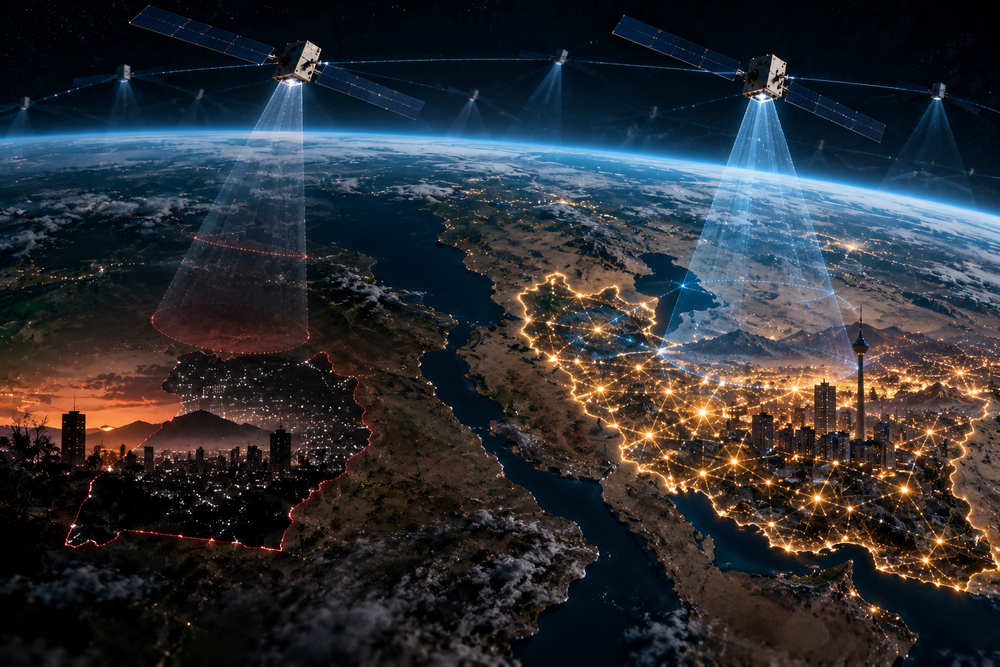
At some point in the modern era, infrastructure stopped being merely the support system of war and became one of its primary media. The battlefield no longer needed to widen geographically for the conflict to become socially real elsewhere. It only needed to disturb the corridors through which ordinary life remains coherent.
That threshold was crossed when several systems fused.
Energy became globally concentrated and instantly priced. Civil aviation became routine infrastructure rather than luxury. Shipping became the bloodstream of ordinary consumption. Insurance turned distant risk into immediate cost. Financial markets began repricing instability before political language had even settled on a name for it.
From that moment on, war no longer needed to conquer your city to enter your life.
It only needed to touch the route.
The battlefield did not disappear.
It lost its monopoly.
Where the Real Battlefield Sits Now
Look at the objects that now matter most.
Oil terminals. Strategic straits. Civilian air corridors. Energy sites. Desalination plants. Tankers. Insurance rates. Strategic reserves. Export capacity.
These are not side notes.
They are the battlefield’s second body.
That is not mere economic fallout.
It is the operational shape of modern war.
The old battlefield destroys.
Infrastructure warfare transmits.
And the mechanics are simple enough to disappear inside their own normality. A terminal is threatened. Insurers raise risk. Freight prices widen. Traders build scarcity into contracts. Governments eye reserves. Industry recalculates. Households feel the effect as if it were weather.
It is not weather.
It is the route by which conflict enters daily life.
A mother in a city far from the Gulf does not see an export terminal. She sees a higher transport cost, a changed bill, a tighter week. A driver does not study tanker lanes. He sees the number climb at the pump. A traveler sees a route vanish from a board and calls it inconvenience. He is already living inside the perimeter of the event.
War is no longer only where destruction occurs.
It is where continuity starts to fail.
Why the Strait of Hormuz Matters More Than the Headline
The Strait of Hormuz is often described as a chokepoint, and the term is correct, but incomplete.
A chokepoint is not just a narrow passage. It is a place where distance collapses. Events inside it cease to belong to the surrounding geography alone. They become price signals, political pressures and strategic warnings for everyone tied to the route.
That is why Hormuz matters more than many headlines about the “Iran war” itself.
It is not simply one location inside a war zone.
It is the mechanism by which the war leaves the war zone.
When oil routes tremble, distance disappears.
The Tanker as Political Object
Few objects now reveal power more clearly than the tanker.
Slow, exposed, commercial, indispensable.
At first glance it appears to belong to the old world of trade, routine and technical necessity. Steel, cargo, navigation, schedules. But in periods of escalation, the tanker sheds that innocence almost instantly. It stops being a vessel of commerce and becomes a vessel of leverage.
A tanker is not merely carrying energy. It is carrying an assumption. The assumption that movement will remain normal. That insurers will keep pricing passage. That ports will receive. That escorts will deter. That distance will remain manageable. That the world, whatever else is breaking, will continue to honor the route.
The moment that assumption weakens, the tanker changes meaning.
It is no longer just cargo in motion. It is a floating referendum on continuity.
A ship waits. Screens update. Crews listen. Markets infer. Somewhere far away, a driver who has never heard of Hormuz will still meet that pause days later at a pump, a checkout line, a freight invoice, a budget meeting. The ship disappears beyond the horizon. Its pressure does not.
That is the cruelty of infrastructural war.
It reaches the ordinary without ever needing to announce itself as war.
A tanker under pressure is not only a ship.
It is a moving test of whether peace still has an operating system.
The Sky Is No Longer Neutral
The same transformation is happening above the sea.
A closure in the sky sounds administrative. It rarely feels dramatic enough to carry the emotional weight of war. It arrives in notices, reroutings, codes, advisories. It sounds like safety language. But airspace is infrastructure disguised as emptiness. The moment routes are restricted, the sky stops being background and becomes active terrain.
Flights reroute. Cargo schedules bend. Costs rise. Timelines shift. Military calculations change. Civilian systems absorb the disturbance before most civilians understand what was disturbed.
A route missing from a departures board is a small visual event.
Its meaning is not small.
It tells you that sovereignty has entered the timetable. That fear has entered the corridor. That altitude itself is being reorganized under pressure. The sky, once treated as neutral passage, begins to behave like a governed frontier.
This is one of the clearest signs that war has changed form.
It no longer needs to occupy a city to interrupt civilian normality. It only needs to make movement conditional.
A delayed family. A rerouted shipment. An empty line on a departure board. These are quiet images. That quietness is part of the deception. They do not look like war. They are one of the ways war enters life without its old uniform.
The war arrives long before the invasion reaches you.
It arrives in routes, price and delay.
The Language That Hides the Mechanism
The public vocabulary remains far behind reality.
We still get words like volatility, disruption, spillover, precaution, market reaction.
These words calm the reader at exactly the wrong moment.
Volatility suggests mood where structure is at work.
Disruption suggests inconvenience where coercion is at work.
Spillover suggests accident where transmission is at work.
Precaution suggests neutrality where the infrastructure of daily life is already becoming geopolitical terrain.
Language matters because it preserves the illusion that the real war remains elsewhere.
It does not.
The route is now part of the war.
The price is part of the war.
The closure is part of the war.
The civilian continuity system is part of the war.
Who Benefits from the Old Misunderstanding
The narrower battlefield story survives because it is useful.
Governments benefit from describing the conflict as distant while preparing for domestic economic effects. Markets benefit from narrating systemic coercion as turbulence. Military and political actors benefit from the fact that they can widen the functional battlefield without having to declare that widening openly.
If the public still imagines war as something that happens over there, then the systems carrying its effects can keep doing their work with less scrutiny.
That misunderstanding is no longer a neutral analytical mistake.
It is one of the ways modern conflict remains governable in public language.
What Classic War Theory Still Gets Right
This is where weak essays usually collapse. They discover a new phenomenon and declare the old theory dead.
That is lazy thinking.
Sun Tzu is not obsolete. Clausewitz is not obsolete. Tuchman is not obsolete.
Sun Tzu still teaches how power misleads. Clausewitz still teaches that war is political and saturated with uncertainty. Tuchman still teaches that systems can outrun judgment and turn elite miscalculation into civilizational damage.
The problem is not that they became false.
The problem is that they now describe only part of the event.
The old books are not wrong.
They are bounded.
What Iran Adds to the History of War
Iran’s value as a case study is not only that it is current. It is that it makes the transformation legible.
The strikes and threats are visible. So is the underlying shift.
War is becoming infrastructural in form.
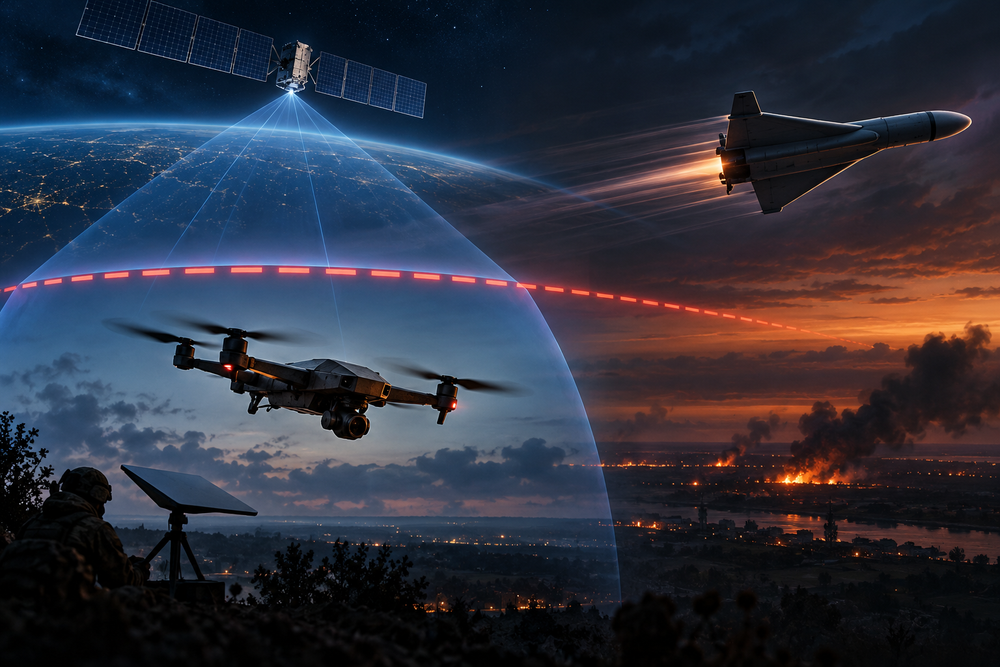
Not infrastructural instead of military, but infrastructural alongside and beyond it. The decisive question is no longer only who can strike harder, deceive better or mobilize faster. It is also who can route instability through the systems that keep other societies coherent.
That means the new theorist of war has to read more than armies.
He has to read shipping tables, energy corridors, reserve policy, airspace notices, insurance logic, price transmission and logistical fragility.
The war book of the twenty first century cannot be written only from the trench, the headquarters or the foreign ministry.
It also has to be written from the tanker lane, the export terminal and the departures board.
Closing Reflection
For a long time, the world could still pretend that war and normal life were distinct categories. War happened at the front. Everything else reacted later.
Iran is showing the weakness of that belief.
A route disappears. A corridor narrows. A terminal is named. A price leaps. And suddenly millions of people who are nowhere near the battlefield are living inside its consequences.
That is the real historical break.
Sun Tzu could still read the enemy. Clausewitz could still read the state. Tuchman could still read the machinery of escalation.
What our age adds is the route.
And the route is merciless.
It does not ask who voted for the war. It does not ask who understands it, supports it, resists it or even notices it. It simply carries pressure until ordinary life begins to deform around a distant decision.
War no longer arrives only with soldiers.
It arrives when systems stop behaving as if peace still exists.
And once that happens, the war is no longer only in Iran.
It is in the timetable.
In the tanker lane.
In the price of movement.
In the fragile routine by which societies reassure themselves that the front is still far away.
The front is still far away.
That is no longer the same thing as being outside it.
Further Reading from The Manifest
If you want to go deeper into the wider architecture behind modern conflict, energy pressure and hidden systems of power, continue with these chapters from The Manifest.
Strait of Hormuz: The Chokepoint That Could Break the World EconomyFor the geographic and economic logic behind the corridor itself, and why a narrow maritime passage can carry consequences far beyond the region.
Hormuz and Suez: The Chokepoints of Global PowerFor the broader pattern of how narrow routes become strategic levers in a system built on global dependency.
Europe and the Strait of Hormuz: Drifting Into a War It Cannot ControlFor the European layer of the crisis, and how distant escalation becomes domestic vulnerability.
US Strikes Iran While Talks Continue: Energy, Law and the Architecture of EscalationFor the earlier phase of the Iran escalation, where the legal, military and energy layers first began to merge.
Architecture of Power: How Modern Empires Hide in Plain SightFor the larger structural map connecting war, infrastructure, dependency and modern systems of control.
Related from The Manifest Archive