The Object You Turn Back For
You leave the house.
Keys in your pocket.
Jacket on.
The door closes.
After a few steps, you stop.
Not because you are unsafe.
Not because you forgot something essential.
Something feels off. A small break in continuity.
You turn around.
Inside, you pick up one object. Not your wallet. Not your watch. Not your keys.
The device.
Only then do you leave.
You can leave your house without shoes.
You can leave without cash.
But not without the object that confirms you exist.
This does not feel like dependence.
It feels like order. Like responsibility. Like how life works now.
That is where it begins.
From Tool to Infrastructure
There was a time when the phone was a tool.
You carried it because you might need it. You could forget it without consequence. Nothing failed. No access disappeared. You were still fully present in the world.
The phone was something you used.
Not something you inhabited.
The transition did not arrive as a decision.
It arrived as improvement.
Calls became cheaper. Messages unlimited. Data abundant. Navigation helpful. Payments easier. Storage infinite.
Each step reasonable.
Each step useful.
What changed was not the device itself.
It was its position.
The phone moved from accessory to infrastructure.
Infrastructure is only noticed when it fails.
Visibility as Condition
Navigation no longer assists. It orients.
You do not choose routes anymore. You follow them. Deviating feels inefficient. Delay feels like error.
Payment no longer passes through hands. It passes through identity.
Money is no longer something you carry.
It is something you are.
Artificial intelligence now lives on the device itself. It listens, predicts, suggests, finishes sentences, anticipates what you might search for before you decide to search.
The phone does not only look backward.
It looks ahead.
None of this feels dramatic.
That’s the problem.
Optimization Without Coercion
None of this feels invasive.
It feels optimized.
Convenience removes resistance.
What once required explanation now arrives pre-approved.
What once demanded trust now offers efficiency.
The system does not push.
It smooths.
When friction disappears, alignment follows.
The System Beneath the Gesture
None of this emerges from individual choice alone.
These behaviors are shaped by systems designed to reward visibility, continuity, and engagement. Platforms monetize attention. States normalize identification. Infrastructure demands predictability.
What looks like habit is often compliance with an environment that no longer functions without data.
The device does not persuade.
It aligns.
Once alignment is achieved, no coercion is needed.
Continuous Presence
The device records where you are. Not only when you move, but when you remain still.
Home is a location.
Sleep is a data point.
It can listen. Not constantly. But sufficiently. Enough to respond. Enough to optimize. Enough to sell.
The explanation is not technical.
It is visible.
The device stores your fingerprints. Your face. Your voice.
Not as suspicion.
As convenience.
What once required justification now arrives as comfort.
Outsourced Memory
Photos are no longer images. They are data.
Faces recognized.
Locations fixed.
Time stamped.
Storage shifts outward. Not because it is poetic. But because absence disrupts continuity.
What is externally stored is not owned.
It is assigned.
Configurable Consent
You are told you are in control.
There are settings.
Permissions.
Dashboards.
You can disable tracking.
You can review access.
You can customize privacy.
And still carry the system everywhere.
Control was not removed.
It was reduced to configuration.
If something feels invasive, you must have missed a setting.
Always On
The device cannot truly be turned off.
The battery cannot be removed.
“Off” means low activity.
Not absence.
Even without a SIM card, presence remains.
Networks are scanned.
Signals recognized.
You are never unreachable.
Only temporarily unconfirmed.
The Performance of Stability
People do not carry the device because it tracks them.
They carry it because it confirms them.
They want to belong.
To be seen.
To be counted.
To show what they are doing.
Where they are.
With whom.
Not as exhibition.
As proof.
Regulated Emotion
The device does not ask if you are well.
It asks if you are visible.
So people show that they are fine.
Even when they are not.
They post movement.
Smiles.
Continuity.
Not to deceive others.
But to regulate themselves.
Showing that you are fine becomes more important than being fine.
Distress does not disappear.
It is delayed.
Edited out.
The system rewards function, not truth.
Stabilization as Relief
The phone began as an instrument.
Then it became medicine.
Something reached for when silence stretched too long.
Now it is neither.
It is a stabilizer.
It does not make you happy.
It makes you functional.
It is not taken to feel better.
It is taken to feel less.
Total Capture
There have never been more photographs.
Not because life became more beautiful.
But because moments require confirmation.
Meals are photographed before tasting.
Events before responding.
Photos are no longer memories.
They are proof of participation.
Recording Before Helping
Something happens.
Someone falls.
A body collapses.
An argument erupts.
Before anyone helps, a phone rises.
Not out of cruelty.
Out of reflex.
Recording feels like action.
Helping feels risky without proof.
Witnessing has become capture.
Everyone knows it.
Intimacy Without Forgetting
When cameras are always present, intimacy does not vanish.
It relocates.
Bodies are photographed to exist.
Desire becomes data.
Sex becomes files.
Nothing feels dangerous in the moment.
The danger is permanence.
The device does not betray intimacy.
It remembers it.
Memory without forgetting becomes leverage.
When Silence Becomes Suspicious
For most of history, absence was neutral.
Now it is noticeable.
If data is missing, questions arise.
If a signal drops, curiosity follows.
Once, power had to prove you were present.
Now, you must prove you were not.
When everything is recorded,
nothing unrecorded feels innocent
Silence becomes deviation.
The Name That Still Hides It
The device is still called a phone.
That detail barely matters.
Calling feels intrusive.
Messaging is default.
The phone did not lose its function.
It buried it.
Navigation.
Payment.
Identity.
Music.
Memory.
Entire lives once carried in rooms
now live in pockets.
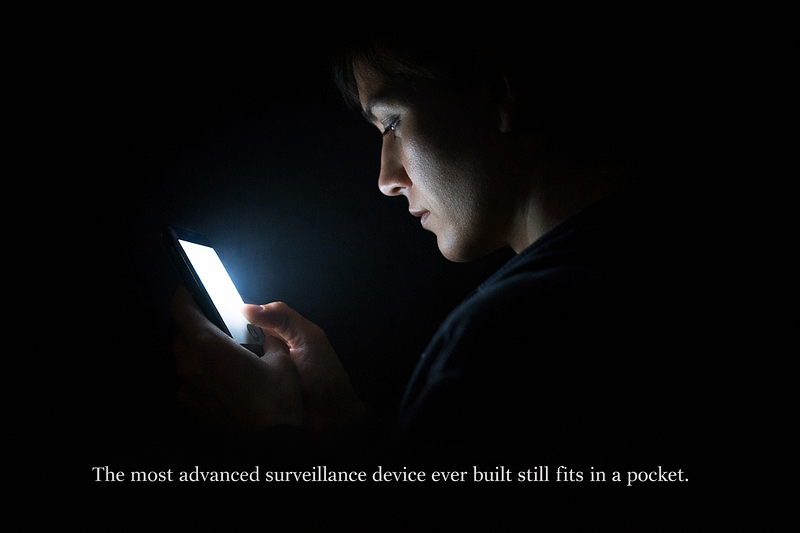
The most advanced surveillance device ever built
is still called a phone.
A Question That Has No Owner
So much data is collected.
People respond with a phrase they did not invent.
They say they have nothing to hide.
It sounds reasonable.
Calm.
Adult.
But it answers the wrong question.
The issue is not whether you have something to hide.
The issue is who decides, later, what becomes hideable.
Data does not live in the present.
It survives context.
What is ordinary today may be suspicious tomorrow.
What is harmless now may be reclassified later.
Nothing to hide assumes a future that will be kind.
Systems do not evaluate innocence.
They evaluate patterns.
Deviation does not require guilt.
Only difference.
Transparency feels safe when it is voluntary.
It becomes dangerous when it is permanent.
Transparency is never neutral
when it flows in one direction.
We are not asked to consent to a purpose.
We are asked to accept collection.
What happens next
will be decided by systems
that do not yet know
what they will need you for.
Recording has replaced remembering.
And what is always recorded
no longer needs to be remembered.
Related from The Manifest Archive