A runway is supposed to be boring. Painted lines. Heat shimmer. A control tower that watches nothing dramatic most days. Then a drone hits near an airfield and the boredom disappears. Not as panic, but as procedure. Tape on the ground. Men in vests walking the perimeter. Phones out. A quiet briefing that does not use adjectives. A sentence that keeps repeating in different accents. If it can reach here, it can reach anywhere.
That is how Cyprus changes. Quietly, then all at once.
And this is the part that matters. The danger here is not only Iran. It is the architecture being built around Iran. The United States and Israel choosing force as the main instrument. Iran responding through reach and spillover. Then a widening circle of countries choosing military presence, ships, air defence, and coverage arcs, because nobody wants to be the government that did nothing before the next impact.
Hardware first. Talking later.
So the second question arrives, the one people avoid because it feels too large to hold in one sentence. Why do governments behave as if there is nothing left to lose, when there is so much to lose.
Because they are not acting as philosophers. They are acting as risk managers trapped inside shrinking rooms. In a fast escalation cycle, leaders do not weigh the full cost of a wider war in calm daylight. They weigh the cost of not responding tonight, not intercepting tomorrow, not looking strong on camera, not being blamed for the next strike. The long term loss is enormous, but the short term political loss feels immediate. Restraint looks like exposure. Patience looks like weakness. Diplomacy looks like delay. So the system rewards the move that looks decisive, even if it makes the future worse.
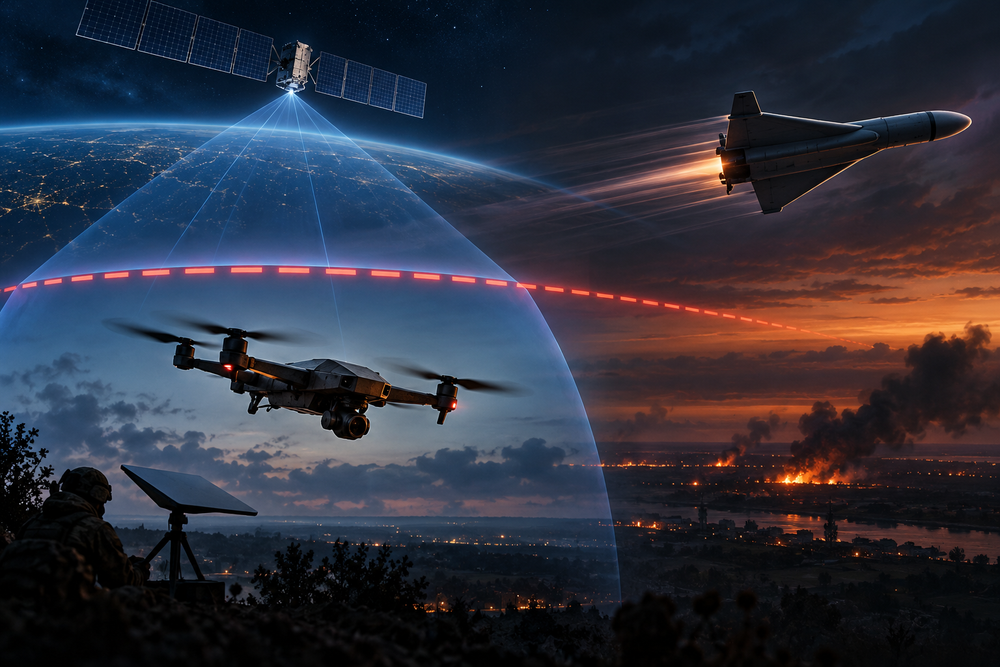
Iran is central because it turns range into pressure. Once drones and missiles can reach Cyprus, the conflict is no longer contained by geography. It becomes a problem of corridors, bases, evacuations, and air defence umbrellas. It forces European states to move hardware, not because they want a larger war, but because they fear being caught without coverage. And once hardware moves, everything becomes more sensitive, not only politically but mechanically. More radar tracks, more interceptions, more split second judgments that nobody will remember until one goes wrong.
The costs rarely stay regional, even when the fighting does. Energy reacts. Shipping reacts. Insurance reacts. Supply chains do not wait for communiqués. When uncertainty spreads, every market tightens, and when markets tighten, governments lose room to manoeuvre. The war becomes a tax on normal life long before it becomes a map of front lines.
The world is not watching this conflict. The world is already paying for it.
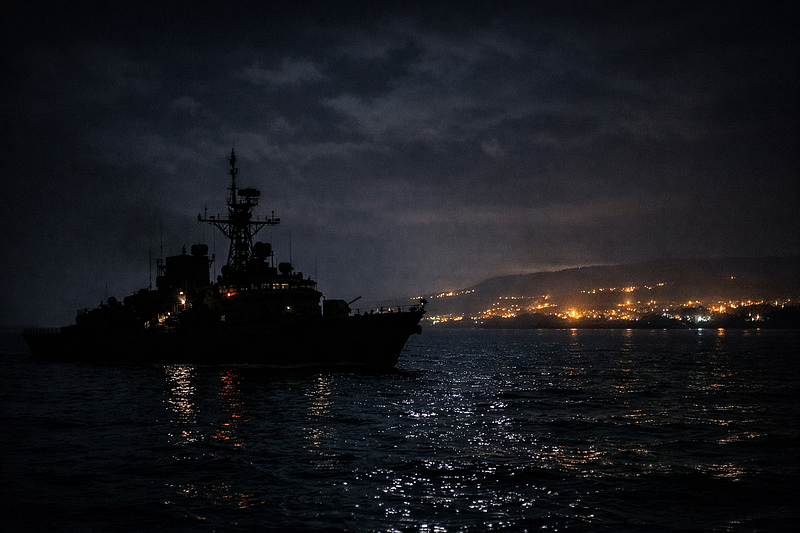
Now the sea off the island is changing too. Not with holidays, but with radar. Not with ferries, but with frigates. Reports indicate that multiple European navies have begun repositioning air defence capable vessels toward the eastern Mediterranean, tightening the link between regional escalation and European exposure. NATO countries, including the Netherlands and France, are sending naval assets toward Cyprus to help shield the island against drone and missile spillover. In practical terms this is sea based air defence, escort capacity, and evacuation posture. It is not an armoured push. It is an attempt to keep a corridor from breaking.
It sounds defensive because it is defensive. It is also a boundary test.
Sometimes a wider war does not begin with an invasion. It begins with escorts.
Cyprus as a Hinge
Cyprus matters because it turns a regional war into an institutional problem. It is an EU member state, and it also hosts British sovereign base areas. That combination changes the temperature. A strike on Cyprus does not land on somewhere far away. It lands inside Europe’s political perimeter, while also touching the practical chain of allied assets on the island.
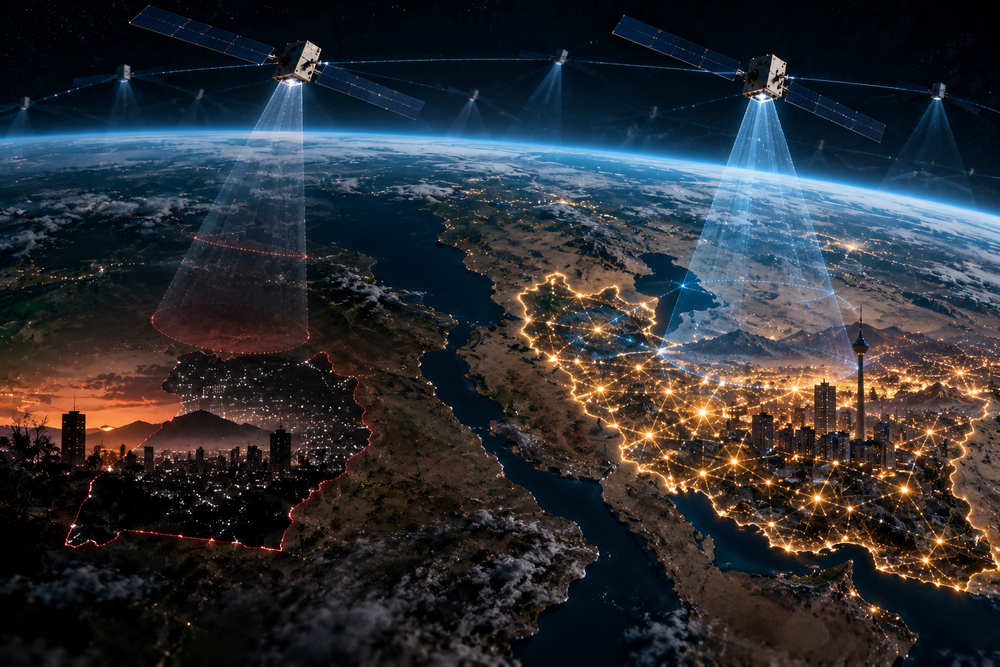
Then there is geography. Cyprus sits close enough to the Middle East that distance stops behaving like safety. Drones and missiles compress maps. They shorten reaction time. They make spillover a planning assumption instead of a hypothetical.
Cyprus is not large. Cyprus is positioned. And in this phase, position is power and vulnerability at the same time.
The island sits where three logics overlap. The first is politics, the law and symbolism of the European Union, the idea that this is inside, not outside. The second is alliance infrastructure, the reality that bases and assets create obligations that are not easily shrugged off. The third is range, the cold fact that modern weapons do not care about your narrative. They care about coordinates.
A war that can touch Cyprus is a war that can touch Europe. Not necessarily with ground troops. Not necessarily with a flag planted on a beach. With something more modern, more deniable, more rapid, and therefore harder to stop. A drone. A missile. A strike that arrives faster than the sentence meant to prevent it.
This is why Cyprus becomes a hinge. It is the point where a conflict stops being a region’s tragedy and becomes a continent’s exposure.
Why Warships Are the Signal That Matters
A warship is not a statement. It is a mechanism. It shifts risk. If an attack lands on a European naval asset, the political consequences are different than if it lands on an empty patch of runway. That is true even when the damage is the same. It is also true even when the attacker did not intend to hit that asset. Presence rewrites intention after the fact.
It shifts time. At sea, the decision window is small. A radar contact, an interception, a warning, a misread. Once ships are in place, the next escalation can happen faster than ministers can assemble, faster than spokespersons can draft, faster than diplomats can translate restraint into a phrase.
Presence creates obligation. If something happens, you are already inside the event. You are not a commentator. You are a participant. This is why deployments are never neutral.
Most large wars are not chosen. They are miscalculated into existence.
That is not a slogan. It is an operating principle. The more assets in one space, the more edges there are where a misunderstanding can bite. The more defence systems stacked on top of each other, the more a successful interception can become the prelude to the interception that fails, or the interception that hits the wrong thing, or the interception that is interpreted as an attack.
A ship is a promise of protection. It is also a promise that you will respond if protection is tested.
Hardware is not a message. Hardware is a contract with the future.
Europe Moves in Formation
Somewhere in a naval operations room, a map is no longer a map. It is a schedule of patrol arcs, air defence umbrellas, and evacuation windows. It is the mathematics of coverage, not the poetry of sovereignty. Someone draws a new line with a fingertip on glass, then redraws it, because in these rooms the difference between a safe corridor and a gap is measured in minutes and altitude. A junior officer reads a list out loud that sounds like logistics until you hear what it really is. Names of ports. Names of airports. Names of people who might need to leave fast.
This is what changes as Europe moves.
It is not only the Netherlands and France. What is emerging around Cyprus is a clustering of European naval and air defence capacity, driven by a single fear that no government wants to admit too loudly. A second strike on the island, or near it, would be politically impossible to treat as distant.
So states move assets early. Spain is publicly discussed as deploying naval air defence capability toward Cyprus. Italy is repeatedly named in the same movement. Greece is widely described as increasing its operational posture around the island, including aviation and naval elements. France acts as the visible weight that pulls the formation together because when France moves at sea, others treat it as a gravity field.
You can call this Europe stepping in. A colder description is more accurate. Europe is positioning itself so it cannot be surprised. That is not escalation as desire. It is escalation as prevention.
Prevention has consequences.
Because ships do not float in abstraction. Ships require rules of engagement. Rules of engagement require assumptions about intent. Assumptions about intent are the first casualty of a fast moving crisis.
And as the sea fills with assets, a new thing forms. A shared operational space where everyone is defensive, everyone is alert, and everyone is one mistake away from becoming the story.
Here is the detail that matters. These movements are not primarily about winning a war. They are about not losing control of a spillover.
They are about containing reach.
Iran Returns to the Center
Cyprus is not the origin of the danger. Cyprus is the indicator that the danger has range.
Iran is the source of the reach that makes Cyprus vulnerable. Once drones and missiles can touch the island, Europe is no longer reacting to a headline. Europe is reacting to geometry. The distance between their war and our perimeter shrinks to a number on a screen. And when that number gets small enough, politics follows physics.
This is why a conflict that begins as a duel becomes a system. Not because the system wants it. Because the system has no space left to pretend it is separate.
The more Iran is pressured, the more it seeks leverage. Not always on the main front. Often on the edges. That is where escalation becomes difficult to predict, and therefore difficult to manage. A conflict spreads not as a line but as a web. And webs are designed to catch whoever thinks they are walking past.
Diplomacy Loses Weight
Diplomacy did not disappear. It lost priority.
You can see it in the order of events. Channels exist, statements exist, calls exist. The heavy assets still moved. That is the tell.
When governments send ships and air defence, they are saying one thing without saying it. They no longer trust words to hold the line. They may still want de escalation. They may still say de escalation. Their behaviour reveals they are preparing for the next impact, not the next meeting.
Diplomacy becomes background when the system begins to run on tempo. Tempo is what makes restraint hard.
There is another accelerant that arrives before diplomats do. Economics.
Markets move faster than diplomats, and shipping insurers move faster than markets.
A shipping desk does not argue about morality. It argues about risk. A new email comes in with a revised premium table. A route on a screen shifts a few degrees. A cargo that was routine becomes exposed, then delayed, then rerouted. Somewhere else, an accountant recalculates the cost of fuel for the month as if the war were weather.
This is how a war becomes global without a global declaration.
It turns into a tax on normal life.
And once that tax rises, governments feel pressure that does not come from ideology, but from daily reality. Inflation. Energy cost. Supply chains. Public anger that is not moral, but economic.
Diplomacy can work under pressure. It does. It has. But diplomacy needs time. And time is the one resource modern escalation consumes first.
Why It Starts to Look Like Eye for an Eye
Eye for an eye is not an ethic. It is a constraint.
A leader who does not respond is punished at home. A leader who responds risks widening the fire. That trap is old. What is new is the speed with which it closes.
A drone strike produces images within minutes. Images produce pressure within hours. Pressure produces orders within days. Then the next strike lands before any mediation window can solidify.
This is why talks begin to look like theatre, even when they are not. Tempo turns sincerity into spectacle.
And the spectacle has a rhythm.
First the strike. Then the response. Then the promise. Then the counterpromise. Then the next strike that proves the promise was not protection.
Each time, the language shifts. The targets broaden. The definitions stretch. Deterrence becomes elastic. Self defence becomes a container large enough to hold almost anything. Proportional becomes a word that means whatever survives the news cycle.
There is a reason the ancient phrase still works in modern war. It describes a logic that outlives technology. Revenge is not just emotion. It is a stabilising mechanism for leaders who fear appearing weak.
But the stabilising mechanism becomes destabilising when multiple actors are trapped in it at once.
When speed outruns reflection, retaliation becomes the default language.
Why Europe Moves Even While Saying De Escalation
Because Europe is acting from proximity, not ideology. Cyprus is close enough to the Middle East that spillover is not theoretical. A strike on the island forces European governments into a choice that is operational, not philosophical.
If you do nothing and a second strike lands, you will be asked why there was no coverage. If you deploy and an interception goes wrong, you will be asked why you were there.
Air defence and escorts can genuinely save lives. That is the part governments say out loud. The part they do not say is that every additional system also increases the number of sensitive moments where a misread can become an event.
Deployments reduce vulnerability. Deployments also increase sensitivity.
More ships means more interceptions. More interceptions means more moments where a misread becomes an event. An event becomes a headline. A headline becomes a demand.
This is not a moral accusation. It is the geometry of crisis.
A defensive posture is not the same thing as a defensive outcome.
Europe may be trying to prevent escalation. Europe is also increasing the number of triggers that could accelerate it.
And because Europe is not one actor, but many, coordination itself becomes fragile. Different rules of engagement. Different political thresholds. Different domestic pressures. Different strategic cultures.
In a crowded space, the weakest link in coordination can become the strongest driver of events.
Not because someone wants it. Because systems behave that way.
Defence often prevents the war you can see. It increases the risk of the war you cannot see.
The Black Scenario Without a Master Plan
Now the honest part.
I do not see public documented proof of a single coordinated plan to start a world war. What I do see is behaviour that makes a broad war more likely because key actors behave as if wide escalation is an acceptable risk.
That difference sounds minor until you see what it does.
If enough powerful players accept escalation risk, the system behaves as if it is being driven toward escalation, even if nobody admits they want it. That is how large wars often form. Not through an announcement, but through a stack of choices that narrow exits until the remaining moves are reactive.
The black scenario is not one villain. It is a convergence.
It is a moment where multiple parties make decisions that are locally rational and globally combustible. A strike that makes sense as deterrence for one side. A response that makes sense as survival for another. A deployment that makes sense as protection for Europe. A mobilization that makes sense as signalling for a regional actor watching the balance shift.
Then, as all those locally rational moves stack, you get something that no one owns. A system with momentum.
Cyprus fits because it is where Europe stops being a spectator and becomes a participant by exposure. The war touches European airspace. European assets gather. Alliance politics enters. Time compresses. Then one incident can do what no leader intended.
You do not need a conspiracy to reach catastrophe. You need enough states willing to gamble with escalation.
And the gamble is often not made consciously as a gamble. It is made as a refusal to appear weak, a refusal to be surprised, a refusal to accept that restraint can look like defeat.
This is why the phrase sleepwalking is often used about great wars. Because participants do not feel asleep. They feel awake, alert, decisive. They feel morally justified. They feel strategically compelled.
They are not asleep. They are trapped.
The Invisible Battlefield
There is a kind of battle that happens before the battle.
It happens in spreadsheets.
In supply routes.
In fuel markets.
In insurance premiums.
In logistics companies reoptimising their routes as if war is weather, a disruption to be routed around rather than a human catastrophe.
This invisible battlefield matters because it shapes political tolerance.
When energy costs rise, governments lose room to maneuver. When shipping slows, economies tighten. When inflation returns, public patience collapses. And as patience collapses, leaders become more sensitive to displays of strength, because strength looks like control.
This is how escalation becomes politically contagious.
Even governments that hate war can find themselves pulled into its logic, not by ideology, but by secondary effects. The first time you feel a conflict in your grocery bill, it stops being foreign policy and becomes domestic stability.
And domestic stability has no patience for complexity.
The Exit Test
So how close are we to a wider war. Close enough that dismissing the question is negligence. Not close enough that the outcome is fixed. The real measure is not rhetoric. It is exits.
A wider war becomes likely when off ramps disappear. When leaders cannot back down without collapse at home. When assets are too clustered to remove without signaling retreat. When retaliation becomes automatic. When each move is called defensive but the architecture becomes irreversible.
You can already see the pressure points where exits narrow: regional bases, air defence networks, evacuation corridors, and the maritime routes whose disruption instantly becomes economic reality through insurance and shipping risk. When those pressure points become the battlefield, every government starts moving on instinct.
Instinct is not policy. Instinct is what happens when policy has no time.
An off ramp is not simply a ceasefire. It is a path by which leaders can step back without humiliation, without appearing to betray their own slogans, without giving their opponents a domestic propaganda victory.
Off ramps require imagination. They require a willingness to accept that saving face is sometimes the only currency available. They require a kind of strategic humility that does not perform well on television.
And that is why they vanish.
Because modern politics is built for performance, not for retreat.
So the question becomes brutally simple. Not what is right. Not what is legal. Not what is moral. What can be stopped.
What can be slowed.
What can be separated before everything touches everything.
Cyprus is not the war. Cyprus is the proof that the war can touch Europe. It is the hinge where obligations activate and restraint becomes expensive.
A runway is supposed to be boring. Cyprus is no longer boring. And that is the detail that should scare you more than any headline.
A world war is not a label. It is the disappearance of off ramps.
Companion Piece
Related from The Manifest Archive