The Week the Map Changed
A war does not become global only when more missiles fly. Sometimes it becomes global when the map of pressure changes faster than governments can control the story. In one week, that map has already changed. Oil surged. Tanker flows through the Strait of Hormuz were disrupted. The Red Sea and Suez route remained under pressure. Markets absorbed the shock almost immediately. This is no longer a crisis that can honestly be described as military in one place and economic somewhere else. The transmission has already begun.
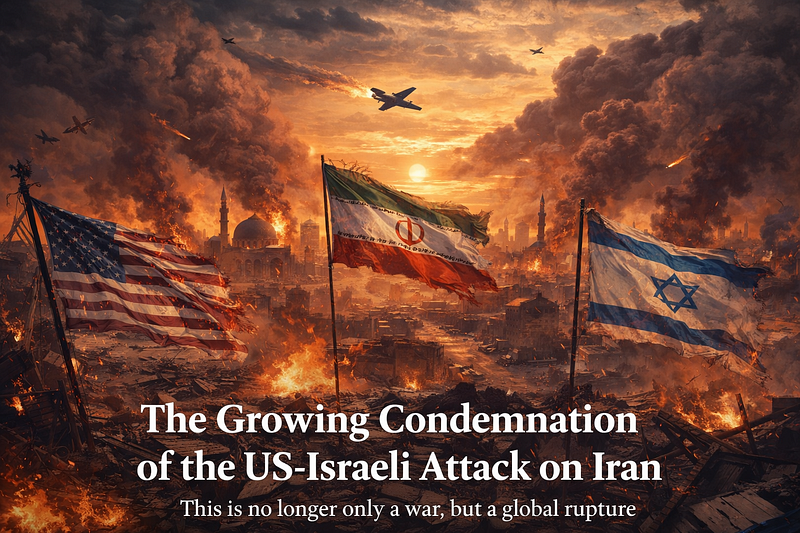
That is the real setting of this article. Not simply the bombs. Not simply the rhetoric. But the fact that the political backlash against the US-Israeli attack on Iran is growing at the same time that the world economy is beginning to register the shock. Those two developments are not separate. They are part of the same event. As governments watch energy, shipping, prices, insurance, and domestic stability come under pressure, the war becomes harder to defend, not only morally or legally, but strategically.
The Circle of Condemnation Is Widening
At first, the condemnation came from the capitals everyone expected. Russia. China. That could still be framed as predictable. Rival powers objecting to American and Israeli force is not, by itself, a geopolitical turning point. But that is no longer the whole picture. The list is growing. And the more it grows, the harder it becomes to pretend that the backlash is merely the noise of hostile capitals.
Spain has emerged as the clearest European state willing to distance itself sharply. Brazil and Pakistan also condemned the attacks. North Korea denounced them as illegal aggression. The United Nations itself entered the frame in language that pushed the crisis beyond ordinary diplomatic disagreement and into the vocabulary of international law.
That pattern matters because these states do not belong to one ideological bloc, one alliance, or one strategic tradition. A permanent member of the Security Council, a major European ally, a large Latin American state, a South Asian nuclear state, North Korea, and the United Nations itself do not need to share motives for the pattern to become meaningful. The pattern is the message. It says the war is no longer being read simply as deterrence. It is increasingly being read as escalation without a convincing political center.
Wars begin to lose legitimacy when opposition broadens beyond their obvious enemies.
Europe Is Not United in Spirit
Inside Europe, the contrast is especially revealing. Spain has spoken more clearly than the rest. France, Germany, and the United Kingdom have not joined Spain’s sharper line. Their statements have emphasized negotiation, de-escalation, and non-participation in the opening strikes, while directing their strongest language toward Iran’s retaliation. That is not open opposition. But neither is it the language of real confidence.
It is the language of governments trying to preserve alliance structure while creating political distance from a war they know may become far more costly than advertised.
That softer European vocabulary should not be underestimated. In geopolitics, hesitation is information. Legal caution is information. Repeated appeals to diplomacy are information. Governments rarely announce their discomfort in the bluntest possible terms when Washington is involved. They signal it through omission, restraint, and procedural language. Europe, in other words, is not fully aligned in spirit even where it remains aligned in structure. Spain said no aloud. Others are saying it more quietly.
This Is Not Only a Military Crisis
However one chooses to frame it, this is no longer only a military question. In the space of a single week, the war has already begun to distort the world economy through energy, shipping, prices, nerves, and expectation.
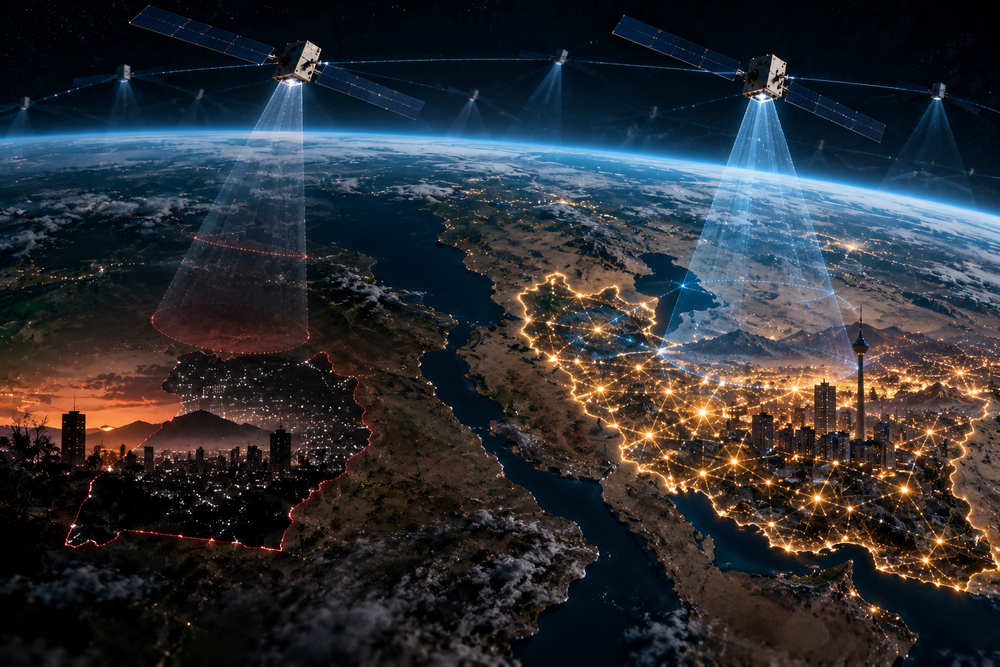
And Hormuz is not the only danger point. The Red Sea and Suez route remain under pressure too. That matters because the world is not facing a single chokepoint crisis. It is facing simultaneous stress on multiple arteries of the global economy. Hormuz threatens energy. The Red Sea and Suez threaten wider trade, delivery times, shipping costs, and inflationary pressure. When those arteries come under strain together, war stops being regional in any meaningful economic sense.
The battlefield may be regional. The transmission mechanism is global.
That is what many governments are reacting to, whether they say so directly or not. Once oil spikes, insurance costs rise, shipping becomes more expensive, and trade routes look less secure, the political calculation changes. The question is no longer only whether a government sympathizes with Washington’s or Tel Aviv’s aims. The question becomes whether it can afford the consequences.
That is a different calculation entirely, and it is one of the clearest motives behind the widening resistance.
Why the Great Depression Matters More Than a Market Crash
There is something the world needs to understand. The more relevant historical reference here is not a stock market crash in isolation, but the wider logic of the Great Depression. The danger is not one falling chart. It is a chain reaction moving through energy, trade, finance, and public life.
The point is not that the scale is already the same. The point is that shocks now spread across the globe far faster than they did in the 1930s. That is what makes this moment so dangerous.
In the 1930s, the break spread through banks, confidence, production, and daily life over time. Today, financial markets, commodity prices, shipping routes, and public expectations move together almost instantly. A regional war can become a global economic event in days, not in seasons. That speed changes everything. It changes what governments fear. It changes how central banks read risk. It changes how import-dependent states think about survival. And it changes the threshold at which support for escalation begins to collide with self-preservation.
Why More Governments Are Pulling Away
This is where the widening resistance begins to make geopolitical sense. The resistance is not driven by principle alone. It is also driven by calculation. More governments are beginning to see that the interests of the United States and Israel in this war do not necessarily align with the interests of their own people, their own economies, or the stability of the wider world.
Once leaders begin calculating in terms of oil prices, shipping routes, inflation risk, food prices, insurance stress, and domestic political fragility, alliance loyalty starts colliding with national self-preservation. And in moments like this, self-preservation usually wins.
This is also why the growing condemnation should not be read as a purely moral wave. It is a geopolitical break in priorities. More governments are starting to judge the war not by alliance reflex, but by the price their own societies may be forced to pay. That is a much more serious development than a noisy round of diplomatic criticism. It means the war is beginning to weaken the assumption that Washington’s strategic objectives automatically deserve broader global alignment.
The United States Is Divided Too
The legitimacy problem is not only external. It is internal. The war does not rest on broad, calm, unquestioned consensus inside the United States itself. Public opinion is fractured. Political support is polarized. The official rationale is under pressure. Even within the American right, the lines are not perfectly stable.
Beneath that sits another problem. The standing intelligence picture and the public case for urgency do not sit comfortably together. That does not make Iran harmless. It does mean that the leap from pressure to urgent war becomes harder to stabilize in the public mind when rhetoric outruns what institutions have previously assessed.
A war becomes strategically more dangerous when condemnation grows abroad while conviction weakens at home.
The Real Geopolitical Question
The real question is no longer whether this war can be defended in one press conference, one allied statement, or one cycle of televised justification.
The real question is whether countries still want to stand behind the United States when, for interests narrower than the wellbeing of the world, it is helping to freeze the global engine across energy, trade, finance, and security.
I think the answer is already beginning to appear.
It is visible in the widening condemnation. It is visible in the legal caution of allies. It is visible in the language of de-escalation. It is visible in the fact that more governments are starting to judge this war less through Washington’s strategic preferences and more through the lens of their own vulnerability.
Whatever Washington thinks it stands to gain, it is not worth the cost being imposed on the rest of the world.
The Horizon Beyond the Battlefield
This is what many governments already understand, even when they do not say it plainly. The war is no longer being judged only through the strategic aims of Washington and Tel Aviv. It is being judged through oil prices, shipping lanes, inflation risk, domestic stability, and the possibility of a broader financial break.
Once that happens, the meaning of the war changes. It is no longer only about Iran. It is about whether the rest of the world is prepared to let itself be dragged into a widening disorder whose consequences will be paid far beyond the battlefield.
One more question now becomes unavoidable. Israel is widely treated as a nuclear-armed state, even under its policy of ambiguity. That means this war can no longer be understood only in conventional terms. The moment a nuclear-armed state begins to feel cornered while speaking in the language of existential threat, the entire world is forced to think beyond the battlefield.
No serious government should act as if that horizon is irrelevant.
Related chapters in this series
US Strikes Iran While Talks Continue: Energy, Law and the Architecture of EscalationA companion chapter on the legal, strategic and diplomatic framework of the opening strikes.
Israel and the US Attacked Iran. The Invoice Is Ours.On the economic cost of escalation and why the wider world is being forced to pay.
Iran, Cyprus, Warships, and the Vanishing ExitOn Europe’s vulnerability, military positioning and the narrowing room for de-escalation.
Russia Warns of World War: Iran and the Logic of EscalationOn the larger escalation logic and the widening geopolitical danger.
Related from The Manifest Archive