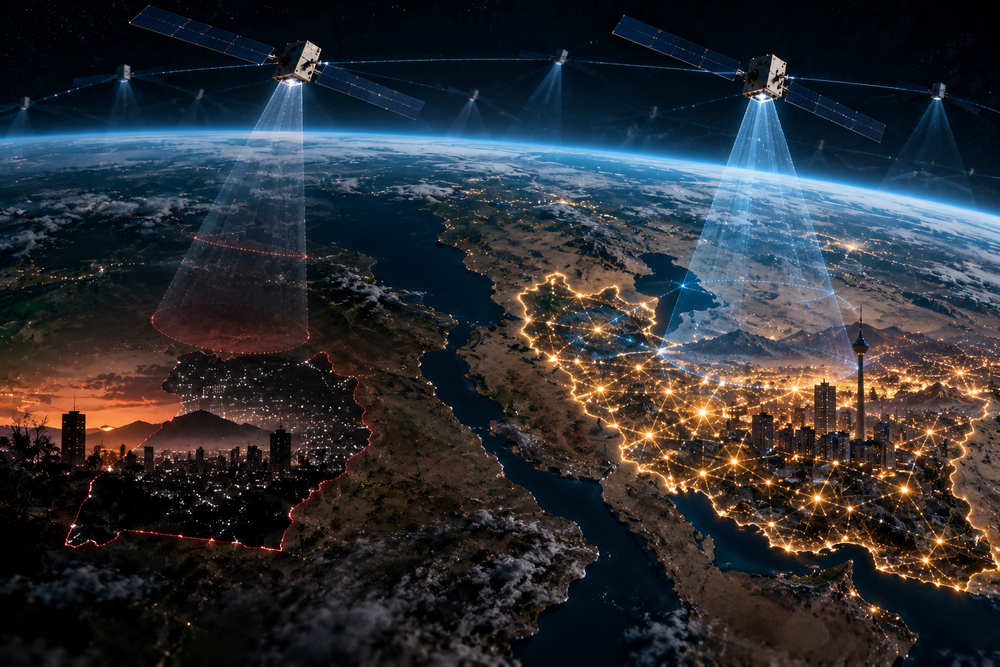
August 10, 2026. A fire broke out at an ammunition storage facility operated by EMCO near Belitsa, Bulgaria. EMCO is one of Bulgaria's largest private arms manufacturers. It produces artillery ammunition for Ukraine. Initial assessments found no immediate indication of external interference.
August 13. A fire followed by an explosion occurred at the KNDS Ammo Italy facility in Colleferro, on the outskirts of Rome. Three days later, Latvian security services arrested three of their citizens for arson at a drone factory in neighboring Estonia. The building belonged to Milrem Robotics, a company that supplies weapons to Ukraine. Latvia opened an investigation under a statute covering assistance to a foreign state in an action directed against another state.
Each incident was processed by local investigators as a separate criminal matter. In none of the three cases was Russia officially named as the responsible party.
August 23. The Telegraph reported that Western intelligence assessed all three incidents as part of a coordinated Russian sabotage campaign against European arms manufacturers, conducted through criminal intermediaries recruited via encrypted messaging applications and paid in cryptocurrency, calibrated to remain below the threshold that would trigger a collective NATO response.
August 24. British Prime Minister Andy Burnham announced that the United Kingdom would share classified manufacturing knowledge related to Storm Shadow cruise missile components to strengthen Ukraine's long-range production capacity. The same day, Russia issued its most direct public threat against Britain: Kremlin adviser Andrei Fedorov stated that British factories producing drones and missile components could face attacks from "unknown sources." Foreign Ministry spokeswoman Maria Zakharova warned of "catastrophic consequences."
August 25. CIA Director John Ratcliffe arrived in Moscow. He met with SVR foreign intelligence chief Sergey Naryshkin and FSB director Alexander Bortnikov. Before his departure, the United States had asked Ukraine to suspend strikes against Russian territory until Ratcliffe had left.
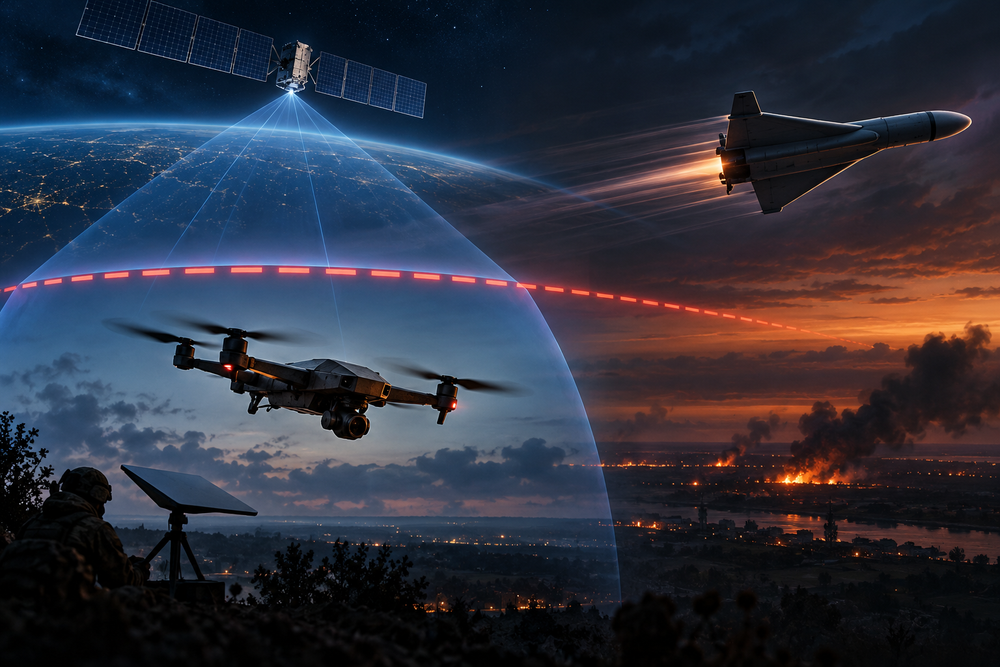
These are not four separate news stories. They are four systems, each operating with its own internal logic and decision cycle, that converged within the same week into something that functions as a single escalation architecture.
Whether that convergence was orchestrated from a central point, or whether it emerged from the independent choices of actors who share no command structure, the architecture is the same. The distinction matters for attribution. It does not change what the architecture produces.
The Explosion That Happened Before the Threat
The sequence matters more than any individual event within it. Russia's formal public threat against British factories arrived on August 24. Western intelligence's assessment of a coordinated sabotage campaign was reported on August 23. The incidents that intelligence assessed as part of that campaign occurred between August 10 and August 15.
The formal diplomatic threat was not the beginning. It was the political layer placed over an operational pattern that had been building for two weeks.
Understanding why requires holding two distinct claims simultaneously. The first: three industrial facilities across three European countries were damaged in five days. That is confirmed. The second: Western intelligence assessed those incidents as components of a Russian GRU-linked campaign using criminal intermediaries. That is attributed by intelligence sources, not confirmed by any national law enforcement agency or NATO collective proceeding.
Bulgarian authorities initially found no indication of external interference at EMCO. Italian investigators reportedly did not confirm sabotage as the primary hypothesis in the Colleferro explosion. Latvia's security services arrested three citizens and opened proceedings under a foreign-state assistance statute, but public reporting has not produced a confirmed Russian command connection. The Telegraph's sourcing, from multiple Western intelligence contacts, describes the pattern, the method, and the assessment. It does not describe a confession, a court finding, or a formal allied attribution. The decision to brief journalists on a classified campaign assessment on August 23, one day before Burnham's announcement, is itself an act of information management that the record does not explain.
The incidents are confirmed. The Russian attribution is alleged by Western intelligence. The gap between those two sentences is where the architecture lives.
That gap is not an evidentiary weakness to be apologized for. It is the analytical subject. Russia's operational doctrine for this category of activity is specifically designed to produce incidents that intelligence assesses but law enforcement cannot prosecute to the standard required for political attribution. The GRU's use of criminal intermediaries means the operational distance between Russian state direction and the person who lights the fire is measured in degrees of legal separation. Each jurisdictional boundary that must be crossed to prove the connection is a structural feature of the method, not an obstacle to its detection.
The result is an institutional architecture that reproduces deniability at every layer. Intelligence documents a campaign. Law enforcement investigates individual incidents. Governments find attribution politically inconvenient. NATO's collective threshold mechanism remains uncrossed. The pattern is legible. The accountability is not.
The threat was not the first signal. The incidents preceding it were what made the threat credible.
The Threat That Was Built to Be Deniable
Maria Zakharova's August 24 statement was described across Western media as the strongest direct threat yet against Britain. The characterization is accurate and incomplete. What is analytically significant about the threat is not its intensity. It is its construction.
Fedorov's formulation, that British drone factories could face attacks "not by Russia, but from unknown sources," is a precise diplomatic instrument. It applies coercive pressure at a level that produces concessions while preserving Russia's formal position as non-committal. A threat attributed to "unknown sources" is far harder to translate into the political attribution required for a collective NATO response. It can be escalated if no response is offered. It can be quietly withdrawn if a deal is reached, without Russia ever having committed to a specific action it must now either execute or visibly retreat from.
The attribution asymmetry this produces is not merely legal maneuvering. It is the deeper story. Four institutional layers process the same events through incompatible evidence standards. Intelligence assesses a Russian campaign. Law enforcement investigates individual criminal incidents. European governments avoid attribution because it creates obligations they are not prepared to fulfill. NATO's threshold mechanism, calibrated for military acts, does not engage. Each layer is operating correctly within its own rules. Together they produce a single outcome: the pattern is documented without becoming actionable.
The deniability is not a flaw in the operation. It is the operation.
This is the mechanism that makes Zakharova's phrase "unknown sources" something other than obvious fiction. It is a technical description of the operational doctrine Russia has spent years refining. The GRU's use of criminal intermediaries means the chain of command is designed to be unproduceable in a court at the standard required for attribution. The political threat is issued after the operational reality has already been demonstrated through incidents that intelligence understands and law enforcement is processing independently.
Britain's Storm Shadow announcement arrived on August 24. Russia announced that British factories could face attacks that same day. Ratcliffe arrived in Moscow the next morning. The question of whether these events were coordinated in advance, or whether they converged through the independent momentum of actors responding to the same strategic conditions, is a question about mechanism. The functional relationship is identical either way.
The Visit That Was Never Semi-Routine
President Trump described John Ratcliffe's trip to Moscow as "semi-routine." The characterization is worth examining precisely because it is wrong in an informative way.
Visits by serving CIA directors to Moscow are exceptionally rare. The current visit's circumstances place it in a distinct category: confirmed meetings with both SVR and FSB leadership simultaneously, a prior request to Ukraine to suspend strikes, and a specific agenda including Iran alongside Ukraine. The meeting required advance Kremlin coordination. It involved the heads of both major Russian intelligence services, not a single counterpart but both at once.
Sergey Naryshkin has led the SVR, Russia's foreign intelligence service, since 2016. Before that he served as speaker of the State Duma and as head of Putin's Presidential Administration. He is not primarily an intelligence professional. He is a political actor whose position at the head of the SVR places the service unusually close to Kremlin political direction. When Naryshkin meets a foreign counterpart, the conversation carries Kremlin political authority at a level of deniability that the foreign ministry cannot provide.
Alexander Bortnikov has directed the FSB since 2008. He has operated through four US administrations and outlasted the political turnover that removed nearly every other major figure from the Russian security establishment. He is the institutional memory of Russia's domestic and counterintelligence apparatus. His presence alongside Naryshkin signals that both the foreign intelligence and domestic security dimensions of the conversation were considered relevant by Moscow.
The choice of these two counterparts over a diplomatic channel signals the purpose of the visit. Intelligence-to-intelligence dialogue at this level is reserved for matters where the political track has failed or is not yet available, where both sides need to exchange assessments without committing to positions that would require public accountability.
This is not diplomacy. This is the channel that operates when diplomacy is not yet possible.
Four separate sourced reports describe distinct objectives that Ratcliffe carried to Moscow. The New York Times reported a "bleak assessment" of Russia's military and economic position and an urging to reach a deal before conditions deteriorated further. CBS News reported warnings against attacking NATO member states in the Baltic region. The Washington Post reported a core warning against Russia exploiting "perceived US weakness" from the Iran war. NBC News reported that Ratcliffe asked Russia directly to stop sharing intelligence with Iran.
Together these describe a meeting with at least four distinct objectives, each reflecting a different dimension of the same strategic problem: the United States is simultaneously managing a war with Iran, a stalled peace process in Ukraine, the threat of Russian escalation against NATO's eastern flank, and a Russian-Iranian intelligence relationship that directly endangers American forces. Trump called it semi-routine because acknowledging its urgency would confirm that Russia currently holds significant leverage. Russia holds leverage because the US is fighting Iran. Iran has been receiving Russian support. The visit to Moscow was an attempt to interrupt that loop. Calling it semi-routine was the public framing that allowed it to happen without announcing that it had to.
The Ukraine That Was Told to Pause
Before Ratcliffe departed for Moscow, the United States informed Ukrainian officials that a senior American delegation would travel to Russia. The US asked Kyiv to suspend strikes against Russian territory until the delegation had departed.
Ukraine complied.
The request and the compliance together constitute a documented structural fact about the current state of the war. Ukraine, fighting for its existence on its own territory with weapons supplied by its allies, adjusted its military operations to facilitate a meeting between its principal backer and the leadership of the country that is trying to destroy it. The request was framed as temporary and logistical. Its structural meaning is not temporary.
Ukraine was not invited to the meeting. Ukraine was asked to be quiet during it.
To read that sentence without its full context is to miss the architecture behind it. The conflict in Ukraine did not begin in 2022, and The Manifest Archive has documented its structural preconditions elsewhere: the NATO expansion decisions that preceded the war by decades, the Minsk II architecture that, as Angela Merkel acknowledged in December 2022, gave Ukraine time it used to become militarily stronger. That structural history does not erase what has happened on Ukrainian territory since February 2022. But it is the background without which the current diplomatic moment is illegible. A CIA director does not travel to Moscow with an agenda spanning Iran, Ukraine, and Baltic security in a single meeting unless the system has accumulated contradictions that require managing at that level. The visit is the product of a longer sequence, not only of the week that preceded it.
According to Axios, Ratcliffe proposed a Trump-Putin-Zelensky meeting as a potential framework for peace negotiations. The proposal places all three parties at the same table. What the reporting does not establish is the sequencing of effective decisions: whether prior US-Russia intelligence contact would shape the parameters of any eventual trilateral meeting before Ukraine entered it. That is the structural question the reporting raises, not a finding it resolves. Zelensky was briefed by American officials after Ratcliffe's visit. That briefing is described as informational. The distinction between being informed of a negotiation and being a party to it is the distinction that has governed Ukraine's position in this diplomatic moment.
The peace talks paused in February 2026 when the Iran war began. That pause repositioned Ukraine from the primary American strategic concern to a secondary one. The Ratcliffe visit is the first major evidence of how that repositioning operates in practice: Ukraine's military operations are adjustable variables in the management of a broader US-Russia bilateral agenda that now includes Iran as a primary concern.
Burnham's Storm Shadow announcement on August 24 makes more sense in this context. The UK escalated the weapons supply relationship on the day before the CIA visit. Whether coordinated or not, the functional effect was to give Ratcliffe something concrete to reference: Britain was escalating on its own timeline. The US was present in Moscow offering a different path. The combination created negotiating geometry that did not exist before.
The Iran Equation Nobody Named
Every public account of Ratcliffe's Moscow visit placed Ukraine at the center of the story. The headline architecture across networks and newspapers was consistent: CIA director warns Russia against NATO attack, urges Ukraine ceasefire. This framing is accurate and incomplete in a way that obscures the actual weight distribution of the meeting.
The visit had at least two objectives not primarily about Ukraine. First: Ratcliffe warned Russia against attacking NATO member states in the Baltic region. Second, and structurally more significant: Ratcliffe asked Russia to stop sharing intelligence with Iran and to scale back support for Tehran.
What is publicly confirmed through NBC News sourcing is that Ratcliffe traveled to Moscow and asked the heads of two Russian intelligence services to stop sharing intelligence with a country the United States is currently fighting. That sentence reorganizes the entire story.
Axios confirms separately that the US-mediated peace process in Ukraine was paused in February 2026 when the Iran war began. The temporal coupling is not merely correlative. It establishes that the Iran war directly disrupted the Ukraine diplomatic track, and that the Moscow visit was attempting to manage both simultaneously.
If Iran support was the primary concession Washington needed from Russia, Ukraine was the most available currency to offer in return. That framing is a synthesis drawn from structure and sequence, not a confirmed account of what was said in the room. The evidence supports the priority ordering: the Iran intelligence request was confirmed by sourcing; the Ukraine framework was discussed; the relationship between them is inferred.
What is established: Iran, Ukraine, and Russia's perception of American overstretch were all on the table simultaneously. What remains inference: the precise exchange rate between them.
Russia's position in this architecture is not passive. The Washington Post reports that American intelligence assessed Russia as viewing the US as weakened by the Iran war. Ratcliffe's warning against exploiting "perceived US weakness" was therefore simultaneous threat and negotiating premise: the weakness is real, but acting on it would push Trump toward Ukraine rather than away from it. Coercive and diplomatic tracks were running in both directions at once.
The Country That Was Not in Moscow
Britain occupies an unusual structural position in the architecture this week produced. Burnham's Storm Shadow announcement was, by the standards of Western support for Ukraine, a significant escalation. Previous British decisions had involved transferring missiles. This decision involved transferring manufacturing capacity for them: not a one-time delivery but an infrastructure that produces continuous supply. Russia's reaction was calibrated to the distinction.
Britain made this decision on August 24. Less than twenty-four hours later, the CIA was in Moscow testing whether the escalation could be contained.
Whether London was informed in detail of Ratcliffe's travel plans before the Burnham announcement is not established in public reporting. What is established is that the functional effect of the sequence placed British escalation and American escalation management on consecutive days, without coordination visible in the record. Britain may now be the exposed flank in a negotiating geometry it did not control: if the US-Russia back-channel produces a framework, London will be expected to align with it; if it does not, Britain faces the possibility that an existing sabotage campaign will expand toward British targets under a public justification supplied by its own government's policy announcement.
This is not a failure of British policy. The Storm Shadow technology transfer is defensible on its own terms. Ukraine has the right to defend itself, and Britain has the right to supply that defense. The structural exposure arises not from the decision itself but from its interaction with a US-Russia diplomatic channel whose timing Britain was not coordinating against.
Burnham's response, that the Russian threats were "outrageous," is a politically coherent framing that is strategically partial. The more precise framing is that the threats are the operational layer of a negotiating architecture currently being tested at the intelligence-chief level in Moscow, and that Britain's position within that architecture was determined by the collision of its August 24 decision with a diplomatic timeline it did not set.
Britain escalated. The CIA arrived in Moscow the next morning to test whether that escalation had a ceiling.
The question that will determine Britain's position in the coming weeks is not whether the threats were outrageous. It is whether Ratcliffe's visit produced any understanding about the pace and nature of NATO member weapons manufacturing transfers to Ukraine. If it did, one indication may emerge through the evolution of Russian behavior rather than through any public communication from Washington. The back-channel is, by construction, a channel that operates outside the formal alliance coordination structure.
The Strongest Counterargument
The reading offered in this article locates functional architecture in a sequence of events that an alternative analysis would describe as parallel tracks with coincidental timing. That alternative analysis is structurally serious and demands direct engagement.
The Storm Shadow announcement on August 24 was driven by British domestic politics: a new Prime Minister establishing credibility with allies and demonstrating that UK support for Ukraine would continue under his leadership. It was not timed in coordination with Moscow's schedule. Russia's threat on the same day was a formulaic response to UK escalation, the kind of rhetorical counter that Russian officials have issued consistently for three years. The CIA visit was scheduled through separate channels, driven by the Iran-Russia intelligence relationship and the stalled Ukraine peace process, not by what Burnham said in a press conference. The sabotage campaign against European factories had been running for months and was not specifically triggered by the events of August 24. Reading a unified escalation architecture into events that originated in different decision centers in different capitals, responding to different immediate pressures, may produce a coherent narrative without producing an accurate one.
This counterargument correctly identifies a real analytical risk. The reading offered here does not claim that Moscow coordinated its public threat with Ratcliffe's arrival, or that Burnham's announcement was strategically timed to create negotiating geometry, or that the three facility incidents were confirmed Russian operations. It claims something narrower: that the structural incentives driving each of these actors produced outcomes that are functionally interdependent, and that understanding any one of them in isolation produces a less accurate account than understanding all of them together.
Whether the convergence was orchestrated or emergent, the architecture is the same. Escalation was announced and de-escalation was tested on consecutive days. Ukraine's operational autonomy was adjusted by the party supplying its weapons. Iran was on the table in a meeting nominally about Ukraine. These functional relationships hold regardless of whether they were designed. The architecture does not require a central architect. It requires only that each actor respond to the same structural conditions with choices that, in aggregate, produce the same outcome.
August 10. A fire broke out at an ammunition storage facility in Bulgaria. Local investigators found no immediate indication of external interference.
August 25. John Ratcliffe sat across from Sergey Naryshkin in Moscow and asked Russia to stop sharing intelligence with the country the United States is at war with. Ukraine had been asked to suspend its strikes for the duration of the visit.
Russia threatens. The CIA negotiates. Ukraine waits. Britain escalates. The investigators in Bulgaria found nothing they could formally attribute.
The architecture accounts for every actor in this sequence. Except the one who built the shells.
Evidence Map
Core claim: Within one week, four systems, comprising Russian hybrid pressure against European arms production, British weapons technology escalation, CIA-SVR/FSB intelligence dialogue, and US-Russia-Iran-Ukraine bargaining, became functionally interdependent in a way that constitutes a single escalation architecture, regardless of whether it was centrally coordinated.
Observed (high confidence, directly documented): Fire at EMCO Bulgaria ammunition facility, Aug 10. Fire and explosion at KNDS Ammo Italy, Colleferro, Aug 13. Arson at Milrem Robotics Estonia facility, Aug 14-15; three Latvian citizens arrested under foreign-state assistance statute. Burnham Storm Shadow technology transfer announcement, Aug 24. Kremlin adviser Fedorov and spokeswoman Zakharova formal threats against British factories, Aug 24. Ratcliffe Moscow visit confirmed, Aug 25. Ratcliffe met Naryshkin (SVR) and Bortnikov (FSB), not Putin. US asked Ukraine to suspend strikes during visit. Ratcliffe asked Russia not to share intelligence with Iran (NBC News). Ratcliffe warned Russia against NATO Baltic attacks (CNBC). Ratcliffe proposed Trump-Putin-Zelensky summit framework (Axios). Ukraine briefed by US officials after visit (Axios). US-Russia Ukraine talks paused at onset of Iran war, February 2026 (Axios).
Attributed (Western intelligence assessment, not confirmed by law enforcement or formal allied proceeding): Three facility incidents assessed by Western intelligence sources as components of a Russian GRU-linked sabotage campaign using criminal intermediaries, encrypted communications, and cryptocurrency payments (The Telegraph, Aug 23, multiple Western intelligence contacts). Individual law enforcement findings: Bulgaria found no external interference indication; Italy reportedly did not confirm sabotage hypothesis; Latvia opened investigation but has not publicly confirmed Russian state direction.
Inferred (medium confidence, structurally supported): Iran support was a primary objective of the Ratcliffe visit, with Ukraine serving as the available currency for any potential exchange. Burnham's announcement and Ratcliffe's departure functioned as simultaneous escalation and exit-offer regardless of coordination. Britain's position in the resulting geometry was not the product of deliberate alliance coordination. Evidence levels: Claim A | Transmission B | Causality B | Synthesis C.
What would confirm this: Operational coordination documented between any of the four tracks. Confirmed Russian state direction in any of the three facility incidents. A disclosed framework connecting Russian Iran restraint to US Ukraine concessions.
What would disprove this: Evidence that the four tracks did not materially constrain, influence, or alter one another's available choices: that the convergence was purely coincidental with no functional interdependence.
Watchlist: Whether any facility investigation produces confirmed Russian attribution. Whether Russian-Iranian intelligence cooperation changes in coming weeks. Whether a trilateral summit is announced and in what sequence decisions are effectively made. Whether additional British or European facilities are targeted.
Confidence assessment: Observed sequence (Claim A): high confidence, primary sourced throughout. Functional interdependence of four tracks (Claim B): medium-high confidence, supported by NBC News Iran sourcing and Axios peace-pause reporting. Iran as primary driver of American urgency (Claim B-C): medium confidence, NBC News confirmed but full scope not disclosed. Central coordination hypothesis: not supported and not required for the architectural reading.
The deniability doctrine operating in this week's sequence has a documented precedent. Epic Fury Ended May 5. Hormuz Was Still Closed May 6. traced an earlier version of the same structural logic: when the CIA's leverage window closed without a deal, the operational reality continued regardless. The structural conditions that made this week's Moscow visit necessary are mapped in Everyone Is Watching the Iran War. Nobody Sees Why It Cannot End.
Jerry van der Laan is an independent analyst and the author of The Manifest Archive.
Related from The Manifest Archive
- Ratcliffe Warned Russia Not to Attack NATO. Rheinmetall's Investors Had Already Priced the Threat.
- Russia Has Never Hit the Polish Airfield That Arms Ukraine. The Retaliation Went Somewhere Else.
- The NATO-Russia Escalation Trap: How Distributed Coordination Increases Confrontation Risk
- Everyone Is Watching Iran Close Hormuz. Nobody Is Watching America Reopen Russia.