Editorial note, June 2026. This analysis was written during the Iran war, to explain why the conflict could neither fully escalate nor cleanly resolve. The war has since reached a nominal settlement. The architecture described below did not move. It hardened. The reconciliation is in a new section, What Happened Next, before the close.
Update, October 2026. The settlement did not hold. Washington declared the June memorandum over on 8 July, the US blockade of Iranian ports resumed on 14 July, and the memorandum's sixty-day window lapsed on 17 August without renewal.
Why This Article Exists
After publishing "Everyone Is Watching the Iran War. Nobody Is Watching What It Is Breaking," I received an unusual number of messages from readers saying some version of the same thing:
"I can feel this article is describing something real. I just cannot fully see how the pieces connect yet."
That response mattered. Not because it was criticism, but because it revealed something larger than the article itself.
Many people already sense that the Iran situation feels different from previous wars. The headlines move constantly. The rhetoric escalates daily. Oil markets react strangely. Governments appear trapped between aggression and restraint. Yet almost nobody explains why the system behaves this way underneath the surface.
Your intuition was correct. Something is different. Something is locked.
The original article was written at the architectural level. It focused on the machinery beneath the conflict. It assumed readers could follow systems-level analysis without stopping to explain why each part mattered.
This article does something different. It slows the mechanism down. Not to change the argument. But to make the structure visible step by step, including the friction that keeps it moving and the costs that make it permanent.
Because once you see how the energy system, the defense industry, and the financial system locked themselves together around the Iran situation, and once you understand the institutional texture that keeps them locked, the headlines start looking less like news and more like symptoms of a system that is simultaneously functioning and exhausted.
This is not a simpler version. It is the complete architecture explained piece by piece. A deep translation layer for people who already felt something was wrong but needed to see exactly what, and more importantly, why it cannot easily be changed.
What You Are Actually Feeling
For the past year, something has felt off about energy markets.
Fuel prices rise unexpectedly. Container shipping rates spike. Insurance costs for tankers moving through the Middle East increase. Governments announce rearmament packages. The European Union fast-tracks defense spending. The US expands military commitments.
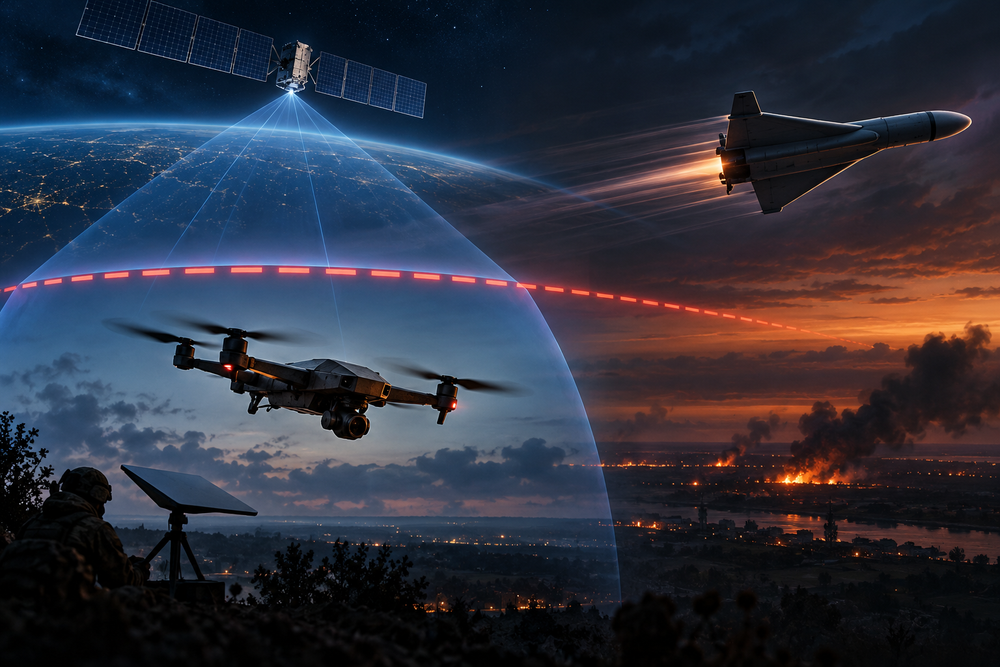
But after the weeks of direct strikes that began on February 28, the conflict neither escalates further nor ends.
Instead, it hovers. Threatens. Retreats. Threatens again.
Meanwhile, ordinary people notice: Fuel costs stay elevated. Grocery prices do not fall. Shipping timelines stretch. Corporate earnings projections shift. Central banks stay cautious about interest rates. Governments appear unable to address domestic problems.
The feeling is not "there is a war." The feeling is "the system is stressed and nobody is explaining why."
That stress is real. It is structural. It is not temporary. And it exists precisely because three separate systems have locked themselves into a configuration where they reinforce each other indefinitely. More precisely: they maintain themselves at a cost that is now as expensive as the conflict they are trying to prevent.
The First Lock: Energy and Leverage
Every morning, enormous tankers carrying millions of barrels of oil move through a narrow strip of water whose shipping lanes are only two miles wide in each direction.
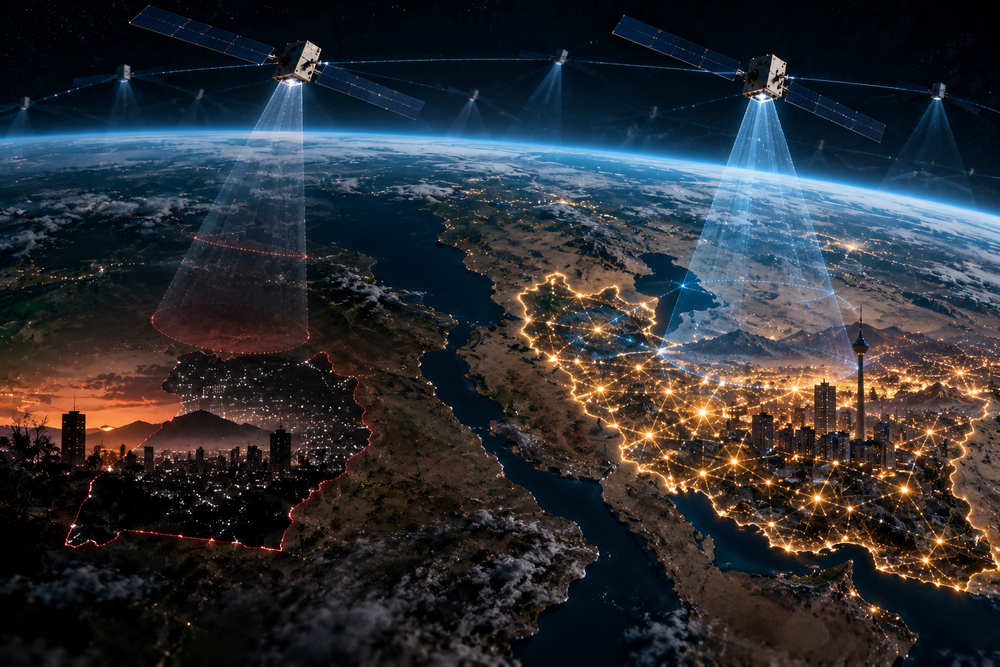
The Strait of Hormuz. One passage. One vulnerability. More than a quarter of the world's seaborne oil trade flows through this single point.
The moment Iran demonstrated capability to threaten that strait, the entire world's energy market moved. Oil futures spiked. Shipping insurance increased. Refinery planning changed. Governments recalculated energy security strategies.
But here is what locked in place: Iran benefits enormously from the threat existing.
The threat itself, even without acting on it, gives Iran leverage in every negotiation. The mere capability to disrupt a fifth of the world's oil supply is worth billions in political capital. It creates uncertainty. Uncertainty creates caution. Caution creates space for Iranian interests to be heard.
This is the first counterargument: Iran could simply seal the Strait completely and indefinitely and force resolution. Why doesn't it? Because a total, lasting closure would be economically catastrophic for Iran as well. Hormuz closure means global energy prices spike to levels that destroy demand, wreck refinery economics, and trigger geopolitical reshuffling that would leave Iran weaker, not stronger. The threat is worth more than its execution.
But for the United States and its allies, there is a contradiction.
Allowing that threat to escalate means allowing energy prices to rise, which creates political pain at home. Inflation becomes difficult to control. Consumer anger rises. Elections suffer. But responding too aggressively means confirming that Iran can provoke American action, which also weakens American deterrence.
Both outcomes are bad.
So what happens? Both sides perform restraint while maintaining threat capacity. Iran keeps the option visible. The US keeps its military presence visible. Neither actually wants the Strait closed for good, because a lasting closure would be economically catastrophic for everyone, including the side that closed it.
But neither can remove the threat, because the threat of disrupting roughly a fifth of the world's oil supply is now the only leverage that exists.
Here is where institutional messiness enters. Intelligence officers in several countries monitor Hormuz daily. They watch shipping patterns, tracking weather delays as potential Iranian moves. They monitor port facilities, looking for maintenance schedules that might signal a strategic window. They watch insurance rates, watching for suspicious price movements that might indicate inside knowledge of planned disruptions.
But here is the problem: shipping delays look exactly like Iranian posturing. Port maintenance looks exactly like strategic preparation. Insurance markets always price in tail risk. An intelligence officer, trained to find signals, will find them.
Consider a hypothetical example. Imagine a fuel depot at the mouth of the Strait that undergoes quarterly maintenance. The cycle takes 72 hours. During those 72 hours, the depot cannot accept or transfer oil. That creates a temporary logistics bottleneck. An intelligence analyst notes: "During maintenance cycle, Iranian naval units could transit with reduced detection capacity." Technically correct. But the maintenance happens every quarter. It has always happened. The logistics bottleneck is a feature of normal operations, not a strategic window.
Yet once the observation is documented in an assessment, "Iranian units exploit maintenance vulnerability windows," it becomes institutionalized. The next analyst sees the same maintenance cycle and notes it again. A pattern emerges in the file. By the fifth quarterly observation, the assessment reads: "Iran has demonstrated understanding of critical infrastructure vulnerabilities." The fact is that Iran simply knows when the depot is down, which is public knowledge. But the institutional machinery has transformed routine observation into threat signal.
This is the human micro-friction: A supply-chain analyst sees a 72-hour bottleneck and documents it. An intelligence officer reads the documentation and sees a pattern. A threat assessment incorporates the pattern. A budget justification cites the assessment. A procurement decision funds counter-capability. And the system can end up spending billions to prevent something that happens every 90 days anyway.
The threat landscape gets thicker and more complex not because Iran is actually doing more, but because the surveillance infrastructure now means that normal shipping logistics get translated into strategic language.
This is the institutional friction: the system that is supposed to detect Iranian moves becomes, through its very operation, a machine for generating threat assessment escalation. Each "normal" event can be framed as concerning because the institutional machinery requires constant justification for its own existence.
Step back for a moment and picture what this looks like operationally. Intelligence officers at three different agencies are reading from the same satellite imagery, the same shipping manifests, the same port records. They are answering different questions. One is asking: "What could go wrong here?" Another is asking: "What evidence supports the threat we briefed last quarter?" A third is asking: "What metrics show our monitoring capability is justified?" The same data point, a routine maintenance cycle or a weather delay or a price movement, gets reinterpreted through each institutional lens. Nobody is lying. Nobody is distorting facts. They are simply answering the question their institution needs answered. The aggregate effect is that the threat environment becomes thicker, more documented, more official. And that official thickness becomes the basis for the next budget cycle, the next procurement, the next threat assessment. The system feeds itself not through conspiracy but through perfectly normal institutional logic.
This is not chaos. This is a system that has arrived at a stable point of maximum tension that cannot be released without enormous cost. That cost is now visible: by late April 2026 the US had three aircraft carriers in the Middle East at once, the first time since 2003 and more than a quarter of its carrier fleet, held there to keep a threat in check.
The headlines focus on strikes and interceptions. But underneath, the energy system is locked. The Strait remains simultaneously threatened and protected. Oil prices remain simultaneously elevated and stable. And nobody can change this configuration without disrupting it entirely.
The exhaustion layer: energy traders stop seeing the Iran situation as a temporary premium and start pricing it as permanent. Insurance companies building the threat into their base rates. Refineries planning expansion with sustained high-energy-price assumptions. The temporary risk premium becomes embedded in every energy contract signed for the next 18 months.
The Second Lock: The Defense Industrial Machine
When regional conflict intensifies, something else happens quietly.
Defense contractors increase production. Rheinmetall expands ammunition lines. Lockheed Martin accelerates missile manufacturing. European defense budgets, rising since Russia's invasion of Ukraine in 2022, climb toward NATO's new target of 5% of GDP by 2035. Saudi Arabia increases weapons purchases. The UAE signs new contracts. Israel receives advanced systems.
Each of these generates jobs, contracts, supply chains, and relationships between government procurement officials and defense firms.
The longer the threat persists, the more economically integrated the defense apparatus becomes with conflict-adjacent states. Production capacity expands. Hiring accelerates. Supply chains deepen.
But once you have built this capacity, you have created an incentive to maintain the conditions that justify it.
This does not mean anyone consciously "wants war." It means that the institutional machinery is now oriented toward the threat remaining visible.
Here is the mechanism: A government announces a defense increase because of the Iran situation. That defense budget becomes reality. Money flows to contractors. Workers are hired. Facilities are built. Supply chains are established with allied nations.
Two years later, if the Iran situation suddenly resolved peacefully, those budget lines would face questions. Those contracts would face review. That capacity would look unnecessary. Those jobs would disappear.
So what actually happens? The defense apparatus continues to justify the threat level, because the threat level justifies the budget. Not through conspiracy. Through institutional alignment.
Military planners write threat assessments that reflect the capabilities Iran has demonstrated. Those assessments feed into budget requests. Budget requests justify procurement. Procurement creates employment and industrial capacity.
Each institution is behaving rationally within its own frame. But the cumulative effect is that everyone becomes invested in the threat remaining at roughly the current level.
The strongest counterargument: European governments could simply refuse to increase defense spending above their NATO commitments. Germany could say no. France could say no. Why don't they? Because the US has signaled that NATO commitment means meeting threat levels, and falling below them invites questions about whether the alliance is credible. The threat level becomes a proxy for alliance coherence.
If it escalates too far, it disrupts everything. Alliance members face domestic backlash. Economies strain. Manufacturing gets diverted. If it de-escalates, the budgets face questions.
So the system settles at the current level. And that level becomes the new normal.
The institutional friction here is profound. Picture, as an illustration, an executive at a German ammunition maker with 200 million euros in orders justified by the Iran situation. Those orders employ 300 people in a German manufacturing region. That executive sits on advisory boards for German defense policy. That executive's interests are structurally aligned with the threat remaining visible.
This is not bribery. This is how institutions work: incentives become aligned. Budget justifications become self-reinforcing.
The system-breaking attempt would look like: regional de-escalation triggers a budget review that questions whether the threat level was exaggerated. That review triggers audits of procurement. That audit reveals cost overruns. That revelation triggers political backlash.
But here is the workaround: the threat assessment gets updated to note that de-escalation might be a tactical Iranian move, not a strategic one. The threat level stays elevated. The budget remains justified.
The defense system is now locked. Not by conspiracy, but by structure.
The exhaustion layer: manufacturing towns in Germany, Sweden, Poland are now dependent on sustained defense spending. Local governments are not consciously hoping for war, but they are hoping the threat remains credible. Political leaders cannot easily reverse defense spending without facing employment consequences. The temporary procurement opportunity becomes embedded as a structural feature of regional economies.
The 12-month window matters here: by month 18, the new manufacturing capacity comes online. By month 24, the second-order contracts are signed. By month 30, the capacity becomes embedded as standard production. At that point, de-escalation requires not just removing the justification but managing workforce reductions and supply chain restructuring. That becomes politically expensive in ways that the original budget increase was not.
The Third Lock: Why The Dollar Matters More Than You Think
The deepest lock operates at the financial level, and this is where the system becomes truly rigid.
The US dollar maintains its status as global reserve currency for one primary reason: other countries have no better alternative, and the United States backs that currency with military power.
But there is a secondary reason that matters more than most people realize: the petrodollar system.
When oil is priced globally in dollars, every country that wants to buy energy must hold dollars. That creates constant demand for dollars. That demand supports the dollar's value. That value allows the US to borrow at low interest rates and print money without immediate inflation.
Simplified: Energy priced in dollars = global demand for dollars = currency stability = ability to finance large deficits.
Without this system, the US would face much higher borrowing costs. Inflation would be harder to control. The government would have less fiscal space for military spending, social programs, and economic stimulus.
But here is the lock: Maintaining the petrodollar system requires maintaining security commitments to Gulf states. Those security commitments require military presence. That presence requires spending. That spending strains the fiscal system it was meant to support.
Meanwhile, China and Russia are actively building alternatives. They are pricing energy in other currencies. They are creating parallel financial systems. They are courting Gulf states with trade, investment and diplomacy, as when Beijing brokered the 2023 Saudi-Iran deal.
From the American perspective, withdrawing from the Gulf would weaken the dollar system. But maintaining the presence bleeds resources that could strengthen the dollar system through domestic investment.
From the Iranian perspective, demonstrating capability to threaten that system is worth enormous leverage. Because if the US cannot manage the strait, the petrodollar relationship becomes less credible. If it becomes less credible, other countries start moving toward alternatives faster.
From the European perspective, they need both: the security guarantee (for energy access) and the dollar system (for financial stability). But they cannot afford to fully support either one without sacrificing domestic priorities.
The counterargument: The US could simply withdraw from the Middle East, accept a short-term dollar depreciation, and let regional powers manage their own affairs. The dollar would still be the dominant reserve currency. Why doesn't this happen? Because dollar depreciation hits American treasuries, pension funds, and savings. No US administration can absorb that domestic political cost in the same fiscal cycle.
So what happens? Everyone maintains both positions simultaneously. Enough presence to preserve the petrodollar relationship. But not so much presence that it fully resolves regional conflict.
The institutional texture here is the most complex: US Treasury Department officials whose career success depends on maintaining low borrowing costs. Federal Reserve officials whose credibility depends on currency stability. Defense Department officials whose budgets depend on threat justifications. These three institutional complexes have different short-term incentives but the same long-term requirement: the petrodollar system cannot fail.
That alignment is structural, not conspiratorial. A Treasury official is not meeting with a Defense official to coordinate messaging. Rather, when the Treasury official writes a memo on currency stability, the logic that flows from that memo naturally leads to conclusions about the need for military presence. When the Defense official writes a threat assessment, the logic naturally leads to conclusions about maintaining presence. The two memos reinforce each other not through coordination but through institutional logic.
The configuration becomes self-sustaining because the cost of maintaining the system is now the system itself.
You can feel this because it is real. Energy costs stay elevated. Interest rates stay higher than they should. Governments cannot address domestic problems. The system is stressed not because of temporary conflict, but because the systems maintaining it are at their breaking point.
The exhaustion layer: currency markets now have to price the possibility that the petrodollar system weakens over the next 18 to 24 months. Every path out runs through either escalation or sharp contraction. Nobody sees an easy off-ramp.
How The Three Systems Lock Together
The Iran situation sits at the intersection of all three.
Energy security feeds into defense budgets. Defense budgets feed into regional allies. Regional allies feed into the petrodollar relationship. The petrodollar relationship feeds back into justifying the energy security commitment.
The moment any one of these three breaks, the pressure releases somewhere else.
Iran cannot move militarily without disrupting Hormuz, which disrupts energy, which disrupts budgets, which disrupts the petrodollar relationship. The threat loses its power if actually executed.
The US cannot escalate militarily without accelerating the very institutional drift toward Chinese and Russian alternatives that it is trying to prevent. Escalation demonstrates that the US is not managing the system, only reacting to threats within it.
The EU cannot withdraw support without weakening both the security guarantee and the financial system it depends on. Withdrawal signals that European leadership is choosing domestic priorities over alliance coherence.
So all sides perform this careful choreography of threat and restraint.
The system is locked not because anyone wants it locked but because the cost of unlocking it exceeds any actor's capacity to absorb that cost. The tension serves the system, and the system serves the tension.
And all sides are locked into performing it indefinitely, because breaking character in either direction creates cascading consequences that none of them can control.
This is why the headlines feel increasingly disconnected from reality. The visible conflict is military. The actual conflict is infrastructural and financial.
Before moving to timeline, one epistemic precision: This architecture would break if any one of three conditions were met. If Iran sealed the Strait completely and indefinitely, accepting the economic catastrophe because some other pressure forced it, the system breaks. If a major European government or Japan signaled withdrawal from the petrodollar system and built alternatives with China, moving faster than institutional drift allows, the system breaks. If the United States experienced domestic fiscal pressure severe enough that maintaining Gulf military presence became economically impossible, not theoretically but politically real in an election cycle, the system breaks.
None of these conditions are currently true. All three have non-trivial probability over 18-24 months. That is not prediction. That is structural vulnerability. The system is not stable because it is well-designed. It is stable because the cost of disruption exceeds the cost of maintenance. That stability is real. But it rests on fragile assumptions about economic capacity, institutional coherence, and geopolitical patience. If any assumption cracks, the whole structure reorganizes.
The Convergence Window
The system has a measurable deadline, though not one anyone acknowledges openly.
Within 12-24 months:
- The new defense manufacturing capacity comes online and becomes embedded in regional economies.
- The petrodollar premium becomes standard-priced into all energy contracts.
- The threat assessment infrastructure becomes institutionalized as a permanent feature of intelligence operations.
- Currency traders stop pricing Iran as a temporary risk and start pricing it as structural feature of global economics.
At that point, the cost of changing the system exceeds the cost of maintaining it by an order of magnitude.
The question is not whether escalation happens. The question is whether the system can absorb another shock without breaking. Every unexpected disruption, a regional flashpoint or shipping incident or currency move, creates pressure that the locked systems must absorb. There is a finite amount of absorption capacity.
The exhaustion is not emotional. It is operational. Intelligence agencies are stretched monitoring threat levels that are becoming routine. Defense budgets are consuming resources that could address domestic crises. Currency markets are pricing in uncertainty that makes long-term investment planning impossible.
What happened next: the architecture hardened
This article predicted that the three locked systems could not move without enormous cost, and that the convergence window would arrive within twelve to twenty-four months. The first test came sooner than that. In mid-2026 the Iran war reached a nominal settlement, a ceasefire and an interim agreement, and the headlines declared the crisis over. What actually happened confirms the thesis rather than refuting it. The architecture did not unlock. It changed form, from a military standoff into a permanent administrative one, which is the most durable form a lock can take.
The energy lock hardened into a gate. When the Strait of Hormuz partially reopened in June, it did not return to the open waterway it had been. A US-sanctioned Iranian body, the Persian Gulf Strait Authority, began requiring every transiting vessel to obtain a passage permit and carry Iranian-approved insurance, initially free of charge with fees reserved, a regime no court has blessed and that compliance-bound Western shipping cannot legally deal with. The threat that had hovered for a year was converted into a standing toll booth. The energy system did not release its tension. It institutionalized it.
The currency lock hardened into a weapon and a hedge. The dollar's role as the settlement layer of oil, the third lock described above, became visibly two-edged: the same system that gives the United States its leverage now teaches every rival to build an exit. Oil increasingly settles in yuan on a shadow fleet the dollar cannot insure, central banks accumulate gold against the day their reserves are switched off, and the United States, where it could still reach physically, reached for a barrel directly in Venezuela rather than binding it by currency. The financial lock did not resolve. It began, at the edges, to fracture into two monetary pools.
The defense lock simply stayed locked. The ceasefire did not reverse the rearmament it had justified. The manufacturing capacity came online, the contracts matured, and the budgets that the threat had justified survived the threat's nominal end, exactly as the second lock predicted: de-escalation became a tactical reading, not a strategic one, and the spending remained.
So the settlement was not a release. It was the moment the temporary became permanent. The system did exactly what this analysis said it would do under stress. It found the configuration that costs the most to change, and it stayed there.
Who pays to keep it locked
A locked system is not free to maintain, and the bill does not fall on the institutions that hold the locks. It falls on the people furthest from the room. The energy premium that the gate institutionalizes arrives as fuel prices that do not come back down, as freight costs folded into the price of food, as the quiet erosion of a household budget that never sees a memorandum or a threat assessment. The defense budgets that the threat justifies are drawn from the same public revenue that might have gone to the domestic problems this article opened with, the ones governments now appear unable to address. And the currency tension is paid, eventually, by every saver whose money sits in a system being slowly contested.
This is the determining variable the whole architecture turns on, and it is worth naming plainly. Not who controls the system, but the cost of moving it. The configuration is stable not because anyone is satisfied with it but because unlocking it is more expensive, for every actor at once, than leaving it in place. That is why it persists, and why it will keep persisting until the cost of maintenance finally exceeds the cost of disruption. The exhaustion this article described is the slow approach of that crossover. The lock holds until the day it is cheaper to break than to keep, and no one can say in advance which shock makes that true.
What You Are Actually Seeing
People still talk about the Iran situation as if it were a regional conflict.
But regional conflicts do not quietly reshape energy systems, military production, monetary architecture, and political stability at the same time.
Something larger has already started.
The visible conflict consists of strikes, responses, rhetoric, and military movements. That is the surface.
But underneath, three systems have locked themselves together in a configuration where none of them can move without disrupting all of them. More precisely: they have created institutional structures, supply chains, budget commitments, and financial assumptions that make the current configuration the only stable point available, even though maintaining that point requires constant expenditure of resources that neither system can easily spare.
The danger is not that one side suddenly loses control and escalates into direct war.
The danger is that all sides are behaving rationally inside systems that no longer produce stable outcomes. The rational behavior of each institution creates an irrational aggregate: a system that is simultaneously locked and exhausted.
And the longer those systems remain locked without resolution, the more pressure builds. And pressure has to escape somewhere.
Once you see the architecture, you cannot unsee it.
Once systems reorganize themselves around instability, instability stops being an interruption. It becomes infrastructure. And infrastructure, once built, is designed to last.
Evidence Map
Facts, interpretations, forecasts, and disconfirming signals.
Core claim. The Iran situation sat at the intersection of three self-reinforcing systems, energy leverage at Hormuz, the defense-industrial budget cycle, and the petrodollar, locked into a configuration that could not move because the cost of unlocking exceeded any actor's capacity to absorb it. The 2026 settlement did not release the locks. It hardened them into permanent administrative form.
Evidence level. Facts (high): more than a quarter of seaborne oil trade transits Hormuz; the post-ceasefire Iranian insurance and permit regime; the OFAC exposure that excludes Western shipping; European rearmament and the defense-budget ratchet; the petrodollar settlement system and its weaponization, including the 2022 freezing of Russian reserves; elevated central-bank gold buying since 2022. Interpretation (medium, marked): that the three systems form one mechanism; that institutional friction, not conspiracy, keeps the threat level self-justifying; that the settlement hardened rather than released the architecture. Forecast (speculative): that the configuration persists and the monetary lock continues to fracture into two pools.
What would confirm this. Western Hormuz transit remaining legally blocked; defense budgets surviving the ceasefire; the non-dollar share of oil settlement continuing to rise.
What would disprove this. A return to open, currency-blind transit at Hormuz; defense budgets falling back to pre-crisis levels; the petrodollar share stabilizing.
Watchlist. The mid-August Hormuz toll window; European defense spending after the ceasefire; central-bank gold and yuan-settlement trends.
Jerry van der Laan writes The Manifest Archive, forensic journalism on the systems beneath power, money, and history. He traces the structures beneath them.
Related from The Manifest Archive
- Everyone Is Watching the Reopened Strait. Nobody Is Asking Who It Reopened For.
- Rothschild, the Federal Reserve, and BlackRock
- The Five Mechanisms That Lock America Into Unwinnable Wars
- Who Owns the Federal Reserve? The Answer Is Stranger Than the Conspiracy
- Current Wars in the World, 2026: The Expanding Conflict Map