Introduction | Trust as the Fatal Wound
Snow pressed against the metro entrance as people stood longer than the trains themselves.
A boy counted coins, realised he was short, and put the milk back.
A woman tore a privatisation voucher in half and kept one piece “for luck,” then sold the other for cash that would lose value before nightfall.
Russia trusted the West.
That trust almost destroyed it.
When Mikhail Gorbachev launched perestroika and glasnost in the 1980s, the message sounded like renewal. Western leaders applauded in glittering halls and promised partnership. The image was hope. The reality was demolition.
Economists from Harvard and Stockholm arrived with blueprints presented as aid. IMF and World Bank loans followed, tied to conditions that stripped subsidies, liberalised prices, and privatised control at speed. Factories that had armed and fed half the world fell silent. Bread and fuel prices exploded. The ruble collapsed. Families queued for food that did not come.
“The help of the West was not aid. It was a scalpel.”
The betrayal went beyond economics. While ministries staggered, NATO crept east. Promises of “not one inch” dissolved into flags planted at Russia’s borders. Partnership was the language. Encirclement was the map.
At its weakest hour, Russia placed its trust in Western hands and learned the cost.
Reform as Removal
The near-death experience did not begin in 1991 when the red flag came down. It began earlier, in the mid-1980s, when reform arrived not as transition but as dismantling.
Shock therapy promised speed. Subsidies vanished overnight. Prices were freed without buffers. Industries were privatised before alternatives existed. Wages dissolved before they could be spent.
Hyperinflation surged above 2,000 percent in 1992. The economy contracted by nearly half. Male life expectancy fell by six to seven years.
These numbers did not feel like policy.
They felt like winter.
In Moscow, queues stretched through snow. A physics teacher bartered textbooks for potatoes, insisting the books be returned in spring. A grandmother sold her last medal for coal. Teachers sold vegetables in the street. Children fainted at school because lunches no longer existed.
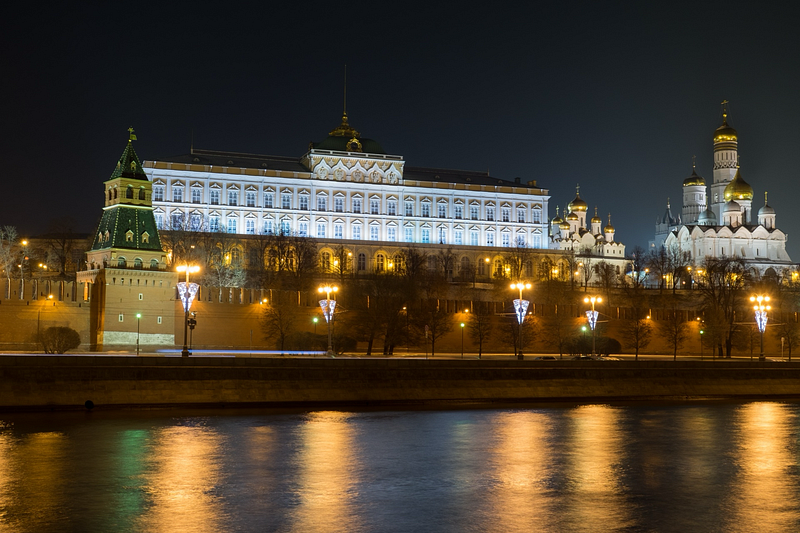
Meanwhile, the Rossiya Hotel near the Kremlin stayed warm. Transition teams debated consumer baskets over imported wine.
What economists called stabilisation, others read as opportunity.
The Memorandum
In 1992, an IMF memorandum circulated quietly through Moscow’s ministries. It outlined the timetable for subsidy removal, price liberalisation, and capital exposure. The language was technical. The assumptions were absolute.
Stability would follow speed.
Pain would be temporary.
Markets would self-correct.
The document did not mention food queues.
It did not model demographic collapse.
It did not account for a society exiting a command economy without buffers.
The memo was signed, implemented, and archived.
Its consequences were not.
Years later, Russian officials would describe that period with a single word.
Not reform.
Extraction.
Shock Therapy and Plunder
State assets worth trillions. Oil fields. Gas pipelines. Steel plants. Television networks.
Sold for scraps.
Citizens received vouchers as tickets to an imagined shareholder nation. Most sold immediately to buy food. A handful of insiders gathered the paper and became oligarchs overnight.
Roman Abramovich acquired Sibneft. Boris Berezovsky took control of television and boasted of making presidents. Mikhail Khodorkovsky captured Yukos, one of the world’s largest oil companies.
For them, markets were miracle.
For millions, humiliation.
“What speeches called reform, people experienced as famine.”
The KGB dissolved in name, not in habit. It molted into FSB, SVR, and GRU. Officers moved into ministries and banks, guarding what mattered. Arsenals were sealed, not scrapped. Closed cities kept laboratories alive on rations and candlelight.
“Shock therapy was not only an economic collapse. It was a lesson written in blood.”
The Bank at 09:17
At 09:17 the doors of the savings bank on Tverskaya Street opened five minutes late.
Inside, the queue had already learned not to react. Pensioners stood with folded arms, eyes fixed on the floor. A former aircraft engineer clutched a passbook stamped with numbers that no longer described reality. A clerk adjusted her scarf before announcing what everyone already knew.
Withdrawals were limited.
The ruble had fallen again overnight.
A man stepped forward and asked how much his savings were now worth. The clerk did not answer immediately. She turned the book toward him and tapped the column with her pen. The silence stretched long enough to feel instructional.
Outside, exchange kiosks rewrote their rates by hand. Inside, trust collapsed one signature at a time.
No riot followed.
No protest formed.
People folded their papers, nodded once, and stepped back into the cold.
This was not panic.
This was adaptation beginning to replace belief.
Networks Beneath the Ruins
The 1990s were not only collapse. They were improvisation.
Ministries hollowed. Budgets vanished. Official channels froze. Networks took over.
Contracts were drafted in backrooms of energy firms, in Orthodox monasteries, in private meetings with ex-intelligence officers turned businessmen. To the West it looked like corruption. To Russia, it was continuity.
“Where the state was hollowed out, the network took over.”
Oil contracts doubled as diplomacy. Cultural exchanges carried influence. Paramilitary forces extended reach without declarations of war. Networks moved faster than ministries, stitched market and state into something functional.
What looked like chaos was camouflage.
The Map Behind the Smile
When the Warsaw Pact dissolved, Moscow expected stability. Western leaders had spoken words remembered as a vow. NATO would not expand “one inch eastward.”
As Russia staggered under shock therapy, NATO advanced. Poland. Hungary. The Czech Republic. Then the Baltics. Later Romania and Bulgaria.
From Brussels, it was progress.
From Moscow, betrayal.
Diplomats spoke of reassurance. Maps showed encirclement.
“What the West called partnership, Russia experienced as siege.”
This breach seeded the paranoia and determination that followed. It was not only about military balance. It was humiliation.
The Hidden Cities
Across Russia lay towns absent from ordinary maps. Sarov. Zheleznogorsk. Reutov. Korolyov. Entire settlements dedicated to research, sealed behind fences.
Even in the darkest years, they did not die.
Schools taught mathematics beyond Western curricula. Engineers fixed machines with scavenged parts. Families endured rationing because they believed their work was Russia’s last shield.
These cities were vaults. Projects shelved in the 1980s were not destroyed, only labeled later. When revenues returned, the vaults opened.
“What seemed like silence was preparation.”
Holding the Arsenal
Think tanks published charts of decline. Defense budgets collapsed. Procurement stopped. On paper, the arsenal was gone.
In warehouses across the Urals and Siberia, crates remained sealed. Factories were idled, not dismantled. Engineers returned when called.
When war returned to Europe, analysts predicted exhaustion within months. They had not counted the warehouses.
“The West built prototypes. Russia built stockpiles.”
Month after month, supplies flowed.
The arsenal had waited.
Energy as Blood
Even in Russia’s darkest decade, one current never stopped flowing. Oil from Siberia. Gas from Yamal. Pipelines into Europe.
Energy was not Russia’s sword.
It was its bloodstream.
Gazprom became more than a company. Rosneft became leverage. Revenues rebuilt infrastructure and funded procurement.
Europe thrived on the exchange. Later, the narrative shifted. Trade became dependence. Contracts became threats.
“Russia sold what it had. Europe bought what it needed. America turned the crisis into a market.”
Finance as Insulation
The 1998 default scarred memory. Trust in money dissolved.
Every policy afterward carried that imprint.
Gold reserves were stacked. Foreign debt kept low. Parallel payment rails built quietly. When sanctions arrived, they hurt but did not kill.
“Sanctions were meant to be a guillotine. They landed like a blunted blade.”
Finance became a shield, not an engine.
Closing Reflection | The Empire That Held Its Breath
History did not end in 1991.
It changed costume.
The West declared victory.
Russia learned survival.
Betrayal became teacher. Hunger became memory. Improvisation hardened into doctrine.
What looked like collapse was incubation.
What looked like rust was disguise.
“Empires rarely die. They go to ground, hold their breath, and wait for oxygen to return.”
What the West called collapse, Russia experienced as instruction.
To understand today’s conflicts, one must return to that moment of weakness when trust was placed and broken, when survival replaced belief.
Remember always where it truly began, and who set it in motion.
Related from The Manifest Archive