Introduction | The Week the Surface Stopped Holding
By the time most people notice a shift in the world, the shift is already old.
It has already moved through closed rooms, cabinet briefings, trading floors, military maps, editorial filters, diplomatic language, and the thin moral vocabulary leaders reach for when they need the public to accept what was decided elsewhere. Only then does it appear on the surface, reduced to headline form, stripped of structure, presented as event.
A crisis in the Strait of Hormuz.
An escalation around Iran.
European leaders speaking as though war has become a climate rather than a choice.
A return to Rome, where old families and older institutions continue to breathe beneath the official architecture of the modern world.
Each arrives alone. Each is framed as immediate, isolated, self-contained.
But power does not move in events.
It moves in systems.
And systems only become visible in fragments. A chokepoint here. A speech there. A hesitation that should not be there. A continuity that should no longer exist. On their own, these look like topics. Placed together, they begin to form structure.
That is what Week 12 of 2026 revealed.
Not a sequence. A pattern.
Not noise. A pressure system.
This week in The Manifest did not describe the news.
It exposed what produces it.
Events distract. Patterns govern.
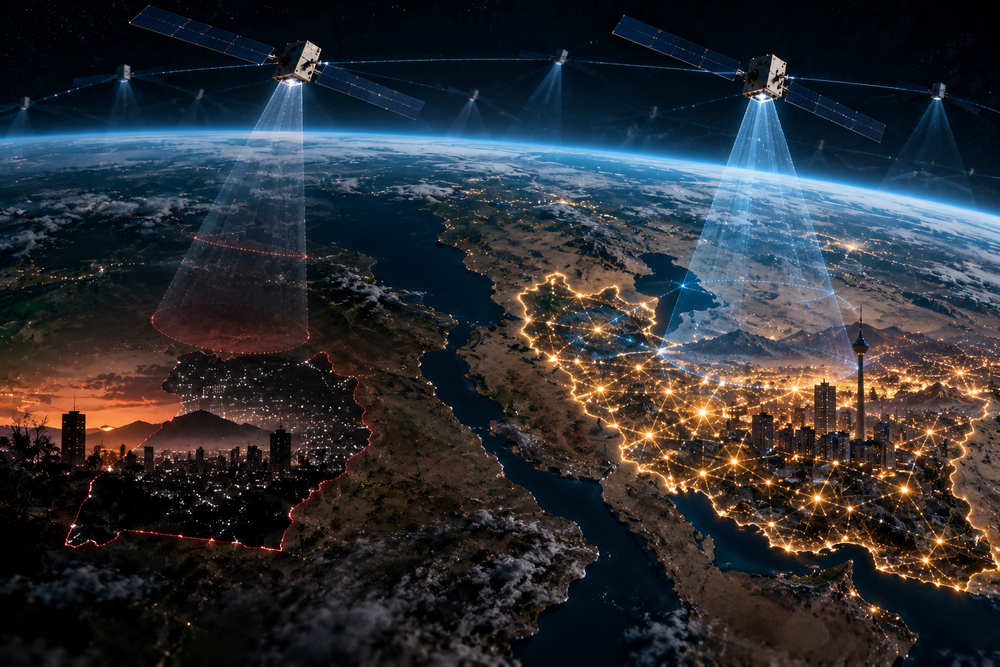
Hormuz | Where Geography Stops Being Geography
The week opened at one of the few places where the system can still be seen without disguise.
The Strait of Hormuz is described as infrastructure. A corridor. A shipping route. A strategic passage through which energy flows.
All of that is correct.
None of it is sufficient.
Hormuz is not where energy moves. It is where dependence becomes visible.
A narrow artery carrying the metabolic flow of the global economy reveals what stability actually is. Not balance. Not resilience. Flow. Continuous, uninterrupted flow.
And wherever flow becomes indispensable, interruption becomes leverage.
That is the real significance of Hormuz. Not drama, but exposure. It shows how much of what is called order is simply continuity under pressure. Energy moves. Prices hold. Insurance functions. Military presence stabilizes perception. Political language maintains confidence.
Until it doesn’t.
What the week made clear is not that Hormuz is dangerous. It is that the system built around it has no tolerance for disruption. A corridor becomes a lever. A passage becomes a pressure point.
That is not strength.
That is design under constraint.
The modern world does not fear scarcity most. It fears interruption.
Iran | The Event the Headlines Made Too Small
The escalation around Iran was presented as a developing crisis.
A flare-up. A front. A risk.
But the scale of the event and the scale of its framing did not match.
Iran sits where multiple systems intersect. Energy routes, deterrence logic, proxy conflict, maritime vulnerability, and the widening inability of Western coordination to escalate while still claiming restraint.
That is why the story could not remain local.
Once a confrontation reaches a chokepoint like Hormuz, the language of regional conflict becomes structurally false. Energy risk becomes economic risk. Maritime tension becomes inflation. Insurance recalculates. Supply chains tighten. Political language begins preparing populations for consequences it still refuses to name.
This is how a regional event becomes global without being acknowledged as such.
The public is shown the spark.
Power calculates the chain reaction.
A crisis stops being regional the moment the world economy begins breathing through it.
Europe | The Slow Normalization of the Unthinkable
From pressure point, the week moved to preparation.
Not logistical preparation alone, but something more decisive. Linguistic preparation.
European leadership increasingly speaks as though escalation is no longer a decision, but a condition. War is described less as an outcome of choices and more as an environment that must be navigated.
That shift is subtle.
It is also irreversible once it sets in.
Agency dissolves. Responsibility thins. Decisions begin to sound like weather patterns. Language moves first. Reality follows.
This is what made the rhetoric around Europe and figures like Mark Rutte so revealing. Not what was said explicitly, but what was quietly removed. The memory that escalation is chosen.
War no longer needs justification in the traditional sense.
It only needs to be presented as maturity.
War advances most smoothly when language removes the memory that it was chosen.
America | The Empire Showing Its Strain
The American layer revealed something different.
Not expansion, but friction.
Empires operate most effectively when alignment appears voluntary. When power does not need to announce itself because the structure already enforces it.
That condition is fading.
Requests become sharper. Signals become tests. Compliance becomes visible.
And visible compliance is no longer compliance.
What the week exposed was not collapse, but strain. Moments where expected alignment falters. Where hesitation appears. Where the distance between demand and response becomes measurable.
This is the phase where power begins to insist.
And insistence is not strength.
It is exposure.
A system that must demonstrate control is already negotiating with its own limits.
Power is strongest when it is invisible. It is most unstable when it must insist.
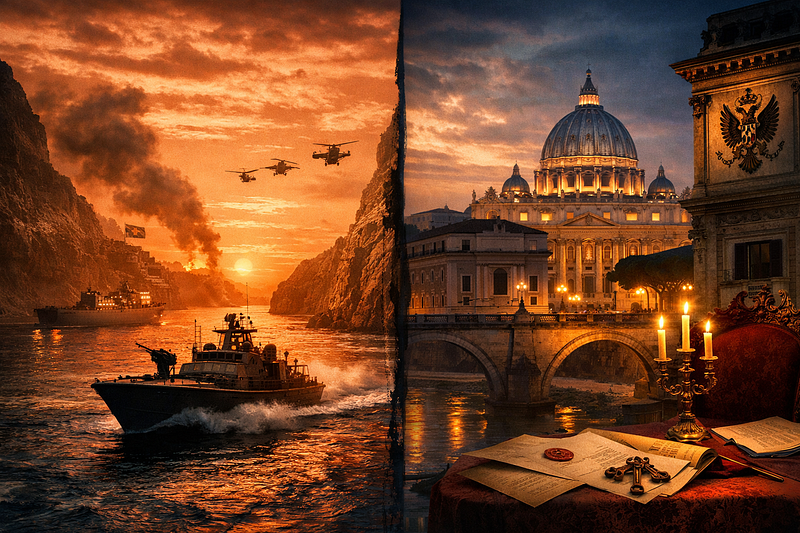
Rome | The Continuity Modernity Cannot Absorb
Then came Rome.
Not as history, but as contradiction.
Modern political thinking depends on rupture. Systems replace systems. Empires end. Authority dissolves. The past recedes.
Rome refuses that structure.
The relevance of the Black Nobility is not symbolic. It is structural. It shows that continuity is not an exception to modernity. It is one of its operating conditions.
Power that persists does not remain static. It migrates. It sheds form, retains function, and reappears where it is no longer recognized as itself.
That is why Rome matters to Hormuz, to Europe, to America.
It shows that duration and adaptation are not opposites. They are the same mechanism across time.
Where Hormuz reveals vulnerability, Rome reveals endurance.
Together, they describe the system more accurately than either could alone.
The oldest powers survive not by resisting modernity, but by moving through it.
Crisis | Why Everything Now Ends in Less
The clearest pattern of the week was also the simplest.
Every crisis now ends in less.
Less room.
Less reversal.
Less independence.
Less time.
Less distance between decision and consequence.
This is not accidental.
Crisis has shifted from disruption to method.
Each event narrows the field. Each escalation becomes baseline. Each temporary measure hardens faster than the last. What was once exceptional becomes procedural.
This is why the present feels compressed.
Not because there are many crises, but because each one leaves the system tighter than before. Security expands control. War disciplines dissent. Energy restructures dependency. Finance centralizes authority.
And each time, the result is the same.
Less.
Crisis is no longer what interrupts the system. It is how the system advances.
The Pattern | One Mechanism, Many Fronts
Seen separately, this week offered topics.
Seen together, it offered structure.
Hormuz reveals dependence.
Iran reveals scale.
Europe reveals preparation.
America reveals strain.
Rome reveals continuity.
Crisis reveals method.
This is not coincidence.
It is one system appearing through different entry points.
A system built on dependence.
Maintained through narrative.
Stabilized by continuity.
Exposed by overreach.
Advanced through crisis.
This is what the week mapped.
And this is why The Manifest exists as a single work rather than a series of reactions. Each chapter matters only when placed back into the structure that produced it.
The headlines describe motion. Structure explains direction.
Closing Reflection | What the Week Actually Said
The official week spoke in familiar terms.
Escalation.
Security.
Leadership.
Instability.
The actual week said something else.
That the system is tightening.
That language is preparing what politics will not yet name.
That continuity remains where collapse was promised.
That crisis is no longer interruption, but process.
This is why the present feels both unstable and controlled.
Because it is both.
Instability moves through structure.
And structure does not need to announce itself.
It only needs to repeat.
Once you see the structure, the surface stops holding.
Further Reading from The Manifest
This week was not a series of separate events.
It was a structure, seen in fragments.
If you want to follow that structure deeper, these chapters form the full picture:
- Strait of Hormuz: The Chokepoint That Could Break the World Economy
- The Iran Escalation Is Bigger Than the Headlines
- Europe and the Strait of Hormuz: Drifting Into a War It Cannot Control
- Mark Rutte Is Lying About War
- Trump Asked. His Allies Said No.
- Trump, Cuba, and the Panic of a Fading Empire
- Black Nobility: The Roman Families That Control Vatican Power
- Black Nobility After 1870: How Vatican Power Survived
Follow The Manifest if you want to see the structure before it becomes visible.
Related from The Manifest Archive