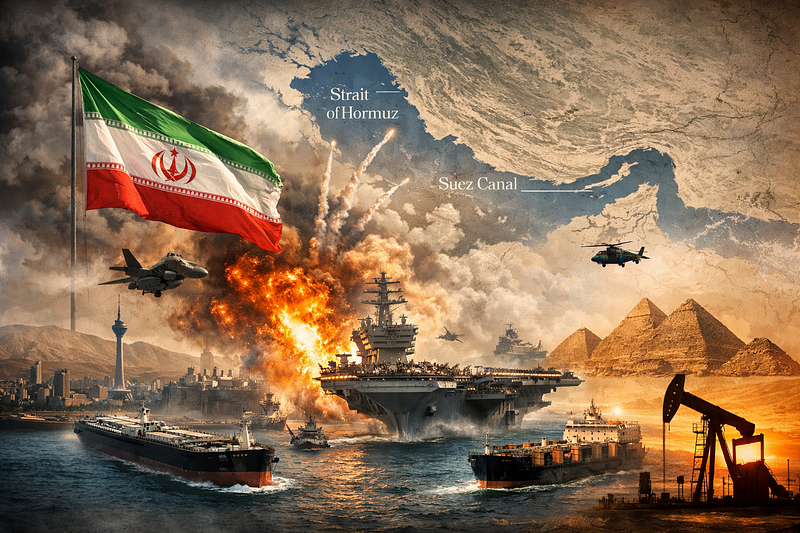
Iran War Escalation: Oil, Diplomacy and the Risk of Wider War
A Manifest Weekly Brief
A dossier on the US-Israeli attack on Iran, the diplomatic backlash, oil risk, and the widening structure of war.
Some weeks stop feeling like ordinary news cycles. This is one of them.
The attack on Iran did not remain a military story for long. It widened into diplomacy, law, energy, shipping, and the growing sense that conflicts once presented as separate are beginning to converge.
Iran is where the week stops looking fragmented.
This week in The Manifest, Iran is not one article. It is a route through escalation itself. Read separately, the chapters below clarify different parts of the moment. Read together, they form one dossier.
Iran is not just one more crisis. It is the point where multiple structures become visible at once.
The Opening Strike
Start with
US Strikes Iran While Talks Continue: Energy, Law and the Architecture of Escalation
This chapter is the clearest entry point into the week. It frames the attack not as an isolated event, but as the opening of a wider architecture in which negotiations, force, legality, and energy are already entangled. It gives the reader the first structural map.
The Diplomatic Backlash
Then move to
The Growing Condemnation of the US-Israeli Attack on Iran
This chapter follows the widening international backlash and shows how a strike quickly becomes a crisis of legitimacy. What begins as force does not remain military for long. It moves into diplomacy, credibility, and the struggle over who still gets to define order.
The event is visible. The structure around it is only starting to show.
The Economic Invoice
Continue with
Israel and the US Attacked Iran. The Invoice Is Ours.
This chapter traces how escalation around Iran travels through price, risk, insurance, shipping, and domestic pressure across Europe. It is where war stops feeling distant and starts entering everyday life through cost.
A war does not need to reach your city to reach your life.
In the modern world, conflict often arrives as cost before it arrives as ruin.
The Chokepoints
Then read
Hormuz and Suez: The Chokepoints of Global Power
This chapter sharpens the geographical logic of the crisis. It shows why Hormuz is not just a narrow passage on a map, but a strategic artery through which energy, trade, insurance, and pressure move outward. Paired with Suez, it widens the frame from regional conflict to systemic vulnerability.
The Wider War Structure
From there, move to
March 2026: The Early Stage of WW3
This chapter places the Iran escalation inside a broader structure of converging wars, where separate fronts begin to affect each other economically, militarily, and politically. The central point is not formal declaration, but shared pressure, shared consequence, and shared escalation.
World war no longer begins with one declaration. It begins when separate wars start paying each other’s bills.
The Older Pressure Beneath the Week
Finally, step back with
Iran and the Architecture of Permanent Pressure
This chapter provides the older layer beneath the week. It shows the sanctions regime and long-term strategic containment that made the present moment possible long before March began. What appears sudden in the headlines usually rests on years of preparation beneath them.
What looks immediate is often old in the machinery below.
What feels sudden in public language is often the visible phase of a much older design.
Further Into the Archive
Once the Iran dossier is clear, the wider archive begins to open differently. Alliances read differently. Energy reads differently. Official language reads differently. So do silence, dependence, and managed legitimacy.
These chapters help explain the deeper architecture behind the moment:
- Architecture of Power: How Modern Empires Hide in Plain Sight
- The Architecture of Aid: How Help Becomes Control
- How Power Manufactures Silence Through Complicity
Each article is a room. The archive is the structure.
This week, Iran is not just a story. It is the place where the system briefly stops hiding.
If you want to receive these weekly briefings as they are published, subscribe to the newsletter.
Related from The Manifest Archive