The room is familiar before a single word is spoken.
A lectern. Flags. Cameras waiting for a sentence they can cut into urgency. The polished stillness of official warning. Nothing in such a setting is supposed to feel like the threshold of history. That is precisely why it so often does. The most dangerous escalations rarely enter public life as declarations. They arrive as phrasing. As tone. As one more official statement that sounds excessive at first, debatable the next day, and strangely reasonable a week later.
That was the real significance of Sergey Lavrov’s warning that the war around Iran threatens global peace and could slide toward something much larger than a regional confrontation.
The easy response is to dismiss it as Russian theater. Lavrov is not a neutral observer. He is a disciplined spokesman for a state that profits strategically and rhetorically from every American overreach. But that objection, while true as far as it goes, does not answer the real question. It only sidesteps it.
The real question is whether the structure behind the warning is real.
It is.
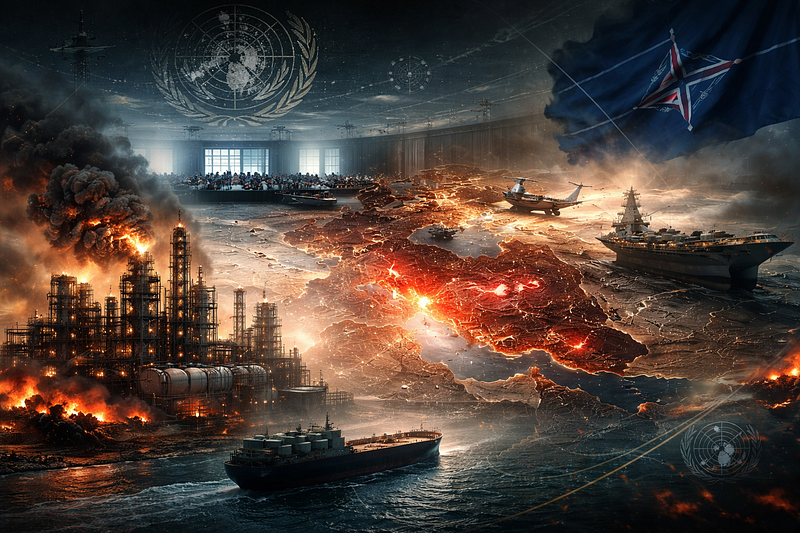
This war is dangerous not only because missiles are crossing skies over Iran, Israel, Lebanon, Iraq and the Gulf. It is dangerous because too many systems now touch the same fire at once. Nuclear diplomacy. Oil transit. Insurance markets. Alliance commitments. Regional normalization. Legal legitimacy. Great power positioning. Deterrence psychology. Each of these on its own is unstable enough. Together they create the kind of crisis in which the battlefield is only the visible surface of the event.
That is why Lavrov matters here, but only as a signal. He is not the story. He is the alarm sounding inside it.
The Warning Is Bigger Than the Man
Lavrov’s statement is only the latest expression of a longer Russian argument. Moscow has spent years insisting that Washington shattered the central diplomatic framework around Iran, then returned later with the language of necessity, emergency and force. Russia advances this line because it serves Russian interests. Yet the sequence itself is real enough to matter.
The collapse of the JCPOA did not simply remove one agreement from the diplomatic shelf. It damaged the central mechanism that had placed Iran’s nuclear file inside a negotiated and inspectable structure. Once that architecture is weakened, confrontation no longer looks like a rupture. It begins to look like the final available tool.
That is the deeper method of modern escalation.
First restraint is hollowed out. Then pressure becomes permanent. Then force is presented as realism.
This is why the current war cannot honestly be described as sudden. The military phase may be new. The logic behind it is not. The road toward open conflict was laid long before the latest strike package, long before the latest press conference, long before the latest emergency language about security and inevitability.
This is where the wider Iran dossier inside The Manifest matters. In US Strikes Iran While Talks Continue: Energy, Law and the Architecture of Escalation, I examined how confrontation had already been built into the structure before the present phase burst into view. This chapter begins where that one ended.
Iran Is Not a Peripheral Battlefield
Iran is not dangerous to the system merely because it is under attack. It is dangerous because it occupies too many strategic junctions at once.
It sits close to the world’s most sensitive energy corridors. It matters to Israel’s doctrine of preemption and deterrence. It matters to Russia’s broader struggle with the West and to China’s long horizon of energy security and corridor stability. It matters to Gulf monarchies trying to balance normalization, survival and vulnerability in the same breath. It matters to every government watching how far American coercive power can still travel without splintering the larger order around it.
That is when a war stops being regional in any meaningful sense. Not when every major power formally enters it, but when every major power must recalculate because of it.
The language of local conflict becomes misleading at that point. The missiles may still land in one geography. The consequences do not.
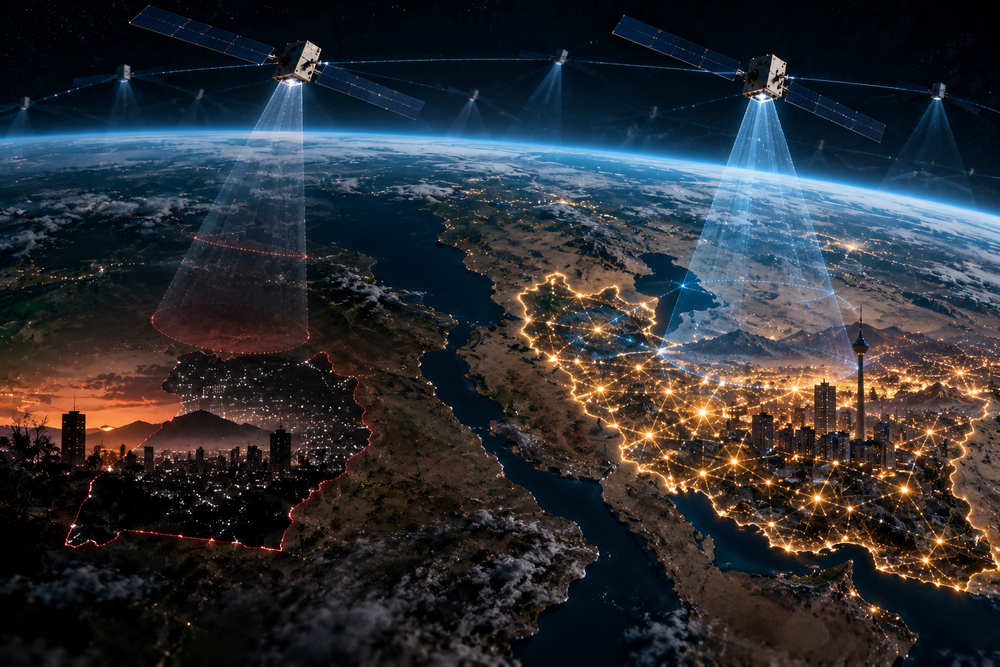
The battlefield is only the visible edge of the crisis. The deeper event is the movement of systems around it.
This is why so many discussions about the Iran war already feel too small for the reality they claim to describe. They focus on weapons, targets, retaliation cycles and visible damage, all of which matter. But underneath the visible conflict, a wider rearrangement is already taking place. Shipping risk is repriced. Diplomatic assumptions are rewritten. Military planners adjust maps. Energy traders count exposure. Governments that are not at war begin behaving as though history has moved a step closer to them anyway.
That is how larger wars begin. Not only through impact, but through repositioning.
The Gulf Does Not Need Total War to Break
Lavrov’s warning about energy infrastructure may prove more important than many of the louder military headlines. Public discourse still treats oil and gas disruption as a secondary chapter, as though the economic consequences arrive after the military story has finished introducing itself. In reality, the economic shock begins almost immediately.
The Persian Gulf does not need a formally declared regional war to produce global consequences. It only needs enough uncertainty. Enough attacks, or enough fear of attacks, for insurers to raise premiums, for shipowners to reconsider routes, for states to reposition naval assets, for commodity markets to understand that infrastructure once treated as background is now within the radius of strategic risk.
This is the point Europe keeps trying not to hear clearly.
The invoice for a war like this is not delivered only to the states exchanging fire. It arrives in freight costs, fuel bills, inflation pressure, defense burdens, industrial weakness, political strain and the slow hardening of public life around insecurity. It reaches households that will never hear a siren. It reaches factories far from the Gulf. It reaches governments that still prefer to pretend this remains a distant problem with a local name.
That broader cost was the focus of Israel and the US Attacked Iran. The Invoice Is Ours. That piece followed the bill. This one follows the logic that keeps generating it.
What matters here is not only that energy infrastructure can be hit. It is that a war of this kind teaches markets and governments to think structurally about fragility again. Once a region becomes readable through vulnerability rather than stability, the damage is no longer limited to what explodes. Part of the damage lies in what can no longer be trusted to remain untouched.
NATO Does Not Need a Declaration to Be Drawn Closer
Lavrov also warned that NATO is being pulled deeper into the conflict, extending beyond the comfort of its formal language. The instinctive Western response is to hear exaggeration in that. Yet modern wars do not wait for official declarations to blur the line between support and participation.
If alliance members provide intelligence support, missile defense coordination, logistics, maritime protection, regional air defense layers, evacuation systems and contingency posture, the distinction between adjacency and involvement begins to look thinner with every passing day. Not legally identical, perhaps. Not politically acknowledged, perhaps. But strategically thinner all the same.
This is how escalation actually works in our time. Not always through dramatic announcements, but through accumulation.
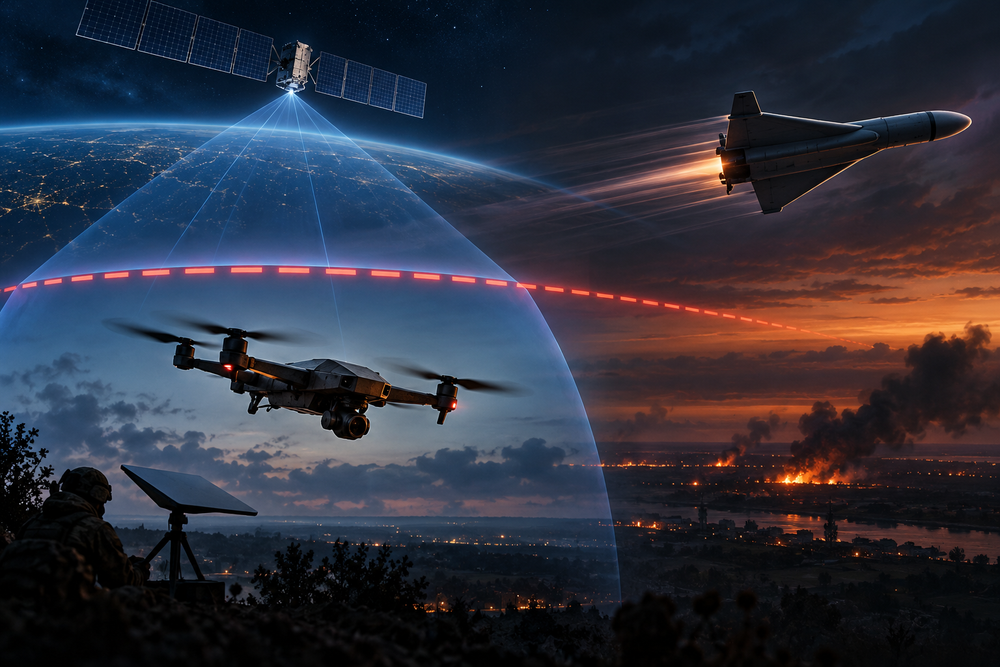
A radar feed here. An interceptor battery there. A naval movement called precautionary. A support mission still described as support even after the adversary has begun reading it differently. The public language of distance remains intact for a while. The operational reality moves ahead without it.
That lag may be one of the most dangerous habits of the current order.
States move closer to the fire while preserving a vocabulary of detachment. They remain, in official phrasing, one step removed from the conflict they are now structurally helping to organize. It is a language designed to manage audiences and postpone consequences. Sometimes it succeeds. Sometimes it only ensures that the moment of recognition arrives late.
Law Has Not Disappeared. Timing Is What Has Collapsed
Russia has pushed for action at the United Nations, and there is every reason to view that with skepticism. Moscow is not transformed by circumstance into a saint of international legality. But skepticism toward Russian motives does not make the legal question disappear.
The legal architecture still matters precisely because power keeps testing how late it can be made to speak.
That is the deeper problem. International law has not vanished. It has been pushed backward in sequence. Force first. Justification second. Emergency diplomacy third. Regret last. The law remains present, cited, discussed, defended, invoked. But it increasingly arrives after strategic momentum has already been set in motion.
That shift changes more than procedures. It changes psychology.
When states see that rules survive mostly as commentary on events already underway, they begin to adjust their expectations accordingly. The law stops looking like shield and begins to look like delayed narration. A system can survive a great deal of hypocrisy. What it does not survive easily is the widespread belief that timing no longer belongs to law at all.
Law still speaks. Power simply speaks earlier.
Once that becomes normal, the Charter is not abolished. It is downgraded in the imagination of states. That may be the more dangerous outcome.
The Nuclear Lesson Other States Are Already Learning
Lavrov’s warning about a wider nuclear arms race is the point many readers will be tempted to treat as dramatic excess. In truth, it may be the coldest and most rational part of the entire warning.
If states conclude that negotiated frameworks can be dismantled, that non nuclear status does not reliably protect them from coercion, and that outside guarantees fade precisely when pressure becomes acute, then the lesson drawn by others will not be moral restraint. It will be deterrence. It will be hedging. It will be the slow normalization of a calculation that many governments already whisper in private.
If treaties do not protect us, perhaps only harder capability will.
This is how nonproliferation decays in the real world. Not through philosophical debate, and not because leaders wake up one morning and suddenly admire the bomb. It decays through precedent. One agreement is broken. One target is isolated. One war widens. Other capitals take notes. Committees meet. Procurement plans change. Strategic doctrines stiffen. Language once used only by hawks enters the center of the room.
Then policy starts moving in places the public never sees.
This is why the Iran war cannot be understood only through the lens of immediate military gain or loss. Every conflict involving pressure on a state with nuclear relevance also teaches lessons to states far beyond the battlefield. Some lessons are spoken aloud. The most consequential ones rarely are.
Russia’s Warning Is Also a Mirror
It is true that Moscow is using this crisis. Of course it is. Russia benefits from any development that portrays Washington as reckless, destabilizing or structurally indifferent to the legal order it claims to defend. It benefits from Middle Eastern volatility that fragments Western attention and complicates alliance unity elsewhere. It benefits from widening the image of American force as something that does not restore order but corrodes it.
Yet the fact that Russia is exploiting the moment does not empty the moment of meaning. It sharpens it.
Because the warning is also a mirror. It reflects a wider reality about the post Cold War order. A system that has become accustomed to force without durable settlement. A system in which diplomacy is often allowed to decay until coercion can be rebranded as necessity. A system in which alliances drift toward conflicts they insist they are not entering. A system in which institutions are summoned after the decisive moves have already been made.
This is not only a story about Russia accusing the United States.
It is a story about a world becoming harder to stabilize each time one more crisis is handled through pressure first and repair later.
The Pattern Beneath the Headline
The headline version of the story is simple enough. Lavrov warned of a larger war. That is the visible sentence. The structural sentence is harder.
The war around Iran is already functioning as a stress test for multiple pillars at once. Diplomatic credibility. Energy stability. Alliance containment. Legal order. Nuclear deterrence. Regional normalization. Great power signaling. Public tolerance for permanent insecurity. They are all being tested together.
That is why a single press conference can matter.
Not because one foreign minister changes the world by uttering a phrase, but because certain phrases emerge at the exact moment when the world has already shifted enough to receive them differently. A year ago the language of world war would have sounded, to many, like inflationary rhetoric. Now it lands inside a landscape already prepared by cumulative escalation.
That is the deeper danger. Not merely that leaders say the words World War III. The deeper danger is that the conditions which make the words sound less absurd are multiplying in plain sight.
A public gets used to emergency faster than it realizes. A continent gets used to militarized maps. Markets get used to instability premiums. Diplomacy gets used to being late. Language adapts. Expectations adapt. Fear becomes procedure. Then the unthinkable does not arrive as shock. It arrives as administration.
Closing Reflection
Lavrov may be dramatizing events to serve Russian interests. He almost certainly is.
But dramatization does not cancel structure.
The structure is already visible. The diplomatic framework around Iran was weakened long before the latest phase of war. Energy vulnerability is rising with every expansion of the battlefield. NATO states are moving closer to the fire whether or not their public language admits it. International law remains standing, but more and more often it speaks after force has already moved. And behind all of this, the oldest lesson of the nuclear age is returning with terrible clarity.
When states stop trusting rules to protect them, they begin searching for harder guarantees.
That is how regional wars become global conditions.
That is how a crisis in one theater teaches doctrine everywhere else.
That is how the map starts moving before publics have found the words to describe what they are watching.
Once diplomacy is broken and force becomes routine, the map does not stay still.
And when the map no longer stays still, the question is never only where the war is. The question is what else is already moving with it.
Related from The Manifest Archive